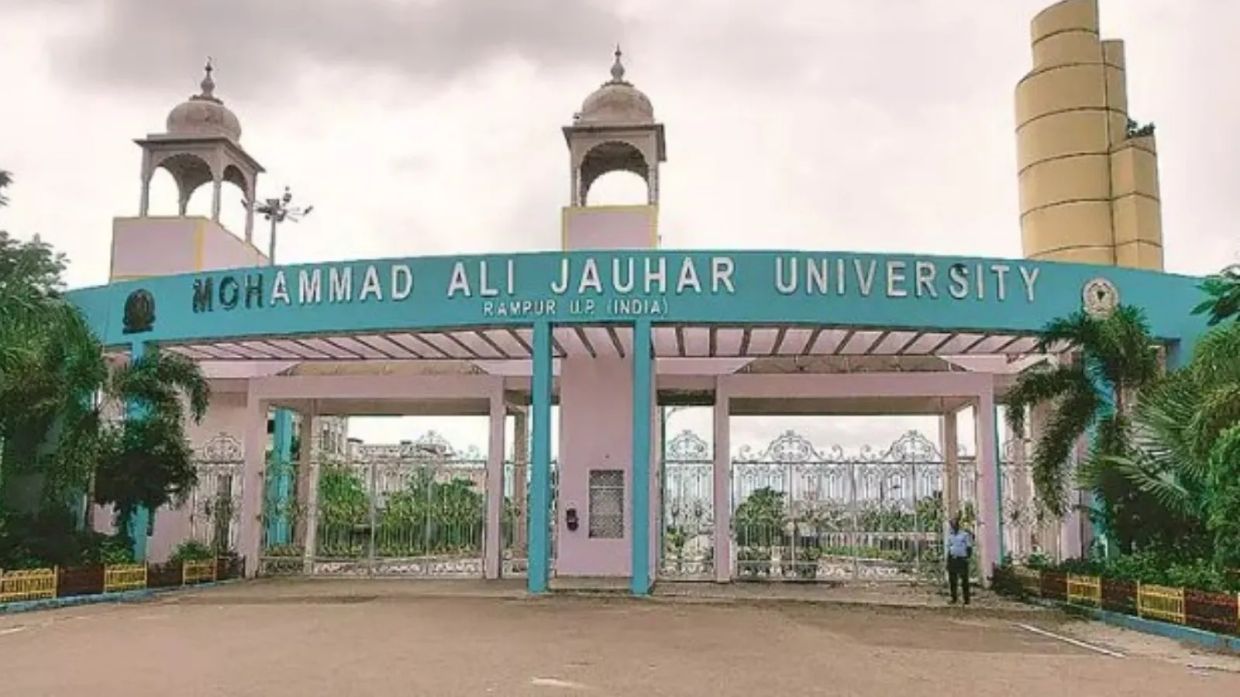
The Rampur Development Authority in Uttar Pradesh's Rampur city has issued a sweeping demolition order affecting 38 structures within Mohammad Ali Jauhar University, alleging that the buildings were constructed without proper authorisation. The order, handed down on Wednesday, July 15, targets facilities spread across the institution's sprawling 250-acre campus and represents one of the most significant regulatory actions taken against the university since its establishment nearly two decades ago.
The university itself carries historical significance, bearing the name of Mohammad Ali Jauhar, a towering figure in India's independence struggle and champion of Muslim interests during the pre-partition era. Founded in 2006, the institution was established by Azam Khan, a politician of considerable influence who held ministerial positions within the Uttar Pradesh state government and maintained a reputation as a compelling public speaker and respected community voice. The founding of the university reflected Khan's ambitions to build educational infrastructure within his political constituency, a common practice among prominent Indian politicians seeking to consolidate local support and create institutional legacies.
Azam Khan's political affiliation with the Samajwadi Party gave him significant leverage during the party's governance of Uttar Pradesh between 2012 and 2017. However, the party's subsequent electoral defeat to the Bharatiya Janata Party marked a turning point in Khan's political fortunes and initiated a sustained period of legal and administrative challenges. The shift in state power dynamics has created a vastly different institutional environment for the university and its founder, one where protective political patronage has evaporated and regulatory scrutiny has intensified considerably.
The timing and scope of the demolition order must be understood within the broader legal troubles engulfing Khan's family. The politician himself currently remains imprisoned following a court conviction in a case centring on forged documents, a serious charge that strikes at questions of institutional integrity and proper governance. His son Abdullah, similarly incarcerated, faces parallel legal proceedings that have kept the family in the public eye and the subject of intense media scrutiny. These developments have transformed Khan from a powerful state-level political operator into a vulnerable figure without recourse to the administrative protections that his earlier political position once afforded.
Additionally, Khan's wife Tazeen Fatima experienced incarceration in connection with a birth certificate case, though she has since secured bail release pending further proceedings. The cascade of legal actions affecting multiple family members has created a pattern of institutional pressure that extends beyond individual criminal matters into domains affecting their collective interests, including the educational institution that remains their primary legacy project. For observers of Indian politics and governance, the interconnected nature of these legal cases raises questions about whether enforcement mechanisms are being deployed with consistent rigour across comparable circumstances or whether political considerations are shaping their application.
Khan's family has consistently maintained that the accumulated legal cases represent a coordinated political vendetta rather than legitimate prosecutions based on objective evidence. They argue that the intensity and breadth of cases—spanning forged documents, birth certificates, and now institutional construction violations—suggest a pattern of harassment designed to neutralise Khan's political opposition and discredit him personally. This characterisation reflects a broader pattern within Indian politics where shifting power dynamics frequently trigger intensified legal scrutiny of politically inconvenient figures, particularly those from parties that have fallen from electoral favour.
The demolition order carries significant implications for the university's operational capacity and academic standing. Beyond the immediate disruption of removing 38 structures from a campus housing only 40 buildings, the regulatory action creates uncertainty about the institution's future accreditation status, its ability to recruit faculty and students, and its long-term institutional viability. Educational institutions depend fundamentally on regulatory approval, stable physical infrastructure, and public confidence—all of which are now in question. The knock-on effects will extend to current students whose educational continuity faces disruption, and to staff members whose employment security has suddenly become precarious.
For Malaysia and Southeast Asian readers following developments in Indian education and politics, this case illustrates the vulnerability of educational institutions founded by political figures when those figures lose their protective political position. It demonstrates how regulatory enforcement mechanisms can become weaponised against institutional legacies associated with political opponents, and how educational quality and institutional stability can suffer collateral damage in broader political power struggles. The situation also highlights the importance of establishing autonomous governance structures within educational institutions that can insulate them from the personal fortunes of their founding figures.
The resolution of this dispute will depend partly on judicial review of whether the construction genuinely violated authorisation requirements or whether regulatory enforcement has been selectively applied. It will also reflect broader questions about how Indian institutions can balance legitimate regulatory oversight with protection against politically motivated persecution. The university's fate remains uncertain pending appeals and potential negotiations between university authorities and the development authority.

