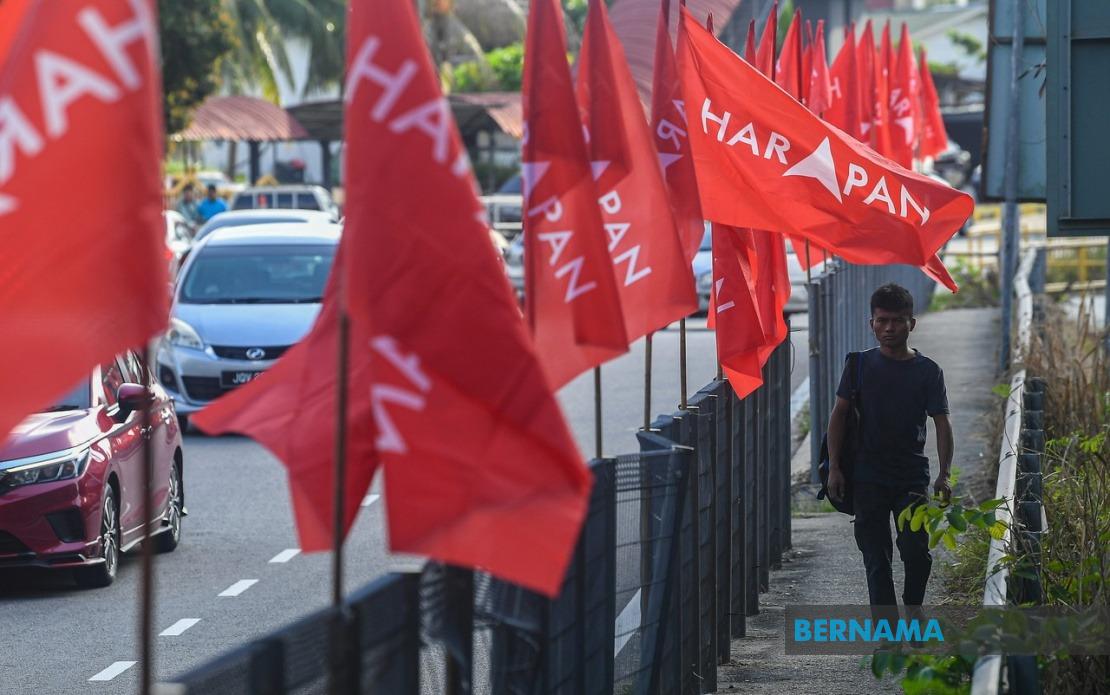
As Johor prepares for its state election on July 11, Pakatan Harapan is intensifying efforts to secure backing from the Indian community, with party leaders arguing that minority voters hold disproportionate influence over the contest's outcome. Dr Gunaraj George, a member of Parti Keadilan Rakyat's Central Leadership Council and Sentosa Assemblyman, has made an explicit appeal for Indian voters to support the coalition, contending that their participation could determine results across approximately 25 mixed and marginal state assembly constituencies where no single community forms an overwhelming majority.
The strategic focus on India-origin voters reflects a calculated political calculation. While the Indian community represents a numerical minority within Johor's overall population, the fragmented nature of electoral competition in numerous seats means that concentrated voting patterns among this group could shift outcomes in tightly contested battles between PH and rival coalitions. This dynamic becomes particularly consequential in constituencies where multiple communities coexist without clear-cut demographic dominance, creating conditions where targeted community mobilization can prove decisive.
Gunaraj's framing of the election extends beyond conventional party politics, positioning the contest as a fundamental choice between two contrasting governance models. He characterises a vote for PH as an endorsement of political stability, institutional reform, and sustained economic development under the MADANI agenda initiated by Prime Minister Datuk Seri Anwar Ibrahim. Conversely, he warns that returning to opposition rule would resurrect the political volatility and institutional uncertainty that previously characterized Malaysian governance and deterred foreign investment.
The argument around economic stability carries particular weight given Malaysia's vulnerability to external pressures. With global growth decelerating, geopolitical tensions affecting trade routes and supply chains, and household budgets strained by cost-of-living inflation, voters across all communities face genuine economic anxiety. Gunaraj implicitly positions PH as the stabilizing force that can shield Malaysia from additional turbulence, arguing that investor confidence and employment opportunities depend upon predictable political conditions that the coalition alone can guarantee.
A central pillar of PH's outreach involves tangible allocations benefiting the Indian community. The most symbolically significant achievement cited is the elevation of the Malaysian Indian Transformation Unit funding from RM100 million to RM150 million, ending a decade of budgetary stagnation under preceding administrations. This restoration carries psychological importance beyond its absolute financial magnitude, signalling governmental recognition of Indian community concerns and willingness to address historical neglect. Critically, Anwar has committed to progressively raising this allocation further, embedding the reversal within a trajectory of expanding resources.
Beyond MITRA, the government has pursued a multi-faceted approach targeting various community interests. Increased budgetary support for Tamil National-Type Schools addresses educational concerns while maintaining cultural continuity, while expanded maintenance allocations for temples and other places of worship reflect governmental responsiveness to religious and community institution priorities. Simultaneously, technical and vocational education programmes provide pathways for youth advancement, and cash assistance schemes including Sumbangan Tunai Rahmah and Sumbangan Asas Rahmah directly address household financial pressures affecting lower-income Indian families disproportionately.
Gunaraj emphasizes that MITRA's operational transformation ranks equally with budgetary increases. Enhanced transparency, systematized monitoring, and parliamentary accountability mechanisms ostensibly address longstanding grievances regarding fund deployment efficacy and reduce opportunities for elite capture or misappropriation. For communities historically skeptical of resource allocation mechanisms, demonstrable institutional improvements may prove as persuasive as absolute funding levels, particularly if communities perceive previous administrations as failing in fiduciary responsibility.
The appeal to Indian voters also incorporates micro, small, and medium enterprise support, acknowledging that entrepreneurial activity provides alternative pathways to prosperity beyond conventional employment. Indian-origin Malaysians maintain significant presence in commerce and small business sectors, making enterprise-focused policies directly relevant to community economic interests. Government initiatives facilitating access to capital, market information, and regulatory support offer tangible benefits to this demographic segment.
Gunaraj's broader governance narrative connects institutional reform, anti-corruption intensification, and inclusive economic policy expansion as interdependent components of a coherent MADANI vision. The argument posits that political stability enables governmental focus on systemic improvements that benefit all Malaysians regardless of ethnicity, whereas instability fragments official attention and diverts resources toward managing political crises rather than pursuing substantive reform. This framing attempts to transform parochial community interest into alignment with broader national institutional modernization.
The election timing carries additional significance given Malaysia's macroeconomic environment. Johor, as the nation's industrial and commercial heartland, functions as a bellwether for national economic sentiment. A decisive PH victory would signal voter endorsement of incumbent governance approaches and likely strengthen the coalition's political mandate for continued reform implementation nationally, whereas opposition gains might embolden skeptics of MADANI continuity.
For the Indian community specifically, this election represents an opportunity to assert electoral influence disproportionate to population size, potentially translating into enhanced future governmental responsiveness to community priorities. Politicians have historically competed vigorously for India-origin votes in mixed constituencies, and Johor's electoral configuration promises continued strategic importance for this demographic. The outcome may establish precedent for community mobilization patterns in subsequent state and federal elections.
PH's comprehensive contesting across all 56 state seats signals confidence in its organizational capacity and policy platform's appeal. The coalition's performance in Johor will provide crucial signals regarding whether the MADANI agenda resonates across diverse constituencies and whether opposition parties have successfully mobilized counter-coalitions. For Malaysian politics more broadly, the election represents a test of whether voters prioritize stability and reform continuity over change narratives.

