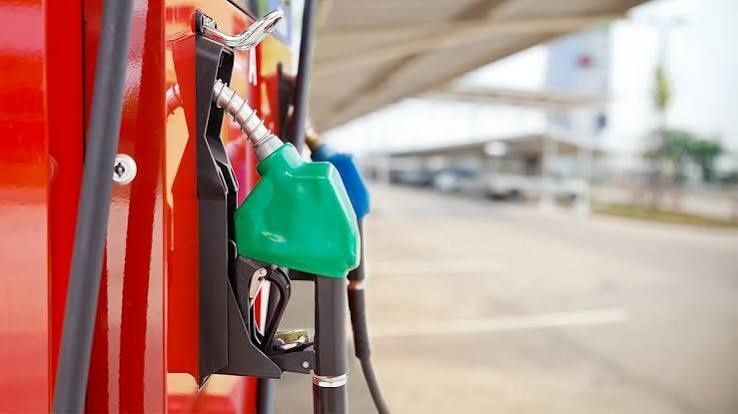
India's government faces an intensifying political crisis over its mandatory 20 per cent ethanol-blended petrol mandate as public discontent reaches boiling point, with motorists planning mass protests and the controversy spilling across social media platforms. The row, which threatens to become a significant liability for Prime Minister Narendra Modi's administration in the world's third-largest automotive market, was ignited when Attorney General R. Venkataramani described the E20 blend as an "experiment" during a court hearing this week—a characterisation that has since become a lightning rod for critics despite government denials and attempts at damage control.
The E20 mandate, formally introduced last year, requires all petrol pumps to stock the ethanol-blended fuel alongside conventional options, eliminating consumer choice at the forecourt. This forced transition represents a dramatic policy shift for India's vast motoring public, and the lack of gradual implementation or widespread consultation has left many drivers feeling blindsided. Rather than a measured rollout allowing drivers to adapt and gather performance data, the policy was implemented swiftly, catching vehicle owners unprepared for its potential effects on their automobiles.
Venkataramani's courtroom remark regarding E20 functioning as an "experiment" proved explosive, particularly after video evidence contradicting official denials circulated widely on social media. The Attorney General subsequently clarified that he had merely referenced the uncertainty surrounding ethanol supply volumes, not the broader policy itself. However, this explanation has done little to restore public confidence, as the original comment appeared to validate what many motorists already suspected—that the government had rushed into implementation without sufficient real-world testing or long-term data on vehicle compatibility.
The controversy reflects deeper public anxiety about fuel efficiency and engine longevity. Hundreds of motorists have documented complaints across social media platforms, alleging that E20 consumption produces notably lower mileage compared to conventional petrol whilst simultaneously accelerating mechanical wear. One widely-shared video, watched over 500,000 times, featured a vehicle owner named Manish Kashyap explaining how his car required substantial repairs after merely two months of using E20 fuel, with the emotional toll evident as he lamented his financial investment and tax contributions.
Tehseen Poonawalla, a Delhi-based socialite and Congress party affiliate, has mobilised public opposition by organising a protest scheduled for Sunday in New Delhi, reporting overwhelming interest from thousands of potential participants. This grassroots mobilisation suggests the controversy extends beyond isolated grievances to represent a genuine groundswell of motorist frustration. The participation of opposition figures, including Congress state minister Priyank Kharge, has further politicised the issue, with critics arguing that the government implemented the policy without adequate stakeholder consultation whilst lacking comprehensive impact assessments.
The government's response has oscillated between defensive justifications and dismissive rhetoric. Petroleum Minister Hardeep Singh Puri attempted to normalise E20 by comparing it to racing fuel, suggesting that formula one vehicles routinely utilise ethanol-blended fuels and experience enhanced acceleration, though acknowledging that slight mileage reductions might occur. This racing analogy, however, appears unconvincing to ordinary motorists concerned about their daily commute rather than competitive motorsport performance. The government's press office subsequently labelled criticism as "wild claims" and "rage bait," a characterisation likely to further antagonise an already frustrated public.
The administration's official rationale centres on environmental and economic benefits. According to government statements, E20 significantly reduces carbon emissions, diminishes India's reliance on crude oil imports—thereby preserving valuable foreign exchange reserves—and generates expanded demand for agricultural feedstocks utilised in ethanol production, theoretically supporting farmer incomes. These macro-level arguments, whilst potentially sound from a national policy perspective, fail to address the immediate financial impact on individual vehicle owners experiencing mechanical problems and reduced fuel economy.
For Malaysian and broader Southeast Asian observers, India's E20 controversy offers instructive lessons about fuel transition policies. The Indian experience demonstrates the political risks inherent in implementing mandatory fuel blend changes without sufficient advance warning, comprehensive vehicle compatibility studies, or consumer choice provisions. In the context of regional moves towards biofuels and emission reduction measures, policymakers might consider whether similar mandates could generate comparable backlash in Malaysia, Thailand, or Indonesia, where personal vehicle ownership is similarly high and consumer resistance to unexpected cost increases remains powerful.
The situation also highlights the tension between government environmental and economic objectives and individual consumer concerns. Whilst reducing crude imports and supporting agricultural sectors represent legitimate policy goals, implementing these measures through mandatory changes affecting daily transportation costs requires careful stakeholder engagement and transparent communication. The absence of consumer choice effectively placed the entire adjustment burden on motorists without compensation or transition support mechanisms.
Moreover, the Attorney General's "experiment" comment, regardless of its intended meaning, exposed a credibility gap between official communications and underlying government uncertainty about the policy's real-world impacts. When senior government figures inadvertently acknowledge doubt about policy outcomes, public confidence deteriorates rapidly, particularly when numerous motorists are already reporting negative experiences. The government's subsequent attempts to reframe and minimise this statement have proven counterproductive, suggesting that transparent acknowledgment of the learning curve might have been more persuasive than defensive posturing.
The E20 controversy also reflects broader questions about how democratic governments balance environmental imperatives with consumer concerns. India's approach—implementing mandatory measures that immediately affect millions of vehicle owners—contrasts with more gradualist strategies that might include voluntary adoption periods, consumer incentives, or phased timelines allowing drivers to adjust. The political consequences now unfolding suggest that rushed implementation of fuel transition policies generates organised resistance that can undermine long-term policy legitimacy.
Looking forward, India's government faces mounting pressure to address motorist grievances through either policy modification, compensation mechanisms, or restored consumer choice provisions. The planned Sunday protest may either fizzle or catalyse broader political momentum, potentially making the E20 mandate a significant electoral issue. For the Modi administration, which has generally maintained strong public support, the fuel controversy represents an unusual vulnerability where direct government decisions have imposed immediate financial costs on ordinary citizens, creating a rare alignment of consumer interest and political opposition.

