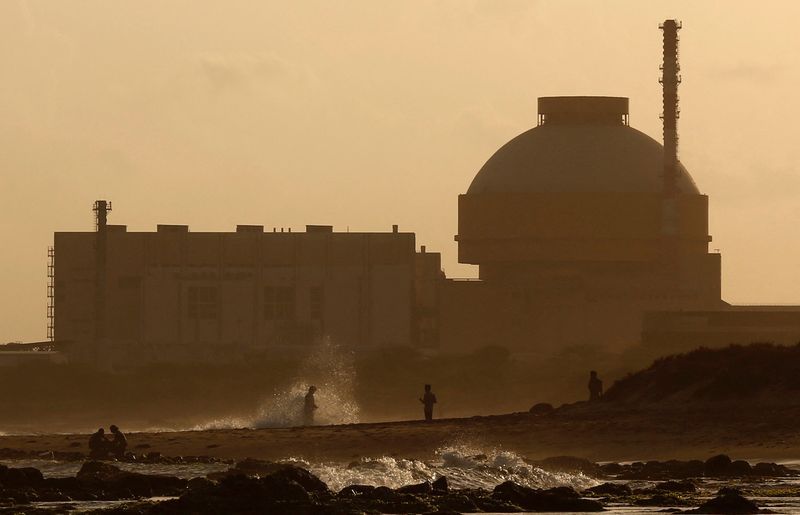
India's largest nuclear facility, the Kudankulam Nuclear Power Plant in Tamil Nadu, has been caught in a significant cybersecurity incident after ransomware group World Leaks posted a substantial cache of documents on the dark web. The files, purportedly originating from Reliance Group, one of the plant's major contractors, represent a breach of sensitive infrastructure data during a period when New Delhi is aggressively pursuing Prime Minister Narendra Modi's nuclear energy expansion agenda. The exposure has sparked fresh concerns about India's vulnerability to sophisticated cyber attacks targeting critical national infrastructure.
Reliance Group, the conglomerate controlled by Indian businessman Anil Ambani, confirmed to Reuters that it experienced a partial data breach involving files hosted on a server operated by third-party data centre provider Yotta. The company stated that authorities had been notified but declined to specify which data categories were compromised. The incident came to light after the ransomware collective distributed approximately 19,000 of the most sensitive files from a larger collection of 858,000 Reliance documents on its publicly accessible dark web platform. This selective publication strategy is typical of ransomware operators seeking to apply maximum pressure on targets unwilling to pay extortion demands.
The Kudankulam facility, comprising seven units across India's nuclear infrastructure, holds strategic importance for the country's energy security and clean power objectives. Units 3 and 4, currently under construction and scheduled for completion by 2027, represent a combined capacity of 2,000 megawatts and fall under Reliance Infrastructure's contract scope, awarded in 2018 for design and construction work. These expansion units are essential to Modi's nuclear modernisation programme, making the security breach particularly sensitive from a national perspective. The plant's strategic value extends beyond domestic energy needs, reflecting India's positioning as a major power in global nuclear technology discussions.
Documents examined by Reuters, spanning from 2016 through mid-2025, included purported facility blueprints, supplier lists, meeting records, inspection documentation, equipment assessments, and insurance policies, though their authenticity could not be independently verified. Notably, the leaked files contain what appears to be designs for ventilation and cooling systems supporting Units 3 and 4, alongside what seems to be a comprehensive floor layout of a common control room. Additionally, the collection reportedly includes vendor proposals, approved supplier catalogues, and photographic evidence from a 2024 joint inspection meeting between the Nuclear Power Corporation and Reliance. One particularly concerning document allegedly shows a USD 112 million terrorism insurance policy jointly held by Reliance Infrastructure and the Nuclear Power Corporation covering either unit.
Nuclear security experts have flagged the potential consequences of exposing such information to malicious actors. Nickolas Roth, senior director at the Nuclear Threat Initiative advising governments on atomic security, characterised the breach as posing serious risks to plant safety. Security analysts note that blueprints of auxiliary systems, when combined with supplier information, could enable adversaries to map the facility's support infrastructure, identify critical vendors, and locate vulnerabilities within the security supply chain. The intelligence value lies not merely in understanding individual systems but in revealing who maintains access to the project and which specific operational systems those access points reach, creating a detailed vulnerability roadmap for potential attackers.
World Leaks, the ransomware collective responsible for this breach, has established itself as a significant threat to major corporations globally. The group previously targeted multinational companies including Nike and India's Tata Group, with the Tata incident revealing confidential component designs belonging to clients Apple and Tesla. In the Tata case, World Leaks demanded USD 1.5 million in ransom and subsequently published the data after the conglomerate refused to negotiate. The group typically operates according to a standard extortion playbook: demand payment, publish stolen data upon refusal, and maintain pressure through dark web marketplace presence accessible only via specialised browsers designed to protect operator anonymity.
Investigation timelines reveal concerning gaps in breach detection. Yotta, the hosting service provider, detected suspicious activity on May 29 on a Reliance Infrastructure server, immediately terminating the activity and preventing what appeared to be ransomware execution. However, Reliance Infrastructure only informed Yotta of external threat actor claims regarding a data breach at the end of June—a lag of approximately one month. This detection delay underscores persistent challenges in India's cyber defence posture. Yotta stated it could not independently verify the threat actor's claims but has since shared detailed technical investigation results with Reliance Infrastructure. The Nuclear Power Corporation, which commissions and operates India's atomic facilities, is communicating with Reliance regarding the incident, whilst the Indian Computer Emergency Response Team, the nation's primary cybersecurity agency, has launched its own investigation.
India's cybersecurity landscape presents a troubling picture that contextualises this incident within a broader vulnerability pattern. According to cybersecurity firm Surfshark, India ranks third globally for countries experiencing the most data breaches, with 28.9 million accounts compromised in the previous year, trailing only the United States and France. A Data Security Council of India report examining 204 organisations revealed that 73 percent remain unaware whether they have experienced cyber attacks, whilst 57 percent lack fundamental cyber hygiene practices. These statistics suggest that the Kudankulam incident may represent not an isolated episode but rather a symptom of systemic security deficiencies affecting India's corporate and infrastructure sectors.
The breach carries particular significance given that this represents the second recorded cyber incident involving the Kudankulam facility. In 2019, malware associated with North Korean hacking operatives was discovered on the plant's administrative network. The Nuclear Power Corporation characterised that intrusion as thoroughly investigated with assurances that plant systems remained unaffected, though the incident highlighted existing vulnerabilities in India's nuclear cyber defence architecture. The reoccurrence of security incidents at the same critical facility raises questions about remediation effectiveness and whether lessons from the 2019 episode were adequately implemented across India's nuclear sector.
The exposed blueprints and supporting documentation do not appear to encompass the reactor core systems themselves, which are supplied by Russia's state-owned Rosatom and presumably maintained under more stringent access controls. However, this distinction offers limited reassurance, as auxiliary systems including ventilation, cooling mechanisms, and control infrastructure represent legitimate targets for sophisticated adversaries seeking to understand facility operations and identify secondary attack vectors. The insurance policy disclosure revealing a USD 112 million terrorism coverage agreement adds an additional intelligence dimension, potentially signalling to threat actors the facility's recognised vulnerability to external attacks serious enough to warrant substantial coverage. For regional observers, particularly in Southeast Asia where nuclear energy development is increasingly discussed, the Kudankulam incident illustrates the interconnected nature of cyber risks affecting critical infrastructure across South Asia.
The incident also underscores broader implications for Malaysia and Southeast Asia, where several nations are considering or developing nuclear energy programmes. The exposure of design and operational information from India's largest facility raises questions about whether similar vulnerabilities exist within emerging nuclear projects regionally. The breach demonstrates that contractor involvement in nuclear projects introduces supply chain vulnerabilities that extend beyond traditional physical security concerns, creating cyber exposure vectors that regulatory frameworks may inadequately address. This lesson resonates across ASEAN as countries balance energy security ambitions with cybersecurity requirements.
Authorities have remained largely silent, with the Department of Atomic Energy declining comment, Prime Minister Modi's office not responding to inquiries, and the Nuclear Power Corporation Chairman Rajesh Veeraraghavan providing no public statement. This communication vacuum has left India's nuclear establishment vulnerable to speculation and international scrutiny. The delayed public disclosure, contrasting with private investigations, suggests tensions between transparency imperatives and security classification protocols. World Leaks has not responded to inquiries regarding the breach specifics or ransom demands, maintaining the opacity characteristic of darknet operations whilst the publication of documents serves as both threat demonstration and negotiation leverage.
Moving forward, the incident will likely trigger enhanced cybersecurity requirements for nuclear contractors, potentially disrupting existing project timelines for Units 3 and 4 if security audits and remediation measures are mandated. The breach also positions cybersecurity at the centre of India's nuclear expansion narrative, forcing policymakers to acknowledge that ambitious energy infrastructure goals require corresponding investment in digital defence architecture. For Reliance Group, the reputational implications extend beyond this single incident, potentially affecting future government contracts and investor confidence. The broader significance lies in establishing precedent—if a major conglomerate's systems protecting India's most strategic nuclear facility can be compromised, what does this portend for cybersecurity standards across India's infrastructure sectors?

