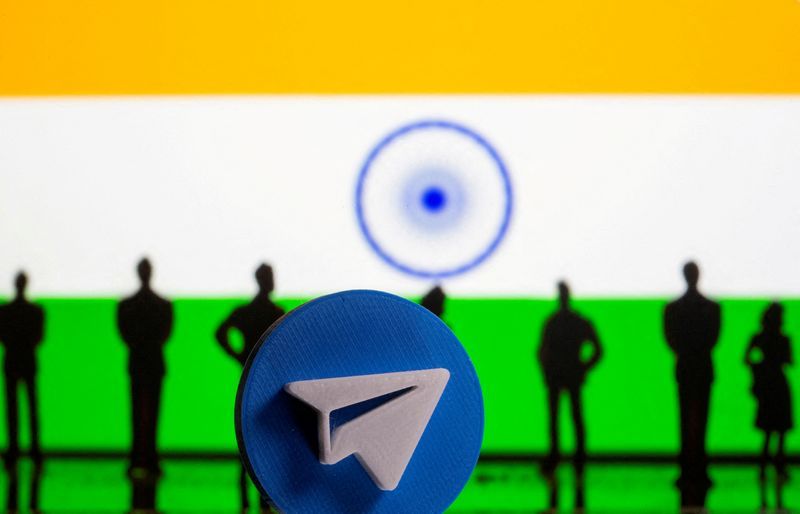
India's decision to block Telegram on June 16 marks a watershed moment in the government's escalating confrontation with major technology platforms over content moderation and national security concerns. The ban, initially imposed until June 22 using emergency powers, emerged from a breakdown in negotiations between New Delhi's Information Technology Ministry and Telegram's leadership over the platform's handling of channels allegedly distributing leaked question papers for NEET, India's most competitive national medical college entrance examination. The move underscores mounting frustration within the Indian government over what it perceives as Silicon Valley's reluctance to take swift action against misuse of their services, even when public interest is demonstrably at stake.
The controversy surrounding NEET has become a major political flashpoint in India. In May, the examination authority cancelled NEET results after suspicions that question papers had been leaked, forcing a complete rescheduling of the test to June 21. The chaos affected more than 2 million candidates and triggered widespread demands for accountability, including calls for the education minister's resignation. Within this volatile context, the government identified Telegram as the primary vector through which fraudsters were operating, with dedicated channels bearing names like "NEET PAPER LEAKED" and "Paper Leaked NEET" offering access to purported question papers in exchange for money. These channels presented themselves as straightforward conduits for exam malpractice, yet Telegram appeared unable or unwilling to take decisive action against them.
The tension between India and Telegram did not emerge suddenly but rather crystallised over two weeks of increasingly acrimonious exchanges between government officials and company representatives. Documents reviewed by international news agencies reveal a pattern of mutual recrimination, with the IT ministry repeatedly charging Telegram with "inaction" despite explicit warnings about specific channels operating on its platform. The government's position was straightforward: here was a named, identifiable threat to a national examination system affecting millions of students, and Telegram's response fell short of what the situation demanded. From the Indian government's perspective, the messaging app had the tools and resources to address the problem but lacked the political will or operational urgency to do so.
Telegram's counter-argument, articulated in subsequent email exchanges and later in its Delhi High Court petition, presented a fundamentally different narrative about the company's capabilities and commitments. The platform insisted it was "surprised at the suggestion that it has been inactive in addressing unlawful content" and emphasised that it does not permit its services to be used for fraudulent purposes. More significantly, the company disputed the government's characterisation of its technical limitations. Where Indian officials claimed that Telegram had acknowledged limitations in proactively detecting "more subjective" content related to exams, the platform retorted that this misrepresented its position. Telegram argued that it possesses proactive detection mechanisms for such content but that these require more intensive moderation resources than more clear-cut offences like child sexual abuse material.
This disagreement over what was actually said in a June 3 meeting between the two parties reveals a deeper chasm about expectations and capabilities. The government's official minutes suggested that Telegram had essentially conceded the difficulty of tackling exam-related fraud through technological means. Telegram's June 5 response vigorously contested this interpretation, arguing that the government's account was "one-sided and inaccurate" and that it "deliberately" omitted details of the company's proactive detection processes. The dispute over meeting minutes might seem technical, but it reflects competing narratives about whether Telegram genuinely cannot do more or simply chooses not to allocate sufficient resources to Indian concerns. This fundamental disagreement precipitated the government's decision to invoke emergency powers and block the platform entirely.
Telegram's position in India deserves particular attention because the country represents the app's single largest user base, with approximately 150 million users relying on the platform. This scale reflects specific advantages that Telegram offers compared to more dominant competitors like WhatsApp. While WhatsApp boasts over 500 million users in India, Telegram's appeal lies in technical features that enable large-scale, pseudo-anonymous communication. Groups on Telegram can accommodate up to 200,000 members, compared to WhatsApp's limit of just over 1,000, and users can participate without disclosing their phone numbers. These architectural choices were designed to provide privacy and enable expansive community discussion, but they have simultaneously created an environment where fraudulent schemes can flourish at scale with limited accountability.
The ban represents unprecedented action by the Modi government against Telegram specifically, though it follows a pattern of conflict between New Delhi and major technology companies over content governance. Last year, the government engaged in protracted legal battles with Elon Musk's X over the platform's content moderation policies, illustrating a broader assertiveness about India's regulatory expectations. The Modi administration has increasingly signalled that it will not tolerate what it perceives as foreign technology companies treating India as a secondary market where standards are relaxed. From this perspective, the Telegram ban is not an isolated incident but part of a coherent strategy to establish that India's sovereign concerns, particularly regarding public examinations and national security, supersede the commercial interests or operational preferences of global platforms.
Pavel Durov, Telegram's founder, has framed the ban as fundamentally misguided, arguing that it punishes ordinary users while proving ineffective at stopping fraud, which can simply migrate to other applications. His critiques carry a philosophical edge, suggesting that the Indian government's approach reflects a broader misunderstanding of how modern technology and human behaviour interact. On Telegram's own social media presence, the company posted a caustic analogy: "Over 300,000 people die of drowning each year. In order to protect society, it is now illegal to consume or possess water." This rhetorical flourish captures Telegram's argument that banning a platform wholesale because some users misuse it represents crude policy-making that ignores the legitimate needs of hundreds of millions of citizens.
The court challenge that Telegram has filed in the Delhi High Court will test constitutional principles of proportionality, free speech, and the state's emergency powers. The messaging app argues that the ban violates constitutional protections, a position that draws on well-established jurisprudence about the limits of government restriction on communication platforms. However, Indian courts have historically given governments considerable deference on matters involving national security or integrity of examinations, particularly when dealing with emergency measures. The outcome will significantly influence how technology regulation evolves in India and potentially across South Asia, where governments increasingly claim authority to restrict platforms they deem uncooperative.
For Malaysian readers and Southeast Asian observers, the India-Telegram dispute carries important implications. Several nations in the region host large populations of Telegram users and face similar pressures regarding examination integrity, national security, and platform accountability. The incident illustrates how quickly technology conflicts can escalate from negotiation to outright bans when trust breaks down, and it raises questions about whether platforms can realistically satisfy government demands for content moderation across diverse jurisdictions with varying legal standards and enforcement capabilities. Malaysia itself has witnessed tensions between authorities and messaging apps over content regulation, making the Indian case study particularly relevant.
The fundamental tension underlying this dispute reflects an unresolved question in the digital age: who bears responsibility for preventing misuse of communication platforms, and how should that responsibility be distributed between platforms, governments, and users? Telegram's argument that effective moderation requires balancing resources and that the company has acted within its capacity contrasts sharply with the Indian government's expectation that platforms with billions in resources should be capable of preventing any significant criminal activity. This disagreement will likely persist as long as platforms claim they cannot achieve perfect content elimination while governments increasingly demand exactly that. Until both parties develop more sophisticated frameworks for allocating responsibility and resources, similar confrontations will continue to erupt whenever emergencies expose gaps between government expectations and platform capabilities.