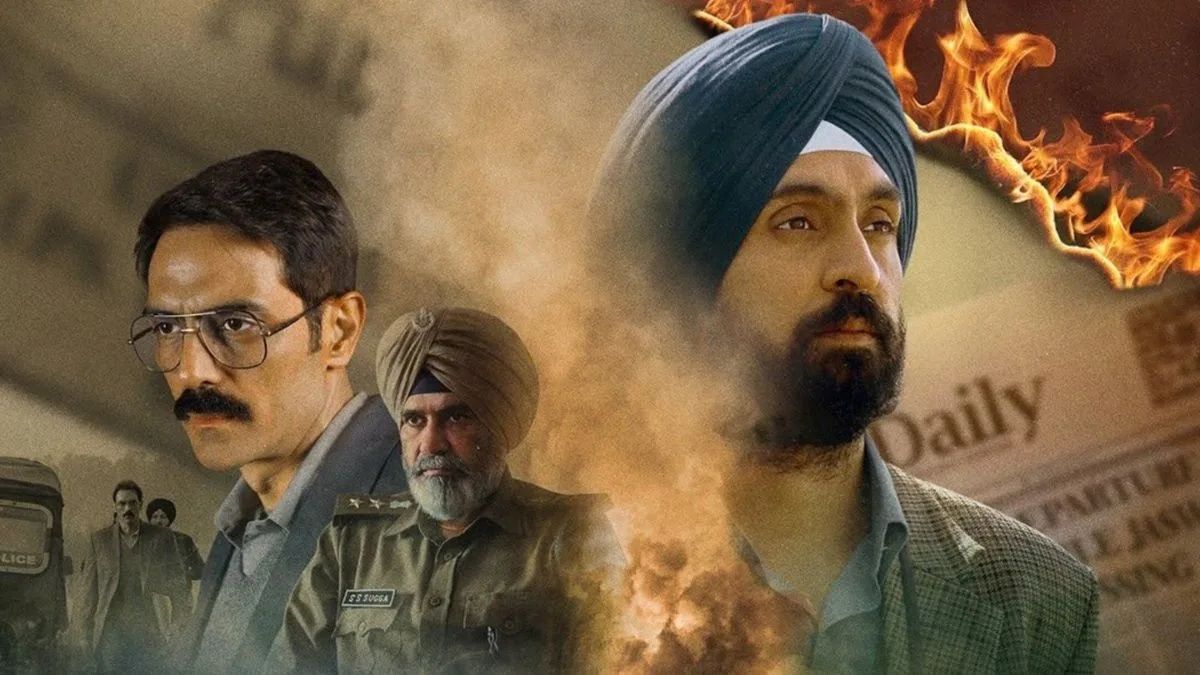
The journey of "Satluj," a film centred on the life of Sikh human-rights activist Jaswant Singh Khalra, illustrates the mounting pressures facing India's creative community. Producer Honey Trehan spent approximately four years negotiating with India's film authorities, accepting 127 demanded alterations before eventually abandoning the theatrical route and uploading the film to streaming platform ZEE5 earlier this month. Within days, the platform removed it, citing "current developments" without explanation. According to Press Trust of India reports, government officials requested the takedown over "security concerns," though no official statement confirmed this intervention.
Trehan's experience reflects a broader pattern of artistic constraint that has alarmed filmmakers and observers across India. The producer openly accused India's Ministry of Information and Broadcasting of political motivation, characterising the removal as an attempt to infiltrate and control the film industry's narrative-setting power. "This is not the sign of a healthy nation," he stated, highlighting the tension between state interests and creative expression. The film's starring role for Punjabi superstar Diljit Dosanjh and its focus on extrajudicial killings during Punjab's 1980s and 1990s counterinsurgency campaign against a Sikh independence movement evidently touched sensitivities within India's current political establishment.
Statistical evidence suggests the problem extends far beyond a single production. Official figures presented to Parliament reveal that 3,033 films in fiscal year 2025 required cuts or modifications before approval, more than double the number four years earlier. Yet the Central Board of Film Certification, India's primary certification authority, has not published a comprehensive annual report detailing its activities since 2017, making it difficult for the public to understand which types of content face scrutiny or what reasoning informs editorial decisions. This opacity itself raises questions about accountability in a democratic system.
India occupies an unusual position among major democracies regarding film regulation. Unlike age-based classification systems prevalent in the United States and much of Europe, India's government-appointed film board possesses direct power to demand edits before public exhibition, effectively controlling what audiences can access rather than merely rating age-suitability. This structural authority grants authorities significant leverage over creative content, distinguishing India's approach from most Western democracies where filmmakers retain greater control over their work.
When pressed for comment, CBFC Chairperson Shashi Shekhar Vempati declined to discuss individual film certifications, while India's Ministry of Information and Broadcasting told Parliament that cuts are only mandated when content allegedly violates "sovereignty and integrity of India, security, public order, decency, morality, defamation, contempt of court or incitement to offence." These categories remain sufficiently broad to encompass subjective interpretations of national interest, particularly regarding sensitive historical episodes or religious themes.
Sadanand Dhume, a senior fellow at the Council on Foreign Relations specialising in South Asian politics and society, argues that India's political trajectory since Prime Minister Narendra Modi's 2014 election has fundamentally altered the censorship landscape. "The politics of the country has taken a sharp turn since the advent of Modi in 2014, and Bollywood is facing the downstream effects," he observed. This assessment suggests that increased censorship reflects broader ideological shifts rather than simple administrative tightening.
Multiple recent cases demonstrate the pattern. The Malayalam-language blockbuster "L2: Empuraan" required 24 post-release cuts in 2025 after Hindu nationalist groups protested its portrayal of 2002 religious riots. The caste-themed biopic "Phule" faced demands for language removal, while "Homebound," selected as India's 2026 Academy Awards submission, obtained approval only after 11 cuts targeting caste and religious references. Conversely, "Dhurandhar," a 2025 spy thriller depicting Indian intelligence operations against Pakistan, cleared certification with routine violence trims and became the highest-grossing Hindi-language film ever, suggesting that patriotic narratives face minimal obstruction.
Filmmaker Onir, who works under a single name, testifies to the escalating demands. His 2023 film "Pine Cone" faced censorship objections to the word "gay" appearing in a scene with a nine-year-old character, receiving approval only after dialogue removal. Such interventions extend beyond political content to encompass LGBTQ+ representation, demonstrating the breadth of constraints. Onir characterises the current period as "one of the worst phases of Indian cinema," arguing that narrative diversity and creative range are steadily vanishing.
Despite these institutional barriers, "Satluj" continues reaching audiences through alternative channels. Trehan screened the film privately at the Cannes Film Festival in May, following its withdrawal from Toronto International Film Festival in 2023 prior to scheduled premiere. Within Punjab itself, grassroots screenings occur in Sikh temples, community centres and village squares, with viewers who downloaded the film before ZEE5 removed it serving as informal distributors. Trehan described this phenomenon as transformative: "The film is getting screened - Hindu, Sikh, every caste, rich, poor, all sitting together. It became a celebration. What this film did, it brought the entire Punjab together."
For Southeast Asian observers, India's censorship trajectory warrants attention. As the world's largest film-producing nation by volume, India's regulatory practices influence regional film industries and set precedents for content control mechanisms. The case also raises questions about how democracies balance security concerns with creative freedom—questions increasingly relevant across the region as governments grapple with similar tensions. Filmmakers in Malaysia, Thailand, and Indonesia may find their own regulatory environments shifting, particularly regarding historical narratives, religious content, and political sensitivities.
The Ministry of Information and Broadcasting claims to have certified nearly 72,000 films over the past five years, suggesting routine certification alongside selective intervention. However, the absence of transparent criteria and published justifications for demanding cuts undermines confidence in the process's consistency and fairness. As one of the few major democracies maintaining such direct government control over artistic expression, India's experience demonstrates the enduring tension between state prerogatives and individual creative rights in functioning democracies.

