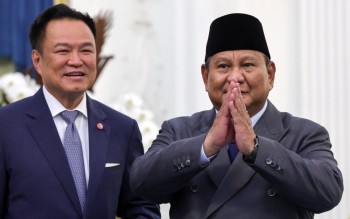
Indonesia and Thailand have embarked on an ambitious economic partnership, adopting a strategic roadmap during high-level talks in Jakarta that sets a goal of achieving US$20 billion in bilateral trade by 2030. The Indonesia-Thailand Strategic Partnership Roadmap 2026-2030 represents the latest manifestation of the two Southeast Asian neighbours' deepening ties, following their elevation to full strategic partnership status last year.
President Prabowo Subianto hosted Thai Prime Minister Anutin Charnvirakul for what marks the first official visit by a Thai prime minister to Indonesia in 15 years. The gathering at Merdeka Palace constituted the second Leaders' Consultation between the two nations since formalising their elevated bilateral relationship. The timing of Anutin's visit, his first international engagement to Indonesia since assuming Thailand's top office in September 2025, underscores Bangkok's commitment to strengthening ties with its western neighbour in an increasingly competitive regional environment.
Central to the partnership architecture is the establishment of a Joint Trade Commission, the first of its kind in bilateral history between the two countries. This institutional mechanism will serve as a dedicated platform for high-level commerce officials to identify fresh business opportunities while systematically addressing tariff barriers and regulatory obstacles that have historically constrained bilateral commerce. The JTC framework reflects recognition from both capitals that existing trade flows remain substantially below potential given the combined economic heft of Indonesia and Thailand within ASEAN.
Food security emerges as a cornerstone cooperation area, reflecting both nations' vulnerabilities to global supply chain disruptions and climate variability. Thailand, already a significant rice exporter, has pledged to maintain its role as a dependable supplier of high-quality grain to Indonesian consumers while simultaneously seeking greater market penetration for its processed foods, meat products, and dairy goods. Beyond agricultural commodities, Thailand has articulated specific ambitions regarding fertiliser imports, seeking to dramatically expand annual urea purchases from Indonesia from the current baseline of approximately 60,000 tonnes to several hundred thousand tonnes annually. This vertical expansion would lock in complementary resource flows between the two economies.
Energy cooperation constitutes another pillar of the roadmap, with both governments committing to establish an Indonesia-Thailand Energy Forum. This initiative targets dual objectives: fortifying each nation's energy security while accelerating the transition towards renewable and sustainable energy sources. The forum will facilitate structured dialogue between government agencies and private sector actors across both nations, positioning the partnership as a vehicle for broader decarbonisation efforts across Southeast Asia during a period when energy demand is surging across the region.
Digital economy integration represents a forward-looking dimension of the partnership. Both nations have committed to advancing local currency transactions in bilateral trade and investment, a move that reduces reliance on third-party currencies and enhances transaction efficiency. Such arrangements could serve as a template for deeper economic integration across ASEAN, particularly as regional economies seek to reduce external dependencies and build more resilient intra-regional financial systems.
The halal industry collaboration underscores the shared cultural and religious dimensions of the partnership. Indonesia and Thailand jointly control substantial portions of global halal value chains, from agricultural production through processing and certification. Both governments have prioritised strengthening this sector, with particular focus on renewing the mutual recognition agreement on halal certification before its expiration in November. Expansion of halal value chains creates opportunities for premium product development and geographic market diversification while capitalising on the certified authenticity that halal branding commands in Muslim-majority markets globally.
Beyond the headline trade target and sectoral frameworks, the roadmap encompasses human capital development through a memorandum of understanding on education. This dimension addresses medium-term competitive capacity, recognising that sustained bilateral trade growth depends on workforce capabilities in emerging sectors like digital technology and renewable energy. Complementing governmental cooperation, private sector agreements have already materialised, including tourism and connectivity arrangements between the Tourism Authority of Thailand and TransNusa, as well as an organic waste processing venture between Bio-Axel and Pro Konsilium.
Thailand's positioning of Indonesia as its fourth-largest trading partner within ASEAN provides crucial context for understanding the strategic calculus underlying this deepened engagement. Despite substantial existing commerce, both sides acknowledge significant untapped potential. Anutin's assertion that bilateral trade should expand commensurately with the combined economic scale of both nations reflects frustration with current performance and determination to redirect supply chains and investment flows toward the bilateral relationship. For Indonesia, deepening economic ties with Thailand serves broader strategic interests in maintaining regional cohesion and balancing relationships across Southeast Asia.
The roadmap's adoption occurs within a regional context characterised by intensifying great power competition and supply chain realignment. By establishing dense institutional frameworks and committing to ambitious numerical targets, Indonesia and Thailand are signalling to regional and global investors that their partnership offers viable alternatives for production networks and market access. The emphasis on food security and energy transition further signals alignment with global sustainability imperatives, potentially unlocking additional investment flows from development finance institutions prioritising climate-compatible growth.
Implementing the ambitious US$20 billion target will require sustained political commitment beyond the initial enthusiasm of high-level visits. The Joint Trade Commission will bear primary responsibility for identifying and removing specific barriers that currently fragment bilateral commerce. Both nations will need to harmonise standards, streamline customs procedures, and provide targeted support to industries positioned to benefit from expanded trade. Success would demonstrate ASEAN's capacity for internal economic integration despite geopolitical pressures.

