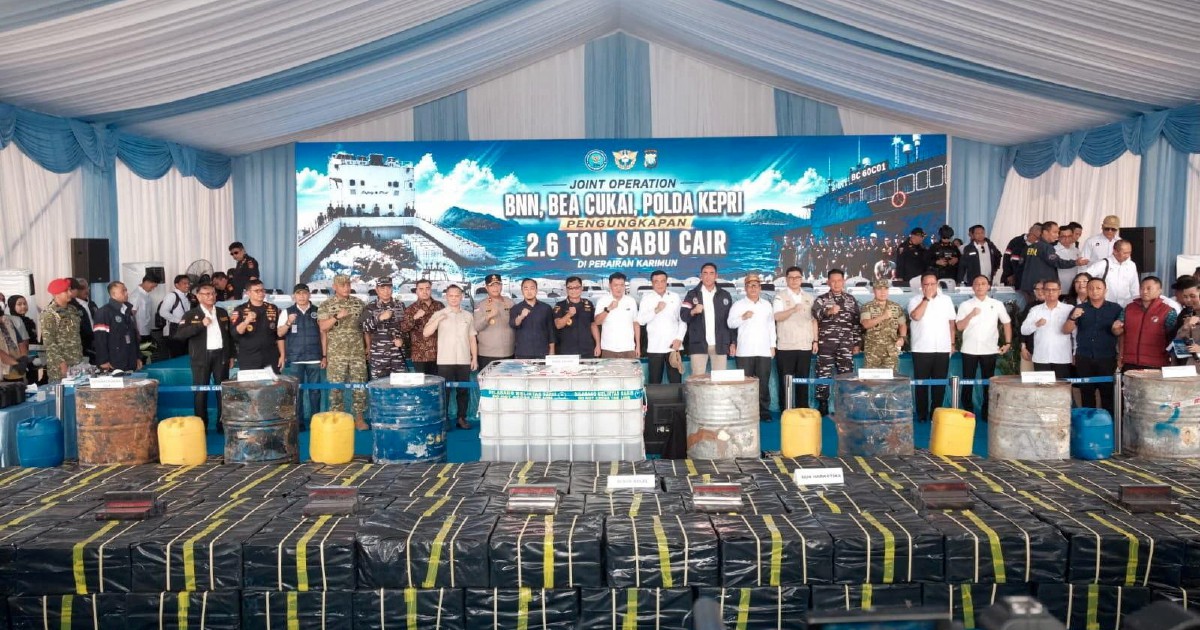
Indonesian authorities have made a substantial arrest in their ongoing campaign against transnational drug trafficking, apprehending 10 nationals from Myanmar following the interception of a vessel carrying 2.6 metric tonnes of liquid methamphetamine. The seizure, announced at a Jakarta press conference on Friday, represents one of the region's more significant narcotics busts and underscores the persistent challenges facing Southeast Asian law enforcement agencies in combating organised drug operations.
The captured ship, which was registered under a Tanzanian flag, became the focal point of a coordinated investigation that culminated in the detention of the Myanmar nationals involved in the trafficking operation. The circumstances surrounding the vessel's apprehension reveal the sophisticated methods employed by drug smuggling networks seeking to move illicit substances through Southeast Asian maritime routes. The use of a foreign-flagged vessel exemplifies how criminal organisations exploit international shipping protocols and flag-of-convenience registries to obscure the true origins and destinations of their contraband.
Liquid methamphetamine represents a particularly troubling category of narcotics, as its chemical state facilitates concealment within legitimate cargo and reduces detection risks compared to crystalline forms. The sheer volume seized—2.6 metric tonnes—suggests this operation was targeting wholesale distribution networks rather than street-level markets, indicating the sophisticated scale of trafficking infrastructure operating within the region. Such large quantities would typically supply multiple countries across Asia, potentially affecting millions of consumers and destabilising communities throughout the continent.
Myanmar has emerged as a critical source region for methamphetamine production and distribution, particularly from laboratories operating in border areas controlled by armed ethnic groups and criminal syndicates. The involvement of Myanmar nationals in this bust reinforces international law enforcement assessments that the country has become a manufacturing and transit hub for amphetamine-type stimulants destined for markets across Asia, Australia, and beyond. This geographical reality has profound implications for Indonesia, which sits at a crucial maritime crossroads where trafficking routes converge.
Indonesia's capacity to intercept such significant drug shipments reflects both improved intelligence capabilities and heightened vigilance among maritime authorities. The nation's strategic location along major shipping lanes, combined with its vast archipelago of thousands of islands, makes it simultaneously a transit point and a destination market for narcotics trafficking. Successful operations like this one demonstrate that despite the inherent challenges of policing such an expansive maritime territory, Indonesian agencies can achieve meaningful results through coordinated enforcement efforts.
The arrest of 10 suspects provides law enforcement with opportunities to disrupt broader trafficking networks through interrogation and investigation. Maritime drug busts often serve as entry points for dismantling larger criminal organisations, as detained individuals may provide actionable intelligence regarding supplier networks, distribution channels, and financial mechanisms. However, the reality of organised crime suggests that the apprehension of individual operatives, while symbolically significant, frequently fails to substantially reduce drug availability unless accompanied by systematic efforts to address manufacturing facilities and financial infrastructure.
Regional drug control cooperation has intensified in recent years, with countries including Indonesia, Malaysia, Thailand, and the Philippines coordinating anti-narcotics operations. This incident exemplifies both the necessity and the limitations of such cooperation. While individual seizures garner headlines and satisfy domestic political demands for visible enforcement, the underlying production capacity and market demand drivers remain largely unaddressed. International pressure on Myanmar to regulate precursor chemicals and dismantle clandestine laboratories has proven insufficient, partly because state capacity in border regions remains limited and partly because economic incentives for production and trafficking exceed the penalties imposed.
For Malaysian readers and policymakers, this development carries particular significance given the nation's vulnerability to methamphetamine trafficking. Malaysia's ports, both maritime and air, have repeatedly served as transshipment points for drugs destined for domestic consumption and regional distribution. The detection of such large quantities in Indonesian waters raises questions about how much flows through Malaysian maritime zones undetected. Strengthening intelligence sharing and joint maritime patrols between Malaysian and Indonesian authorities could yield additional intercepts, though implementation challenges persist.
The broader context of this bust situates it within a wider narrative of escalating drug trafficking driven by expanding production capacity in Myanmar and rising demand across Asia. Methamphetamine seizures have increased markedly throughout Southeast Asia over the past decade, with the United Nations Office on Drugs and Crime reporting record-breaking annual quantities. The liquid form's prevalence suggests criminal networks are adapting manufacturing and distribution methodologies in response to enforcement pressures, potentially rendering future interdiction efforts more difficult.
Indonesia's announcement of this seizure serves multiple functions beyond the operational success itself. It demonstrates to domestic constituencies that authorities are actively combating drug trafficking, satisfies international obligations to report on narcotics enforcement, and sends deterrent messages to criminal organisations. However, observers note that press conferences announcing arrests frequently occur without corresponding updates regarding prosecutions, convictions, or sentences imposed. The sustainability of Indonesia's enforcement capability depends not merely on arrest rates but on the certainty and severity of consequences faced by traffickers and the dismantlement of their operational infrastructure.
Moving forward, the challenge for Indonesian authorities and their regional counterparts involves translating individual successes into systematic reduction of drug availability. This requires sustained investment in maritime interdiction capabilities, enhancement of port security protocols, development of domestic judicial capacity, and crucially, cooperation with Myanmar to address production sources. Absent coordinated action on manufacturing suppression, each successful seizure represents merely a temporary disruption of supply chains that quickly adapt and resume operations elsewhere.

