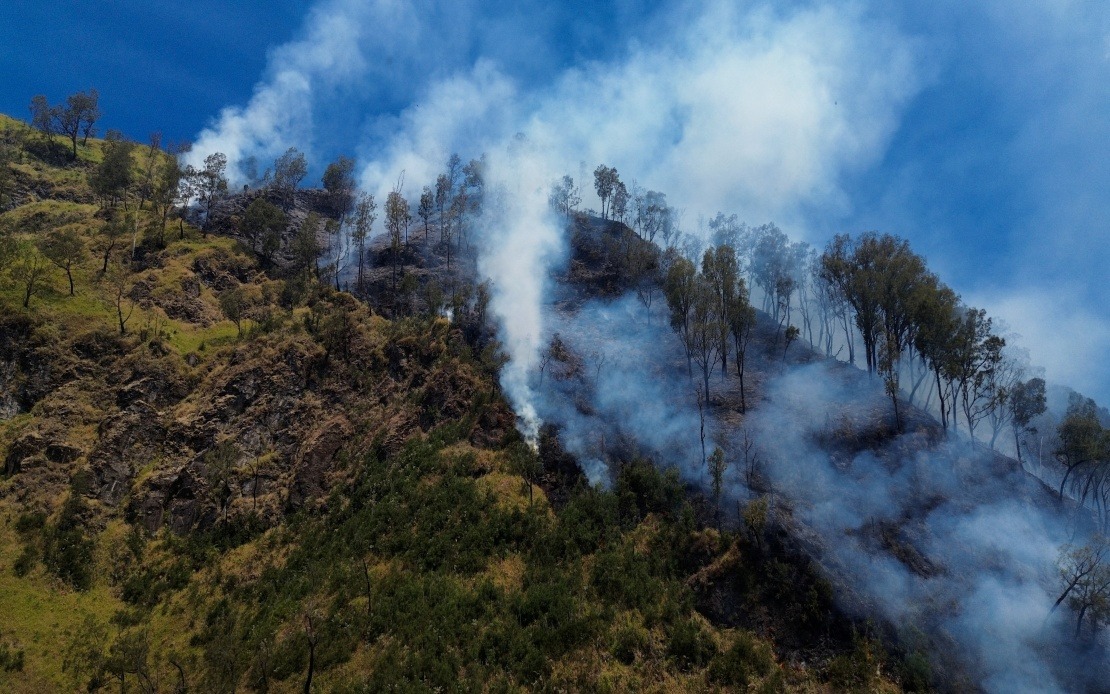
Indonesia has shuttered Mount Bromo to all visitors, effective immediately from Saturday evening, as rampant wildfires continue their destructive advance through one of the nation's most visited natural attractions. The Bromo Tengger Semeru National Park authority imposed the complete closure at 10pm to prioritise both firefighting operations and the protection of tourists venturing into the volcano region during this environmental crisis.
The decision affects access through five strategically placed entrances serving the broader region. Visitors planning entry through Cemorolawang in Probolinggo Regency, Wonokitri in Pasuruan Regency, Jemplang and Coban Trisula in Malang Regency, or Senduro in Lumajang Regency will find all gates sealed until further official notice. This comprehensive blockade reflects the severity of conditions on the ground, where flames have spread unpredictably across the Bromo Caldera landscape.
For tourists who have already secured entry permits through online channels, park authorities are offering flexibility in response to the disruption. Visitors holding tickets for dates falling within the closure period may either postpone their visit to a later date or initiate refund requests through the same booking system. This accommodation acknowledges the significant financial impact on both international and domestic tourism during peak travel season in Southeast Asia.
The fires ignited on Monday and have since consumed approximately 176.20 hectares of vegetation across Probolinggo and Malang regencies according to data released by the National Disaster Management Agency. The scale of destruction underscores how rapidly conditions deteriorated, with flames advancing across multiple administrative boundaries and threatening communities beyond the immediate national park vicinity. Officials monitoring the situation through Sunday evening detected active hotspots still generating heavy smoke despite sustained suppression efforts.
Indonesian authorities have mobilized significant aerial resources to combat the spread. Two large helicopters, each equipped with a 1,000-litre water-carrying capacity, have been deployed from nearby bases to conduct water-bombing operations across the affected zones. These aircraft represent a critical tactical advantage in mountainous terrain where ground crews face logistical constraints and difficult access conditions. The deployment reflects the government's determination to prevent further expansion of the burned area and protect settlements at lower elevations.
Metereological conditions have complicated firefighting operations considerably. Moderate winds sweeping across the volcanic plateau continue to disperse flames and carry embers to unburned vegetation, creating new ignition points and making predictive firefighting strategies increasingly difficult to implement. The combination of rugged topography, shifting wind patterns, and the remote nature of many affected areas has transformed this into a prolonged campaign rather than a quick containment operation.
The Bromo fires represent only part of Indonesia's current wildfire challenge across the eastern archipelago. A separate incident at Mount Rinjani National Park in East Lombok Regency saw flames consume approximately 30 hectares before firefighters achieved control early Saturday morning. That fire began around 8pm Friday in the Sembalun Resort sector, demonstrating how environmental stress is triggering multiple simultaneous crises across different volcanic regions within East Indonesia.
Investigators have yet to determine the root causes of either conflagration, a common pattern in Indonesia where competing theories regarding human activity versus natural ignition sources often dominate discussions. Understanding causation matters significantly for prevention strategies moving forward, particularly given the region's ecological sensitivity and tourism dependence. Preliminary investigations are ongoing as suppression efforts continue at both locations.
The Mount Bromo closure carries broader implications for Indonesia's tourism sector as the region enters what typically represents peak visitation months. Bromo attracts substantial international visitor numbers annually, with many tourists planning their Southeast Asian itineraries around trekking to the caldera and witnessing sunrise from the rim. The sudden suspension disrupts accommodation providers, local guides, and transport operators who depend entirely on seasonal tourist flows for annual income.
For Malaysian travellers specifically, Mount Bromo ranks among the most popular hiking destinations in the region due to its relative accessibility from Kuala Lumpur and Penang via commercial flights to Surabaya. The closure will redirect bookings toward alternative East Java attractions or entirely different destinations, potentially benefiting competing sites in Malaysia and other Southeast Asian countries. Tour operators across Malaysia who specialise in Indonesian packages face the immediate challenge of rebooking clients and managing refund processes.
The incident also underscores the vulnerability of protected natural areas across maritime Southeast Asia to climate-related stressors and seasonal weather patterns. Extended dry seasons have become increasingly common, creating conditions where vegetation moisture levels drop below thresholds required for fire suppression. As Indonesia's eastern regions continue experiencing these climatic pressures, environmental managers are learning difficult lessons about resource allocation and emergency preparedness for simultaneous disasters affecting multiple sites.
Official sources have provided no timeline for reopening Mount Bromo, signalling that authorities will maintain the closure until fire activity ceases completely and ground conditions allow safe visitor access. This cautious approach reflects lessons learned from previous incidents where premature reopening contributed to additional incidents or injuries. Visitors should monitor official national park communications for updates, as conditions can change rapidly in volcanic terrain during active fire seasons.

