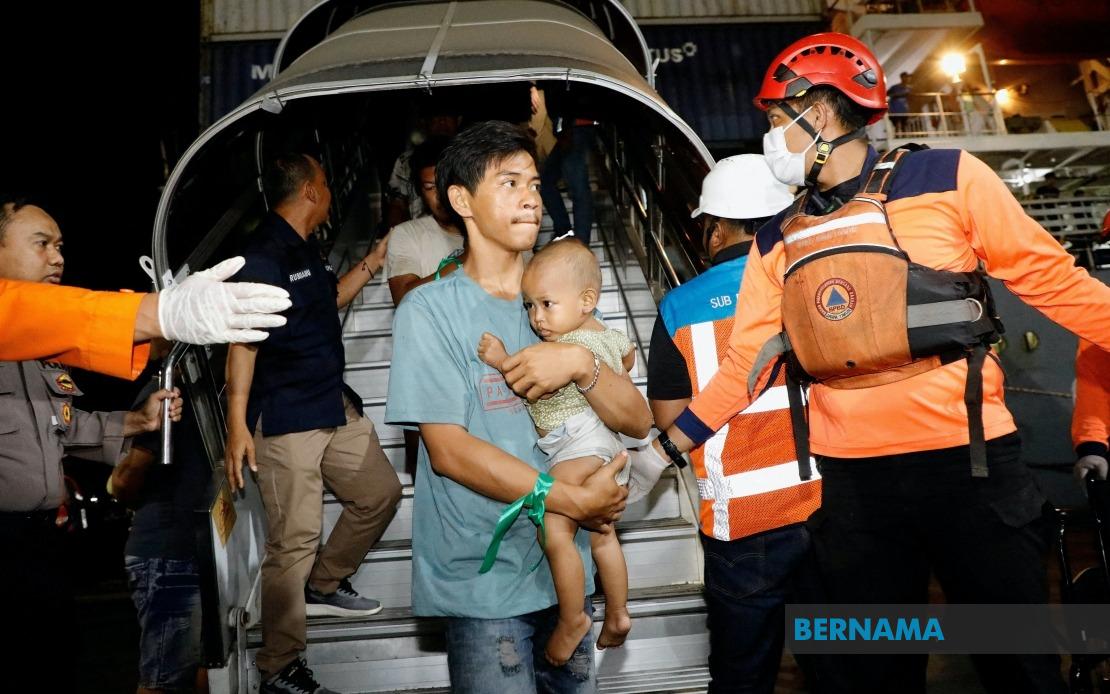
Indonesia's maritime authorities have confirmed that all 238 individuals aboard the KMP Mutiara Sentosa II ferry, which caught fire in waters off East Java during the weekend, have been fully accounted for, marking a significant milestone in the emergency response effort. The announcement prompted the National Search and Rescue Agency, known as Basarnas, to transition from an active search and rescue operation to a routine standby protocol, reflecting confidence that no additional missing persons remain.
The verification came after Indonesian maritime officials undertook a comprehensive reconciliation between passenger manifests held by the harbour authority and records maintained by the ferry operator. This cross-checking process, which took several days, provided authorities with certainty regarding the final tally of those involved in the incident. According to the findings, 233 individuals survived the ordeal while five others lost their lives, with the complete accounting allowing rescue operations to proceed with measured confidence.
Mohammad Syafii, the chief of Basarnas, detailed the revised operational approach during a press briefing held in Surabaya on Tuesday. He explained that while the intensive search phase would conclude, a reduced-scale standby operation would persist in the vicinity of the incident, ensuring rapid response capacity should any new information emerge. Critically, Basarnas established a dedicated complaints post to remain open for families who might report concerns about missing relatives, providing an additional safeguard against overlooking anyone who might have been recorded under different names or circumstances.
The rescue effort involved coordination among multiple maritime assets from both military and commercial sectors. The Indonesian Navy warship KRI Nala played a significant role in pulling survivors from the water, while tugboat Hasnur, general cargo vessels KM Meratus Pematang Siantar and KMP Mutiara Ferindo I, and support vessels KN Permadi and Selaras Mas all contributed to the evacuation. The recovery of the five deceased individuals required similar multi-vessel cooperation, with the same vessels that rescued survivors also retrieving the bodies from the water.
Preliminary investigative findings provided by Syafii offer insight into how the tragedy unfolded and how the crew's emergency procedures likely saved many lives. The investigation determined that all passengers who entered the water had been equipped with life jackets following crew instructions during the emergency evacuation. This adherence to safety protocols appeared to have prevented drowning casualties from becoming significantly higher. However, the five fatalities appear to have resulted from a different mechanism: investigators believe these individuals fell from the vessel's upper decks as the KMP Mutiara Sentosa II listed heavily during the fire, a hazard distinct from the burning itself.
The successful rescue operation underscores the importance of mandatory life jacket distribution and crew training in maritime safety procedures. For Malaysian observers and regional shipping stakeholders, the incident reinforces the critical nature of emergency drills and passenger briefings on commercial vessels operating throughout Southeast Asian waters. The fact that all survivors were found to be wearing life jackets suggests that crew members maintained composure and followed established protocols even under extreme duress, a factor that directly translated into lives preserved.
While the KMP Mutiara Sentosa II situation has now transitioned to a managed closure, Indonesian maritime authorities simultaneously confronted a separate crisis involving the cargo vessel KM Samudra Jaya Kelautan. The vessel, carrying a shipment of fish and a crew of four, departed from Air Sena in Tarempa on Saturday bound for Batam but failed to arrive as scheduled on Sunday, prompting urgent search efforts. The absence of communication from the vessel triggered concern about potential mechanical failure, weather-related distress, or other maritime hazards common to the route.
In response to the missing cargo vessel, Natuna Search and Rescue Office chief Abdul Rahman mobilized a helicopter alongside existing maritime assets to expand coverage across the search area. As of the latest reports, no physical evidence of the vessel or its crew had surfaced, driving continued intensive search operations. The Natuna office coordinated with the Tanjungpinang Search and Rescue Office to ensure comprehensive coverage while also engaging Malaysia's Maritime Rescue Coordination Centre in Putrajaya, reflecting the cross-border nature of maritime emergencies in the region.
The dual incidents occurring within days of each other highlight the persistent challenges facing maritime safety across Southeast Asia and the importance of robust regional coordination mechanisms. The KMP Mutiara Sentosa II fire and the disappearance of KM Samudra Jaya Kelautan underscore vulnerabilities in commercial shipping operations, whether from vessel fires, mechanical failures, or navigational hazards. For Malaysian shipping interests and regulatory bodies, these events serve as reminders of the critical need for enhanced safety standards, better communication systems, and coordinated search protocols that transcend national boundaries.
The successful conclusion of the ferry fire accounting process, despite tragic loss of life, demonstrates the value of meticulous documentation and systematic reconciliation procedures. However, the ongoing search for the missing cargo vessel indicates that maritime challenges remain unpredictable and demanding. Indonesian authorities' decision to maintain active search capabilities while downgrading the ferry operation reflects a pragmatic approach to resource allocation while preserving emergency response readiness. For the regional maritime community, including Malaysian operators and authorities, these incidents provide important data points for reassessing protocols and reinforcing the imperative for international cooperation in safeguarding lives at sea.

