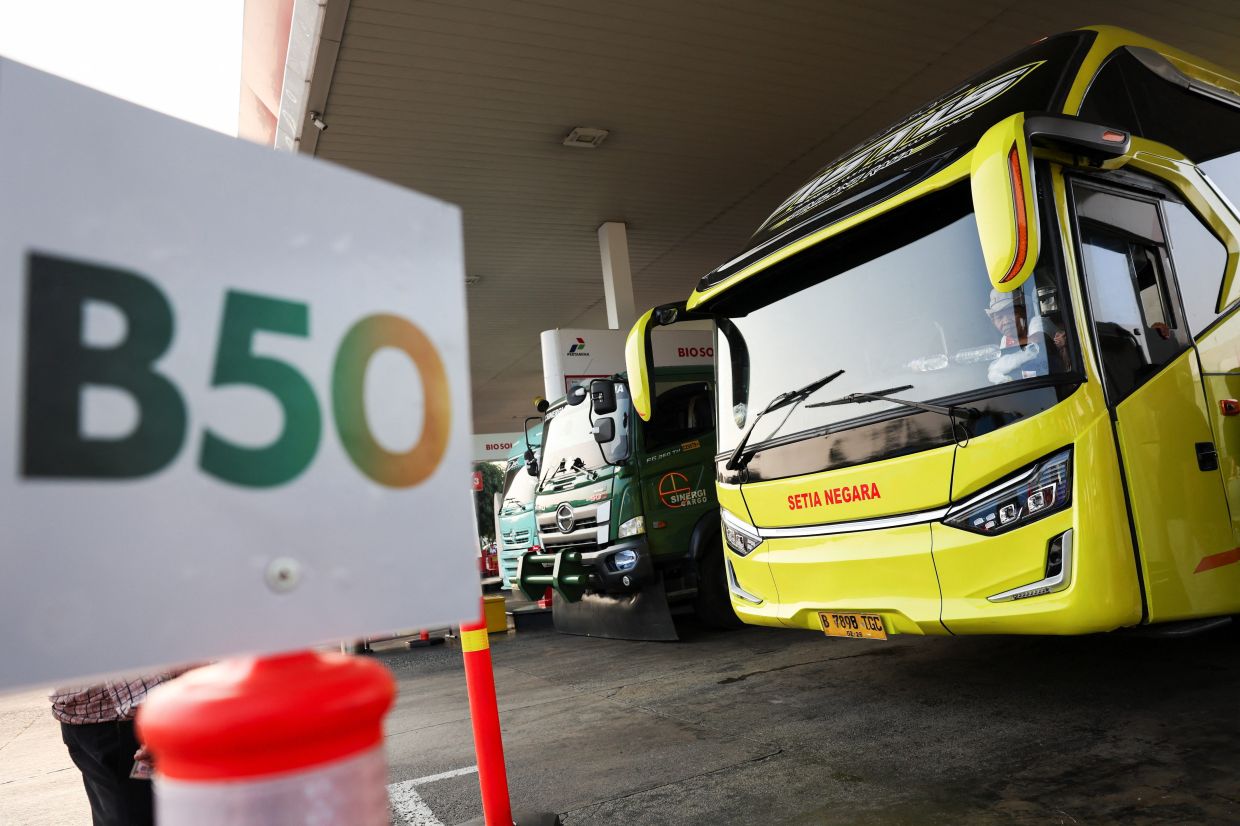
Indonesia has formally launched its B50 biodiesel programme, a significant escalation of the country's strategy to leverage its vast palm oil reserves while reducing dependence on imported diesel fuel. Energy Minister Bahlil Lahadalia unveiled the initiative at a ceremony in Karawang, West Java, with President Prabowo Subianto in attendance, signalling the government's commitment to this energy transition pathway. The programme mandates that biodiesel fuel blends incorporate 50 per cent palm oil content, up from the previous 40 per cent requirement under the B40 scheme, representing a notable intensification of Indonesia's biodiesel ambitions in Southeast Asia's largest economy.
The shift to B50 will fundamentally reshape Indonesia's crude palm oil market dynamics. The energy ministry projects that crude palm oil consumption will rise to between 16.3 million and 17 million metric tons annually, an increase from the current 15.2 million tons under the B40 framework. This expansion positions the biodiesel sector as a major consumer of Indonesia's most valuable agricultural commodity, creating substantial opportunities for the domestic palm oil industry whilst simultaneously addressing energy security concerns. The additional allocation represents roughly 1-1.8 million metric tons of increased palm oil demand, a volume that could absorb surplus production capacity and support grower incomes throughout the archipelago.
President Prabowo has positioned Indonesia at the forefront of global climate action through this initiative, framing the B50 programme as evidence of the nation's leadership in reducing carbon emissions. However, Prabowo revealed that his original vision extended even further—he had advocated internally for a B100 mandate that would utilise 100 per cent palm oil-based biodiesel. Senior ministers counselled against such an aggressive approach, advising that the 50 per cent blend would suffice to eliminate diesel imports whilst remaining technically and economically feasible. Prabowo's comments suggest the government is viewing B50 as a transitional step rather than an endpoint, with officials already discussing the viability of advancing to a 60 per cent blend in future years, indicating a long-term trajectory toward ever-higher palm oil integration in Indonesia's fuel supply.
The financial implications for Indonesia's national budget are substantial. Government data indicates that the B50 transition will reduce this year's import bill by approximately 170 trillion rupiah, equivalent to roughly $9.41 billion USD at current exchange rates. This represents a meaningful improvement over the 133 trillion rupiah in savings projected for 2025 under the previous B40 mandate, demonstrating how each incremental increase in the biodiesel blend proportion yields substantial foreign exchange preservation. For a nation facing persistent external account pressures and currency volatility, such savings carry strategic importance beyond mere budgetary relief, contributing to macroeconomic stability and reducing vulnerability to global fuel price volatility.
The ministry's resource allocation framework shows careful expansion of the biodiesel sector's infrastructure. Under the B40 programme, Indonesia allocated 15.64 million kilolitres of biodiesel this year, representing a 4.68 per cent increase from the previous year's consumption of 14.94 million kilolitres. The transition to B50 will require substantially larger volumes of fatty acid methyl ester (FAME)—the technical term for biodiesel—with ministry officials projecting requirements of between 16.7 million and 18 million kilolitres annually. This broader quota range indicates some uncertainty about precise demand calibration, suggesting the government is building flexibility into the system to accommodate unforeseen consumption patterns or production challenges.
The implementation timeline reveals a deliberate, phased approach to avoiding market disruption. Businesses have been granted until the end of September to exhaust their remaining B40 stocks before transitioning fully to B50 specifications. This grace period allows the fuel distribution chain—refineries, depots, retailers, and vehicle operators—time to adjust inventory management systems, update equipment specifications where necessary, and train personnel on handling the higher-concentration biodiesel blend. The staggered transition acknowledges that immediate mandatory compliance across the entire fuel supply chain could create operational bottlenecks and supply shortages that would undermine the programme's economic objectives.
However, significant regulatory gaps remain unresolved despite the programme's formal launch. The energy ministry has yet to issue formal additional quotas for producers and importers under the B50 framework, leaving the industry in a state of uncertainty about exact allocation responsibilities. This administrative lag creates potential implementation challenges, as businesses require clear guidance on biodiesel procurement commitments, supply chain obligations, and financial planning for the expanded blending requirements. The absence of finalised quota allocation data as of the launch ceremony suggests the government is still calibrating the precise volumes required across different fuel producers and distribution networks.
The B50 programme carries significant implications for regional and global palm oil markets. As the world's largest palm oil producer, Indonesia's increased domestic consumption through mandatory biodiesel blending affects supply availability for export markets, particularly in India, China, and the European Union. Higher domestic biodiesel demand could provide a stabilising floor for palm oil prices whilst simultaneously reducing the environmental pressure associated with expansion of plantation acreage. Conversely, rising biodiesel mandates may attract renewed environmental scrutiny regarding land-use change impacts and carbon footprint calculations—critics argue that counting palm oil-based biodiesel as low-carbon fuel obscures upstream emissions from peatland conversion and deforestation associated with plantation expansion.
For Malaysia and other Southeast Asian economies, Indonesia's B50 ambitions represent both competitive challenge and strategic lesson. Malaysia, the region's second-largest palm oil producer, has implemented more conservative biodiesel blending mandates, and Indonesia's aggressive approach may eventually pressure Malaysian policymakers to accelerate their own biodiesel programmes to support domestic palm oil industries. The regional competition for palm oil-based energy demand creates a dynamic where successive increases in blending percentages across neighbouring countries could substantially reshape global palm oil trade flows and pricing structures.
The B50 programme also reflects Indonesia's broader energy diversification strategy beyond fossil fuels. Whilst the initiative appears counterintuitive—increasing agricultural commodity use in fuel rather than transitioning toward renewable electricity—the government frames biodiesel as a carbon-neutral or low-carbon fuel that addresses climate commitments whilst supporting rural economies dependent on palm oil cultivation. This approach prioritises economic development and foreign exchange conservation alongside environmental objectives, reflecting Indonesia's pragmatic assessment of the transition pathways available to a developing economy with substantial fossil fuel import burdens.
Looking forward, the success of B50 will depend on the ministry's ability to execute the remaining administrative components efficiently. The government must clarify quota allocation mechanisms, establish monitoring systems to verify compliance, ensure product quality standards are maintained, and address any technical challenges that emerge in fuel distribution networks. Equally important will be managing the political economy of the programme—sustaining support from biodiesel producers, petroleum retailers, vehicle manufacturers, and agricultural interests across different regions and supply chain segments. The Prabowo administration's evident commitment to biodiesel expansion suggests the political will exists, but translating that commitment into seamless implementation across Indonesia's complex, decentralised fuel sector will test the government's institutional capacity and coordination abilities throughout 2024 and beyond.

