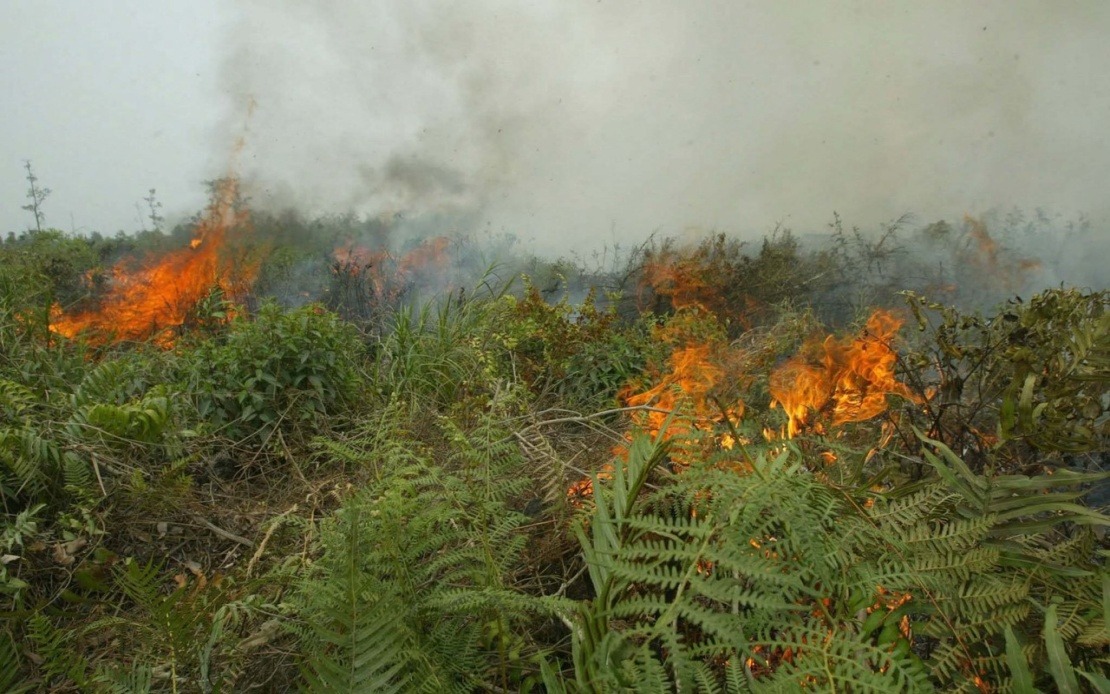
Indonesia is confronting an intensifying environmental crisis as forest and land fires spread across major regions, with West Kalimantan emerging as a critical flashpoint. The situation has deteriorated sharply, with hotspots in the province nearly doubling to 7,377 as of late August, according to officials from the National Disaster Mitigation Agency (BNPB). The agency reported that in a single day, West Kalimantan saw hotspots surge by 3,553, while fire spots climbed to 104 and visibility plummeted below one kilometre, creating hazardous conditions for residents and hampering emergency response efforts.
The fire crisis is not uniformly distributed across Indonesia's forest belt. Central Kalimantan presents a contradictory picture, with hotspot numbers declining by 147 to 5,244, yet active fire spots paradoxically increased by 16 to reach 72. This pattern suggests that while some fire sources may be diminishing, those that remain active are more intense or difficult to extinguish. South Kalimantan showed more encouraging trends, with hotspots falling by 405 to 504, though fire spots still rose by 33 to reach 55. In Sumatra, the eastern region of South Sumatra registered troubling growth, adding 209 hotspots to reach 1,013 in total, whilst Riau and Jambi provinces experienced relative improvement across their fire metrics.
The human toll of this environmental emergency extends far beyond environmental statistics. Approximately 5.5 million people residing across affected zones in Sumatra and Kalimantan face direct exposure to smoke and haze. Deputy Health Minister Prof Dante Saksono Harbuwono revealed that acute respiratory infection cases have mounted significantly, with 13,500 cumulative cases documented through July and August alone. As of late August, 4,082 individuals remained actively suffering from respiratory complications attributed to the smoke exposure. Notably, the health minister emphasised that the respiratory burden from this year's fire season already exceeds the damage observed in the preceding year, signalling an accelerating public health emergency that requires immediate intervention.
The government has initiated enforcement action against industrial actors, recognising that many fires occur within commercial concession areas. The Environment Ministry has identified 42 companies operating in forest zones where fire activity has been detected within their licensed territories. Environmental Law Enforcement Deputy Rizal Irawan explained the methodology behind these designations, revealing that satellite hotspot data was systematically overlaid with concession maps to identify potential violators. Of the flagged companies, nineteen are currently undergoing field verification to assess their culpability, whilst the remainder are scheduled for inspection in subsequent phases.
Legal accountability mechanisms form a central pillar of Indonesia's enforcement strategy. Under the principle of strict liability, companies operating in concession areas bear responsibility for fires occurring within their boundaries regardless of whether the fires were deliberately set or originated accidentally. This framework means organisations face potential exposure to either administrative penalties or civil sanctions, creating powerful incentives for robust fire prevention. However, the effectiveness of this approach depends heavily on consistent enforcement and adequate investigation resources, both of which remain constrained challenges within Indonesian bureaucracy.
Indonesia has prioritised community-based prevention initiatives as a complementary strategy to industrial accountability. The government has established 95 Fire Care Community groups, known locally as Masyarakat Peduli Api or MPA, comprising approximately 1,425 trained personnel distributed across six fire-prone provinces spanning both Sumatra and Kalimantan. These grassroots organisations are designed to detect early warning signs and mobilise rapid response mechanisms before fires escalate beyond control. The government has targeted an additional 35 such groups for establishment during the current year, aiming to expand the safety net across vulnerable regions.
Corporate compliance frameworks have also been expanded. Last year, notices were dispatched to 2,226 companies requiring them to develop personnel capabilities and secure necessary equipment for forest and land fire prevention and response. Current compliance reporting indicates that approximately 80 per cent have submitted confirmation of readiness, whilst approximately one-fifth remain non-responsive. This substantial compliance rate, whilst encouraging, suggests that more than 400 companies have yet to satisfy basic preparedness requirements, representing potential governance gaps.
Regional coordination has become increasingly vital given the transboundary nature of haze pollution. Indonesia has been actively engaging neighbouring countries through established ASEAN mechanisms to address the spread of haze across borders. A significant ministerial-level meeting convened in Bali last month brought together environment officials from Indonesia, Malaysia, and Singapore to synchronise responses. This diplomatic engagement reflects recognition that unilateral efforts prove insufficient when smoke crosses international boundaries, affecting millions beyond Indonesia's territorial limits. For Malaysian readers, this regional dimension carries particular relevance, as Malaysian states bordering Indonesia have historically experienced severe haze impact during peak fire seasons.
The timing of this crisis carries geopolitical implications for Southeast Asia. Coordinated responses through ASEAN underscore the region's commitment to collective environmental stewardship, yet also expose the limitations of voluntary cooperation when economic interests diverge. The involvement of Singapore and Malaysia in joint discussions signals broader regional concern about ecosystem resilience and air quality standards that transcend national boundaries. For Malaysia specifically, the success or failure of Indonesian fire suppression efforts directly influences air quality readings in Klang Valley, Sarawak, and other border regions.
The escalating nature of this year's fire season, compared unfavourably with preceding years according to health officials, suggests that current prevention and response mechanisms may be insufficient. Despite institutional frameworks, corporate accountability provisions, and community engagement programmes, the trajectory indicates that underlying drivers—whether linked to agricultural practices, industrial expansion, or climate factors—remain inadequately addressed. The near-doubling of hotspots in West Kalimantan within a single reporting period demonstrates how quickly the situation can deteriorate, potentially overwhelming response capacity.
Looking forward, Indonesian authorities face mounting pressure to demonstrate that enforcement actions against flagged companies yield tangible reduction in fire incidents. The credibility of strict liability frameworks depends on visible prosecutions and meaningful sanctions, not merely warnings and notices. Furthermore, the scaling of Fire Care Community groups and corporate compliance verification must accelerate to maintain pace with expanding fire risks. For regional observers including Malaysia, the effectiveness of Indonesian response mechanisms will significantly influence transboundary haze exposure and environmental conditions across Southeast Asia during the approaching dry season months.

