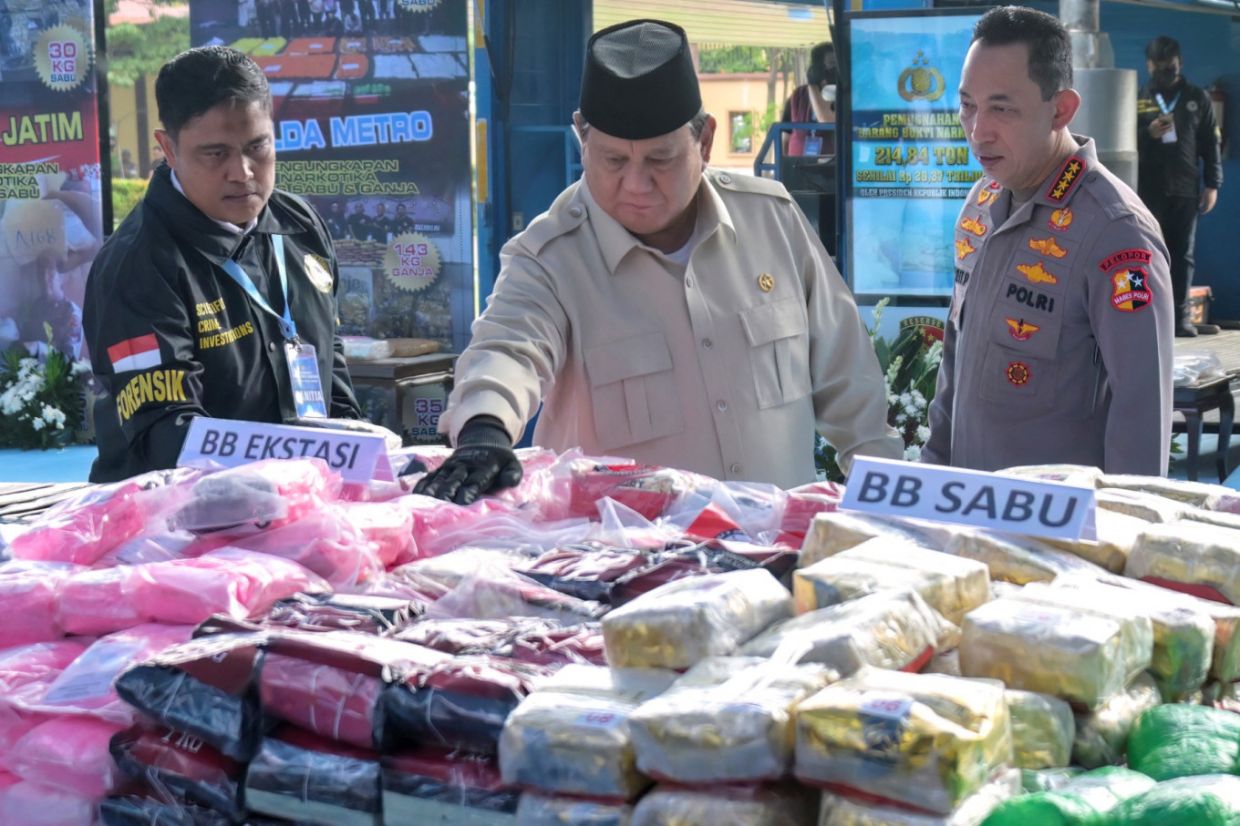
Indonesia has dismantled another major drug trafficking operation in its territorial waters, confiscating 2.6 tonnes of liquid methamphetamine from a commercial vessel operating under a false identity near Bengkalis in Riau province. The National Narcotics Agency announced the seizure on Tuesday, August 18, describing the intercept as among the country's most significant narcotics operations in recent times. The success reflects the intensification of maritime enforcement efforts across Indonesia's waters, a critical chokepoint for drug shipments transiting Southeast Asia.
The vessel, officially registered under a Tanzanian flag but operating under an assumed name, became the subject of intelligence surveillance after authorities received credible information that a ship departing Sarawak, Malaysia and traversing the Andaman Sea was likely transporting illegal narcotics destined for Indonesian markets. This intelligence-led approach has become central to Indonesia's counter-narcotics strategy, allowing the agency to intercept trafficking operations before they can establish distribution networks within the country. Joint coordination between the National Narcotics Agency and customs officials enabled personnel to conduct the interception late Monday near the port town of Bengkalis.
The vessel identification as MV Rain Maker proved crucial in tracking the shipment's journey across regional waters. Upon inspection, enforcement teams discovered the methamphetamine meticulously concealed within eight water barrels and a central water tank, a common smuggling technique designed to evade cursory inspections. Roy Hardi Siahaan, a senior official with the National Narcotics Agency, detailed the findings in an official statement, emphasizing the scale and sophistication of the operation. The liquid form of the drug represents a particularly concerning variant, as it can be more easily transported and subsequently crystallized for distribution through clandestine manufacturing facilities.
Beyond the primary narcotics seizure, authorities also recovered more than 1.5 million illegal cigarettes stashed aboard the vessel, suggesting the trafficking network operated across multiple contraband categories. The presence of cigarette smuggling alongside methamphetamine trafficking indicates a sophisticated criminal enterprise leveraging maritime routes to distribute forbidden goods across the region. Such multi-commodity operations reflect the adaptability and financial capacity of transnational criminal syndicates operating throughout Southeast Asia.
Ten crew members, all identified as Myanmar nationals, were taken into custody following the interception. The arrests underscore the regional nature of these trafficking networks, with personnel recruited from Myanmar frequently serving as operational staff on commercial vessels. The employment of foreign nationals reduces the logistical burden on primary trafficking organizations and provides a degree of insulation from domestic enforcement within their home country. Investigators will likely pursue interrogation to establish links to upstream manufacturing facilities and downstream distribution networks in Indonesia and potentially other regional markets.
This interception represents the second successful operation against a Tanzanian-flagged vessel in the Riau Islands region within a single month, suggesting either a pattern of deliberate use of Tanzanian registry for trafficking purposes or concentrated criminal activity in strategically significant waters. Earlier in August on the eighth, Indonesian authorities seized 1.3 tonnes of ketamine from another vessel operating in waters surrounding the Riau Islands near Singapore. That operation resulted in eight arrests comprising seven Myanmar nationals and one individual from Taiwan, demonstrating the multinational composition of crew members facilitating drug trafficking throughout the region.
The recurrence of major seizures within a short timeframe indicates both the volume of narcotic shipments attempting to transit Indonesian waters and the growing effectiveness of enforcement coordination. The Riau Islands and surrounding waters represent a critical transit zone due to proximity to Singapore, Malaysia, and Thailand, making the region inherently attractive to trafficking organizations routing products toward consumption markets and redistribution hubs throughout Southeast Asia. The strategic location creates persistent enforcement challenges, requiring sustained naval and coast guard presence alongside customs coordination.
Indonesia maintains some of the world's strictest anti-drug legislation, with capital punishment available as a sentence for major traffickers. However, the country has implemented a de facto moratorium on executions for several years, reflecting evolving international pressure and domestic legal considerations. Despite this restraint, sentences for major drug trafficking operations typically result in substantial imprisonment terms, providing significant deterrent value. The consistent application of severe penalties, when combined with maritime enforcement operations, creates multiple layers of risk for transnational trafficking organizations operating throughout the region.
Last year, Indonesian authorities announced what was then characterized as the nation's largest-ever drug seizure when they recovered two tonnes of crystal methamphetamine concealed aboard a fishing vessel traveling from the Andaman Sea toward Batam Island. The comparison between last year's crystal meth haul and the current liquid methamphetamine seizure illustrates both the scale of trafficking operations and the diversification of smuggling methods. The progression from crystal to liquid forms suggests traffickers are experimenting with alternative chemical compositions to exploit detection gaps in existing enforcement protocols.
These operations highlight the persistent challenge confronting Southeast Asian governments attempting to constrain narcotics trafficking across porous maritime borders and through understaffed enforcement agencies. While individual seizures generate significant headlines, law enforcement agencies estimate that a substantial proportion of drug shipments successfully transit regional waters undetected. The financial incentives driving these operations remain extraordinarily high, with methamphetamine production capacity in clandestine laboratories across Myanmar and other regional locations far exceeding enforcement capacity to interdict supplies.

