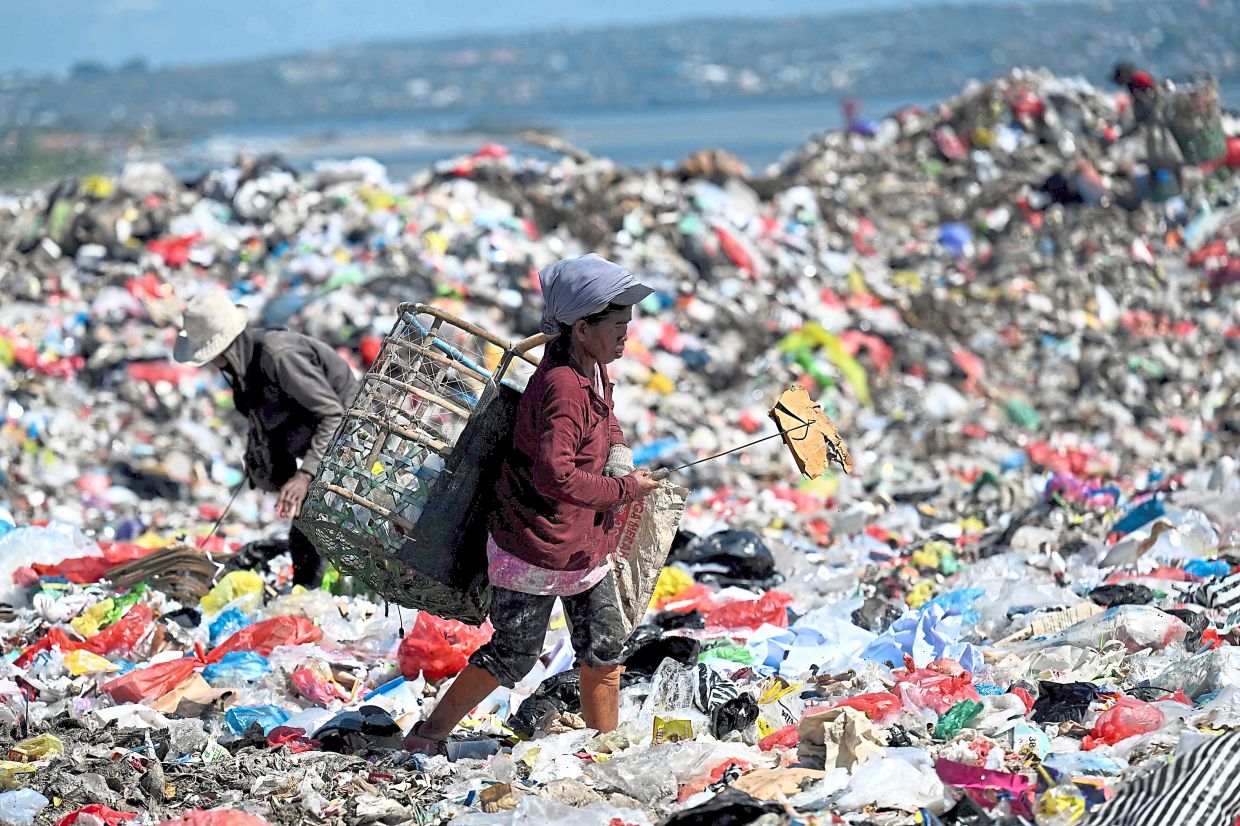
Indonesia has taken a significant step towards addressing one of Southeast Asia's most pressing environmental challenges by inaugurating its inaugural waste-to-energy facility in Bali. The groundbreaking ceremony, held on Wednesday in Pedungan Village within South Denpasar, represents the commencement of a broader national initiative aimed at transforming municipal solid waste into electricity generation capacity. The project is being developed through a partnership between Danantara Investment Management, a sovereign wealth fund, and Daya Energi Bersih Nusantara, a specialised project developer, with Rosan Roeslani, chief executive officer of Danantara Indonesia, leading the ceremonial launch.
The initiative carries direct backing from the highest levels of government. President Prabowo Subianto has personally directed that waste management be treated as a pressing collective responsibility requiring urgent action to prevent environmental and social burdens from cascading into future decades. This presidential endorsement signals a commitment to transitioning Indonesia's waste handling infrastructure away from traditional landfill-dependent models towards more sophisticated technological solutions. The framing of waste management as a shared national challenge reflects growing recognition within Indonesian policy circles that the status quo is environmentally and economically unsustainable.
The Bali facility will employ moving grate incinerator technology, a proven waste conversion method that has been extensively implemented across waste-to-energy installations globally. This technological choice is particularly significant because the system is explicitly designed to meet compliance standards set by the European Industrial Emissions Directive, one of the world's most stringent environmental regulatory frameworks. By adopting European-standard technology rather than lower-specification alternatives, Indonesia is positioning itself to avoid the environmental degradation that has plagued comparable developments in other developing nations.
The environmental benefits outlined in project documentation are substantial. The facility is projected to reduce greenhouse gas and particulate emissions by as much as eighty percent per tonne of waste compared to conventional open dumping practices at landfills. This reduction metric is crucial for understanding the plant's contribution to Indonesia's climate commitments and air quality improvement objectives, particularly in Bali, where tourism and agriculture depend heavily on environmental quality. The comparison baseline—open dumping—remains the predominant waste disposal method across much of Indonesia, making the improvement potential genuinely transformative at scale.
Economic development dimensions extend beyond environmental remediation. The construction and operational phases of the Bali facility are anticipated to generate approximately twelve hundred green employment opportunities. These positions will span skilled trades, engineering, plant operations, and maintenance functions, providing pathways for workforce development in renewable energy and advanced waste management sectors. For Bali, where economic activity has traditionally concentrated in tourism and agriculture, this diversification into environmental technology represents a structural economic shift.
A critical component ensuring project viability emerged during the groundbreaking ceremony when state electricity utility PLN and the project company executed a Power Purchase Agreement. This contractual arrangement obligates PLN to purchase electricity generated by the facility over a defined long-term period, providing the commercial certainty necessary for investors and developers to justify capital expenditure. Without such guaranteed offtake agreements, waste-to-energy projects in developing markets frequently struggle to attract financing, making this PLN commitment instrumental to project realisation.
The scale of Indonesia's waste challenge provides essential context for understanding why this single facility, while symbolically important, represents only an initial step in addressing systemic problems. The nation generates more than one hundred forty thousand tonnes of municipal waste daily, a volume that reflects rapid urbanisation, population growth, and rising consumption patterns across the archipelago. This daily generation figure translates to over fifty million tonnes annually, a volume that existing landfill infrastructure is increasingly unable to accommodate sustainably. Landfills across Java and Bali are approaching capacity, creating urgent pressure for alternative disposal and recovery methods.
For Malaysian readers and Southeast Asian policymakers, the Bali project offers instructive lessons regarding waste management infrastructure development. Malaysia generates approximately forty-five thousand tonnes of waste daily and similarly relies heavily on landfill disposal, making Indonesia's technological adoption potentially relevant for future Malaysian waste infrastructure planning. The moving grate incinerator technology, coupled with stringent environmental standards and government-backed offtake agreements, represents a replicable model that Southeast Asian nations might consider as landfill capacity constraints intensify across the region.
The initiative also reflects broader regional trends towards circular economy principles and renewable energy expansion. By converting waste into electricity, the facility addresses dual policy objectives simultaneously: waste management and clean energy generation. This integrated approach aligns with regional climate commitments and sustainable development goals that increasingly frame waste as a resource rather than merely a disposal problem. The Bali project demonstrates how environmental challenges can be reframed as economic opportunities when coupled with appropriate technology and institutional structures.
Governance standards and international compliance emerge as distinguishing features of this project. Rather than adopting minimal regulatory compliance approaches common in developing country infrastructure, the facility is designed to meet advanced emissions standards and operational governance protocols. This choice reflects either confidence in technology standardisation or a deliberate decision to establish precedent for future waste-to-energy developments across Indonesia. The symbolic and practical significance of establishing high standards in the initial project cannot be overstated, as subsequent facilities will likely benchmark against Bali's specifications.
The timing of this initiative coincides with growing international attention to waste management in Southeast Asia, particularly regarding plastic waste and landfill methane emissions. Indonesia's waste-to-energy programme positioning it as a technological innovator within a region still heavily dependent on traditional waste management approaches. This positioning carries implications for Indonesia's international environmental credibility and potential for technology exports to other developing nations facing similar waste challenges.
Looking forward, the success or challenges encountered during the Bali facility's construction and initial operations will substantially influence whether Indonesia can scale this model to additional sites across the archipelago. Multiple waste-to-energy plants would be required to meaningfully alter the national waste management profile, yet such scaling depends on demonstrated technical performance, financial viability, and community acceptance. The Bali project therefore functions simultaneously as an environmental solution, economic development initiative, and operational test case for a technology that Indonesia hopes will become central to its waste management future.

