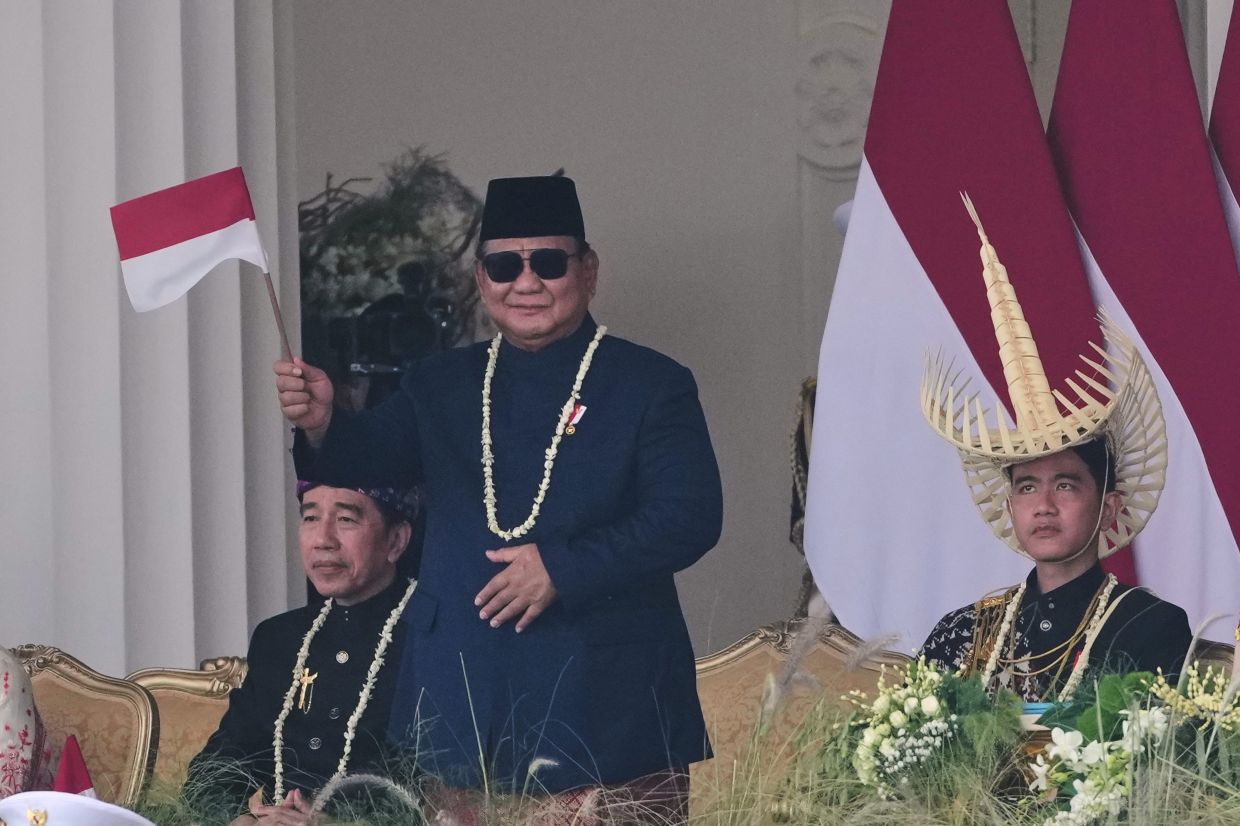
Indonesia marked its 81st year of independence on Monday with a formal ceremony in Jakarta, yet the festive occasion was inevitably shadowed by the humanitarian crisis unfolding thousands of kilometres away on Flores Island in East Nusa Tenggara. President Prabowo Subianto, adorned in traditional ceremonial dress—a navy beskap paired with a black peci and jasmine garland—presided over the flag-hoisting ceremony at Merdeka Palace in the nation's capital, though the event carried a noticeably more solemn tenor than typical Independence Day celebrations.
The early-morning earthquake that struck Flores on Saturday with a magnitude of 7.7 has left a trail of destruction that continues to test Indonesia's disaster response capabilities. The initial tremor killed 53 people and left more than 130 injured, many with serious fractures and internal injuries. The seismic activity has been relentless, with nearly 1,000 aftershocks recorded in the days following the main quake, ranging from minor tremors to significant secondary shocks that have hampered rescue efforts and deterred people from returning to their homes. On Monday morning alone, as Indonesians were observing their independence milestone, another earthquake measuring 5.8 magnitude struck offshore, approximately 39 kilometres north of East Nusa Tenggara at a depth of 10 kilometres, serving as a grim reminder of the region's vulnerability to seismic activity.
The displacement of residents has compounded the humanitarian toll. Approximately 5,400 people have abandoned their homes, either seeking shelter in safer locations or remaining in temporary accommodation provided by local authorities and non-governmental organisations. The destruction extends beyond human casualties—hundreds of houses and buildings sustained damage, ranging from minor structural cracks to complete collapse. In a region where infrastructure is often limited and resources scattered across challenging terrain, such widespread destruction creates cascading problems: compromised water supplies, disrupted power grids, limited medical facilities, and contaminated environments that invite disease.
Rather than undertake a symbolic presidential visit to the affected region, the government opted to deploy key ministerial figures to coordinate the disaster response operations on the ground. State Secretary Prasetyo Hadi announced that coordinating human development minister Pratikno, Home Minister Tito Karnavian, Public Works Minister Dody Hanggodo, and Deputy Health Minister Benjamin Paulus Octavianus were all absent from the Independence Day ceremony in Jakarta, having travelled to East Nusa Tenggara to oversee relief distribution, shelter provision, and medical coordination. This distribution of responsibility reflected the scale of the emergency and the practical recognition that Jakarta-based coordination alone would prove insufficient.
The ceremonial proceedings in the capital proceeded with customary pageantry, beginning with cultural performances and a parade that transported a gilded carriage bearing a replica of Indonesia's red-and-white flag and an original copy of the Proclamation text from the National Monument to Merdeka Palace. The procession, guarded by 114 cavalry troops and 45 military police officers, maintained the dignity and formality that national independence celebrations demand. Yet President Prabowo consciously incorporated acknowledgement of the national tragedy into the formal program, leading attendees in a moment of silence to honour the contributions of Indonesia's national heroes while explicitly asking participants to pray for those affected by the ongoing disaster.
For Malaysian observers and regional analysts, the juxtaposition of independence celebrations with active disaster response underscores the recurring vulnerability that affects much of Southeast Asia's earthquake-prone regions. Flores lies along the Pacific Ring of Fire, where the meeting of tectonic plates generates significant seismic activity. The frequency and magnitude of earthquakes in East Nusa Tenggara demand sustained investment in early-warning systems, building code enforcement, and community preparedness programmes—challenges that competing development priorities often sideline in policy discussions.
The government's response strategy reveals both the institutional mechanisms available to Indonesia's leadership and the constraints they face. Rather than concentrate decision-making authority in the presidential office, the distribution of ministerial responsibilities allowed for parallel operations: senior figures could address immediate humanitarian needs while the ceremonial apparatus of state continued uninterrupted in the capital. Prasetyo Hadi's careful language regarding potential presidential travel—stating that "no decisions have been made" and that the government would "look at the situation"—suggests sensitivity to optics; a presidential visit, if poorly timed or inadequately prepared, risks consuming resources and attention that frontline relief operations require.
The timing of the earthquake created additional complications for crisis management. The tremor struck early Saturday morning, leaving the weekend window for initial response efforts before government machinery fully mobilised on Monday. By the time Independence Day ceremonies commenced, the immediate rescue phase had largely concluded, with attention shifting toward medium-term relief, housing, and psychological support. The persistence of aftershocks, however, prevented any sense of normalcy from returning and continuously raised anxiety levels among survivors already traumatised by the initial event.
For Indonesia's relationship with disaster preparedness and regional cooperation, the Flores earthquake represents both a recurring pattern and an opportunity for renewed focus. Southeast Asia shares similar geological and climatic vulnerabilities; the region experiences frequent earthquakes, volcanic eruptions, floods, and typhoons. Malaysia, while less seismically active than Indonesia's archipelago, maintains genuine interest in Indonesia's disaster response performance, as ineffective management can create regional displacement pressures and humanitarian crises that affect neighbouring countries. The ASEAN Secretariat and bilateral mechanisms provide frameworks for emergency cooperation, yet implementation remains inconsistent and often inadequate.
The Indonesian government's capacity to simultaneously conduct high-level state ceremonies while mobilising disaster response demonstrates institutional compartmentalisation, though observers might question whether adequate priority and resources genuinely flow toward the affected communities. The fact that multiple cabinet ministers were deployed to the disaster zone signals serious intent, yet questions remain regarding the adequacy of funding, the coordination between military and civilian relief agencies, and the long-term reconstruction planning that will extend well beyond the initial emergency phase.
President Prabowo's leadership during this moment of dual national significance—celebrating independence while confronting human tragedy—will likely influence perceptions of his administration's capacity to balance ceremony with substance, symbolism with action. The true test lies not in Monday's televised proceedings but in the tangible rebuilding of Flores over the coming months, and in whether the government can convert the visibility of this disaster into sustained commitment to strengthening Indonesia's resilience against future seismic events.

