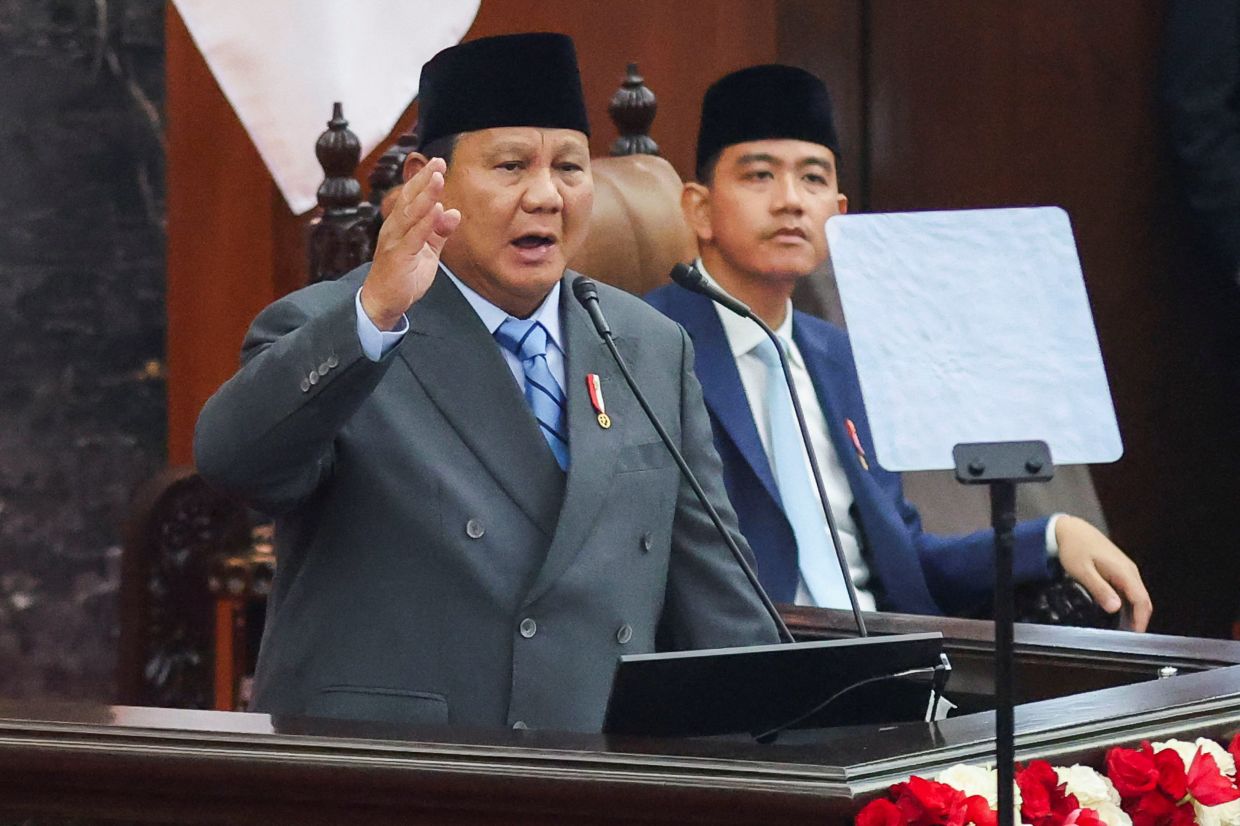
Indonesia is embarking on one of the world's most sweeping corporate restructuring campaigns, with President Prabowo committing to shut down more than 750 state-owned enterprises before the year closes. In his parliamentary address on Friday, the president revealed that the true scope of Indonesia's state sector far exceeds previous estimates, presenting both an opportunity and a challenge for Southeast Asia's largest economy as it grapples with inefficiency, financial opacity, and allegations of systemic malfeasance within state institutions.
The announcement underscores a stark reality that has emerged only recently: when Indonesia established its Danantara sovereign wealth fund last year to oversee state assets, auditors discovered the existence of 1,074 state-owned enterprises—nearly three times the figure government officials had previously believed. Prabowo suggested this discovery revealed the chaotic state of public sector management, noting that many enterprises operated with little accountability to either the state or citizens. The finding highlights how governance gaps in Indonesia's sprawling bureaucracy have allowed redundant and unproductive entities to proliferate unchecked, consuming public resources while contributing minimal economic value.
The sheer scale of the problem becomes apparent when examining what Prabowo described as phantom profitability. Many state enterprises routinely reported inflated or fabricated gains while simultaneously bleeding money through operational inefficiencies. This pattern of misleading financial claims reflects deeper governance failures within Indonesia's public sector, where accountability mechanisms have historically proven weak despite anti-corruption legislation and investigative commissions. The president's decision to target enterprises claiming profits while incurring losses signals recognition that financial manipulation has become endemic, undermining public trust and resource allocation.
Progress toward consolidation is already underway. As of the address, 290 state enterprises have been eliminated, with the remaining 1,074 scheduled for reduction to no more than 300 by December 31. This aggressive timeline reflects the administration's determination to streamline public sector operations rapidly. Such comprehensive restructuring remains extraordinarily ambitious; few nations have attempted eliminations of this magnitude simultaneously. The consolidation strategy focuses on retaining only those entities demonstrating genuine productivity and capacity to generate economic value for citizens and communities.
The financial implications are substantial. The restructuring effort has already delivered approximately 50 trillion rupiah (over USD 2.8 billion) in cost savings, primarily through eliminating redundant administrative positions, curtailing executive compensation packages, and reducing overhead expenses including vehicle fleets, office space, and travel budgets. These cuts reveal how much public wealth was previously consumed by bureaucratic excess rather than channeled toward productive investments or service delivery. The government targets surpassing 70 trillion rupiah in annual savings throughout 2025, demonstrating commitment to extracting maximum efficiency gains from the consolidation process.
Impressions of improved management are already registering in financial performance metrics. State enterprise profits surged approximately 75 percent year-on-year, reaching 326 trillion rupiah in 2024, according to presidential statements. While such dramatic improvements warrant scrutiny—particularly given historical doubts about data reliability in Indonesia's official statistics—the trajectory suggests that even preliminary restructuring yields measurable gains. Skepticism among international analysts regarding Indonesia's growth figures, which registered 5.3 percent in the second quarter, reinforces the importance of transparent reporting as consolidation proceeds.
Beyond operational efficiency, Prabowo has proposed establishing a specialized court to investigate governance and leadership practices within state enterprises spanning three decades. This investigative mechanism would expose historical patterns of mismanagement, corruption, and board malfeasance that have persisted across multiple administrations. However, the president simultaneously broached offering amnesty arrangements for individuals willing to acknowledge wrongdoing, suggesting he seeks accountability alongside reconciliation. This dual approach—combining institutional investigation with conditional forgiveness—reflects competing objectives of exposing past transgressions while maintaining political stability during transition periods.
Indonesia's anti-corruption record remains a persistent vulnerability, with the nation scoring only 34 out of 100 on Transparency International's 2025 Corruption Perceptions Index. This placement underscores systemic challenges in governance quality that extend across public and private sectors. State enterprise mismanagement represents merely one manifestation of broader corruption patterns that have frustrated reform efforts despite legislated safeguards and high-profile prosecutions. The restructuring initiative addresses symptoms while attempting to build institutional frameworks reducing future malfeasance.
Public frustration regarding governance failures intersects with economic grievances as Indonesians confront rising living costs exacerbated by elevated global oil prices tied to Middle Eastern conflicts. Corruption allegations have become catalysts for protest movements, with citizens linking administrative waste to reduced resources for essential services and social support. This political context makes the restructuring campaign particularly salient beyond technical economics; citizens increasingly demand visible evidence that government prioritizes their welfare over bureaucratic preservation.
Prabowo's signature free school meals program exemplifies this tension. While the initiative addresses childhood stunting affecting one in four Indonesian children—a major public health challenge—implementation costs have drawn criticism and scrutiny. The president pledged to continue the program but with enhanced oversight and efficiency improvements, acknowledging legitimate concerns regarding resource management. This positioning suggests recognition that ambitious social programs require transparent stewardship and measurable outcomes rather than lavish spending uncoupled from delivery standards.
Looking ahead, the administration expects economic growth reaching 6 percent by late 2026, contingent partly on efficiency gains from state enterprise consolidation. However, skeptics question whether official growth projections adequately reflect underlying economic conditions, particularly as inflationary pressures and external headwinds persist. The restructuring's success will depend substantially on whether consolidated state enterprises genuinely improve capital allocation, enhance competitive positioning, and generate employment rather than simply reducing expenditures through workforce reductions.
For Malaysia and the broader Southeast Asian region, Indonesia's restructuring experiment offers important lessons regarding state enterprise management and public sector modernization. Many ASEAN nations operate similarly sprawling networks of state companies, often facing comparable inefficiency and accountability challenges. Indonesia's experience—whether ultimately successful or problematic—will likely inform policy discussions throughout the region regarding optimal state sector scale and governance architecture, particularly as nations balance development objectives with fiscal sustainability demands.

