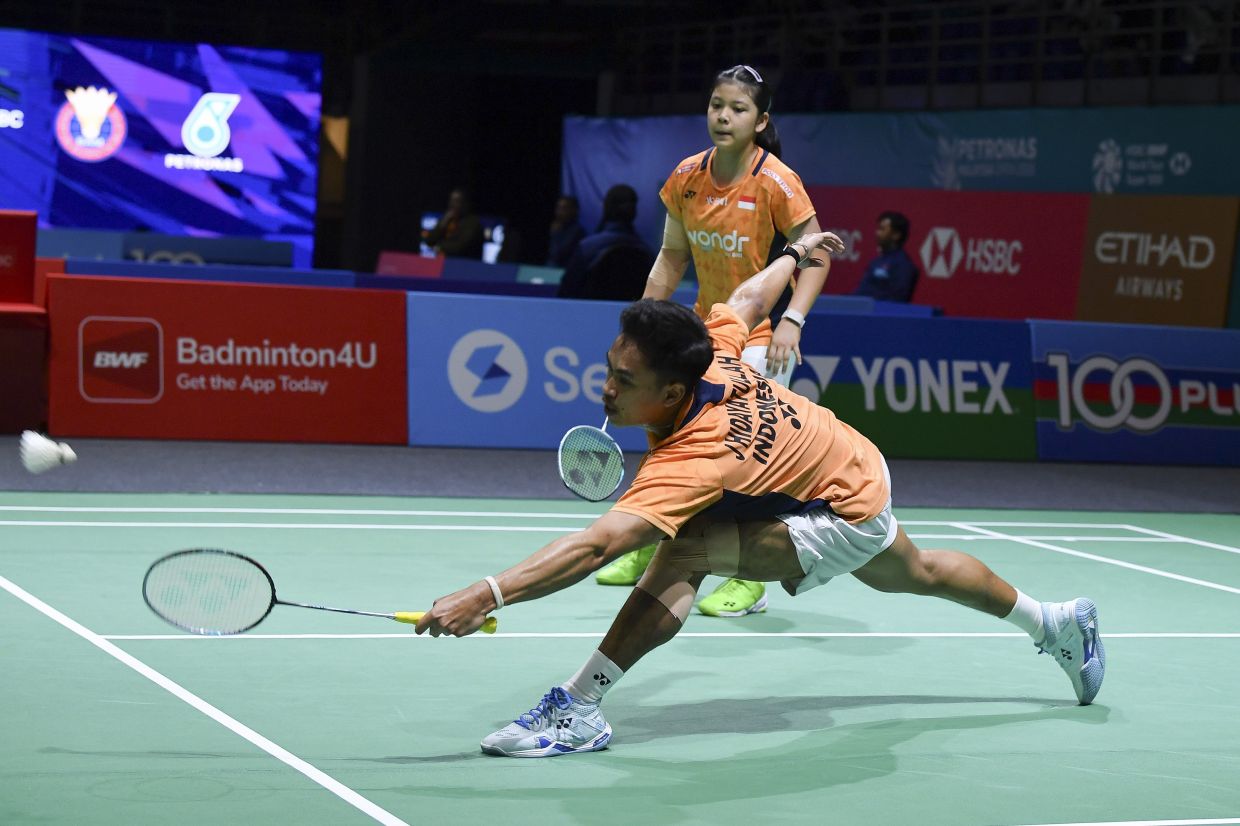
Two Indonesian mixed doubles partnerships have stepped back from competing at the World Championships, with their departures occurring against a backdrop of an integrity investigation that threatens to cast a shadow over the nation's badminton programme. The withdrawal of Jafar Hidayatullah-Felisha Pasaribu, currently ranked 13th globally, and Adnan Maulana-Indah Cahya Sari Jamil from the tournament has sparked considerable speculation within badminton circles, particularly given the timing of their exits and the coinciding scrutiny from international authorities.
The Indonesian Badminton Association announced the squad adjustments through secretary-general Ricky Soebagdja, framing the decision as part of routine modifications to the nation's competition roster. However, the statement's carefully measured language and the absence of explicit justifications have done little to quell growing concerns about the underlying circumstances. While PBSI deliberately avoided confirming any direct link between the withdrawals and the ongoing investigation, the convergence of these events has fuelled widespread conjecture within the sport and among observers tracking governance issues in Indonesian athletics.
The Badminton World Federation is currently conducting independent judicial proceedings into alleged breaches of competition integrity involving a number of Indonesian players, according to the official statement released by the association. The use of technical terminology and references to formal processes underscores the seriousness with which the international governing body is treating these allegations. Such investigations typically involve allegations ranging from match-fixing to spot-fixing, collusion between players, or other conduct that compromises the fairness and credibility of competition.
Indonesia's badminton establishment has adopted a measured stance toward the unfolding situation, with PBSI publicly expressing respect for the BWF's investigative mechanisms while maintaining steadfast neutrality regarding the specific allegations. The association emphasized that its decision to withdraw the two pairs was driven by a commitment to ensuring compliance with applicable international regulations and administrative procedures governing athlete participation. This approach reflects an attempt to position the national body as cooperative with oversight processes rather than obstructive, though it simultaneously raises questions about whether administrative compliance can fully explain the timing and scope of the withdrawals.
The sequential nature of the withdrawals suggests a pattern of escalating concern within the leadership ranks. Adnan-Indah Cahya Sari Jamil stepped away from the championships on July 13, with Jafar-Felisha following approximately two weeks later on July 29. This staggered approach may indicate that additional information emerged during the investigation that prompted the second decision, or alternatively that PBSI took a measured approach to managing the reputational damage by spacing out the announcements rather than making simultaneous declarations that might have amplified the negative publicity.
From a Southeast Asian perspective, this episode carries broader implications for the region's sporting governance and reputational standing. Indonesia remains a badminton powerhouse, with a tradition of producing world-class competitors and a domestic culture deeply invested in the sport. Any suggestion of systemic integrity issues threatens not only the nation's immediate competitive performance but also the credibility of badminton as practised across the region. Malaysia, Thailand, and other regional badminton nations have vested interests in ensuring that the sport maintains transparent, fair, and corruption-free competitive standards.
The appointment of an independent hearing panel by the BWF signals that the investigation has progressed beyond preliminary fact-gathering stages. Such formal structures are typically invoked when there is sufficient evidence to warrant formal adjudication, and the independence of the panel is critical to ensuring that any findings carry international legitimacy. For Indonesia, the challenge lies in demonstrating that the nation's own regulatory systems can work constructively with international oversight without being perceived as either complicit in misconduct or defensive about legitimate inquiries.
Despite the withdrawals, Indonesia will maintain a visible presence in the mixed doubles competition through alternative pairings. Amri Syahnawi-Nita Violina Marwah will lead Indonesia's mixed doubles contingent, while Rehan Kusharjanto-Gloria Widjaja have been elevated from the reserve list to fill one of the vacated slots. This continuity ensures that Indonesia's withdrawal does not completely undermine its World Championships campaign, though the loss of ranked pairings does represent a competitive sacrifice and a visible acknowledgement of the integrity concerns.
The decision by PBSI to request all parties refrain from public speculation until the independent hearing panel reaches its conclusions represents a standard practice in integrity investigations, yet it also creates an information vacuum that speculation naturally rushes to fill. For Malaysian observers and participants in regional badminton, this period of uncertainty underscores the importance of maintaining rigorous ethical standards and transparent governance frameworks. The investigation's ultimate findings could significantly influence how badminton federations across Southeast Asia approach player conduct, competition monitoring, and integrity safeguarding going forward.
The episode serves as a timely reminder that even at elite levels of sport, maintaining competitive integrity requires constant vigilance and willingness to enforce standards consistently. For Indonesia's badminton community, the path forward depends on full cooperation with international investigations and a demonstrated commitment to addressing any systemic vulnerabilities that may have contributed to the alleged breaches. Broader lessons for Malaysian and Southeast Asian badminton extend to the necessity of building robust internal governance mechanisms that complement rather than compete with international oversight.
As the BWF's independent hearing process unfolds, the focus will inevitably turn to what specific allegations are being investigated and whether they involve only the withdrawn players or extend to other members of Indonesia's badminton ecosystem. The outcome of these proceedings could reshape how badminton federations across the region approach player monitoring, financial transparency, and ethical conduct standards. Until the hearing panel issues its decision, Indonesian badminton will operate under a cloud of uncertainty, with the withdrawn pairs serving as visible reminders of the investigation's scope and the sport's vulnerability to integrity threats.

