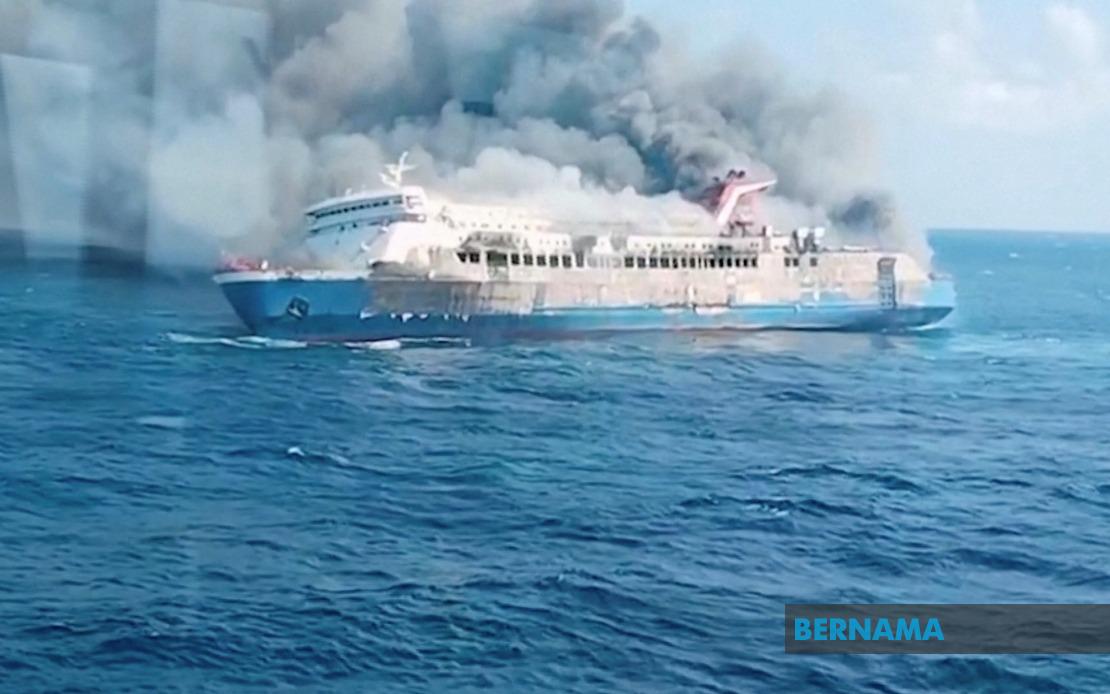
Rescue efforts for the KMP Mutiara Sentosa II ferry disaster have entered their second critical day with significantly expanded maritime and aerial coverage across the northern waters of Madura. The Indonesian National Armed Forces has committed substantial resources to the operation, including the warship KRI Bung Hatta-370, reflecting the magnitude of the incident and the determination to locate all missing persons. According to Nanang Sigit, chief of the Surabaya Search and Rescue Office, the intensified deployment marks a coordinated effort involving multiple government agencies tasked with combing the disaster zone for survivors and recovering victims who perished in the flames.
The ferry caught fire suddenly on Sunday morning at approximately 8:24 am local time in waters north of Sumenep, Madura, with flames rapidly consuming much of the vessel before rescue personnel could reach the scene. The vessel was carrying 232 passengers and 39 crew members when the disaster struck, making it a significant maritime emergency for the region. Initial reports indicated that the fire spread with considerable speed, limiting evacuation options for those aboard and forcing many to abandon ship in challenging circumstances. The rapid deployment of rescue assets suggests that local authorities had maritime assets positioned relatively close to the incident site, enabling faster response times than might otherwise have been possible in more remote waters.
Coordination between multiple maritime agencies demonstrates the structured approach Indonesian authorities have adopted toward the crisis. The State Ship Grantin P.211 and patrol vessel Manyar 5003 have joined the warship in combing through debris fields and surrounding waters. The inclusion of a helicopter from the East Java Police provides aerial reconnaissance capabilities, allowing rescuers to scan wider areas more efficiently and potentially spot survivors in life rafts or clinging to floating wreckage. This multi-layered approach reflects lessons learned from previous maritime disasters in Indonesian waters, where integrated operations combining surface vessels and air support have proven more effective at locating missing persons.
The evacuation process that occurred during the initial hours following the fire appears to have been conducted with considerable efficiency, given the circumstances. Rescue personnel successfully evacuated 229 survivors in what Nanang Sigit described as staged operations, transporting them to Tanjung Perak Port in Surabaya for immediate medical assessment and treatment. This figure represents approximately 98 percent of those aboard the vessel, a relatively high survival rate that suggests either rapid evacuation procedures, favorable sea conditions, or both. However, the fate of dozens remains unknown, as authorities have yet to account for all 271 individuals who were aboard when the fire began.
The five bodies recovered thus far have been transferred to Bhayangkara H.S. Samsoeri Mertojoso Hospital in Surabaya, where medical personnel are conducting identification procedures and preliminary investigations into causes of death. The relatively small number of confirmed fatalities at this early stage offers some hope that missing persons may still be found alive, though the passage of time typically reduces survival probabilities after maritime incidents. Search operations will likely continue for several days, as incomplete accounting for all passengers and crew remains a priority for authorities seeking to provide closure to families and determine the full human toll of the disaster.
For Malaysian and Southeast Asian observers, this incident underscores the ongoing maritime safety challenges facing high-traffic shipping lanes across the region. The northern waters off Madura are part of Indonesia's critical maritime corridors, where numerous ferries operate on regular schedules connecting island communities. The apparent rapid spread of fire aboard the KMP Mutiara Sentosa II raises questions about vessel maintenance standards, fire suppression systems, and crew training protocols—issues that directly concern maritime authorities across the Association of Southeast Asian Nations. Subsequent investigation into the fire's origin will likely reveal whether mechanical failure, human error, or insufficient safety equipment contributed to the disaster.
The scale of the rescue operation mobilized by Indonesian authorities demonstrates regional capacity for coordinating complex maritime emergencies across multiple agencies and jurisdictions. Surabaya's strategic location as a major port city positioned rescue assets favorably for rapid response, though the incident still illustrates how quickly maritime disasters can overwhelm initial resources. The deployment of naval vessels typically reserved for other duties reflects the priority assigned to search and rescue operations, suggesting that authorities view comprehensive coverage of the disaster area as essential despite competing demands on military and civilian maritime assets.
Regional maritime authorities, including those in Malaysia, will be monitoring Indonesia's investigation into the KMP Mutiara Sentosa II fire closely, as findings could prompt safety reviews affecting ferry operations throughout Southeast Asia. Ferry services represent crucial transportation links for island communities, particularly in Indonesia and the Philippines, where thousands of vessels operate on routes connecting dispersed populations. Improvements in fire detection and suppression systems, crew training standards, or passenger manifest procedures identified through this incident's investigation could establish precedents influencing maritime regulations across the wider region.
As rescue operations continue, the focus remains on accounting for all missing persons and determining whether survivors remain undiscovered in surrounding waters. The challenging nature of maritime rescue operations in the Java Sea, where currents and weather can rapidly disperse debris, means that search teams must maintain vigilance across a potentially expanding area. The commitment of additional resources, including military assets, indicates that Indonesian authorities are committed to prosecuting the search comprehensively despite the difficult circumstances. Families awaiting information about missing relatives face an uncertain wait as rescue teams work systematically through likely locations where survivors might have drifted following abandonment of the burning vessel.

