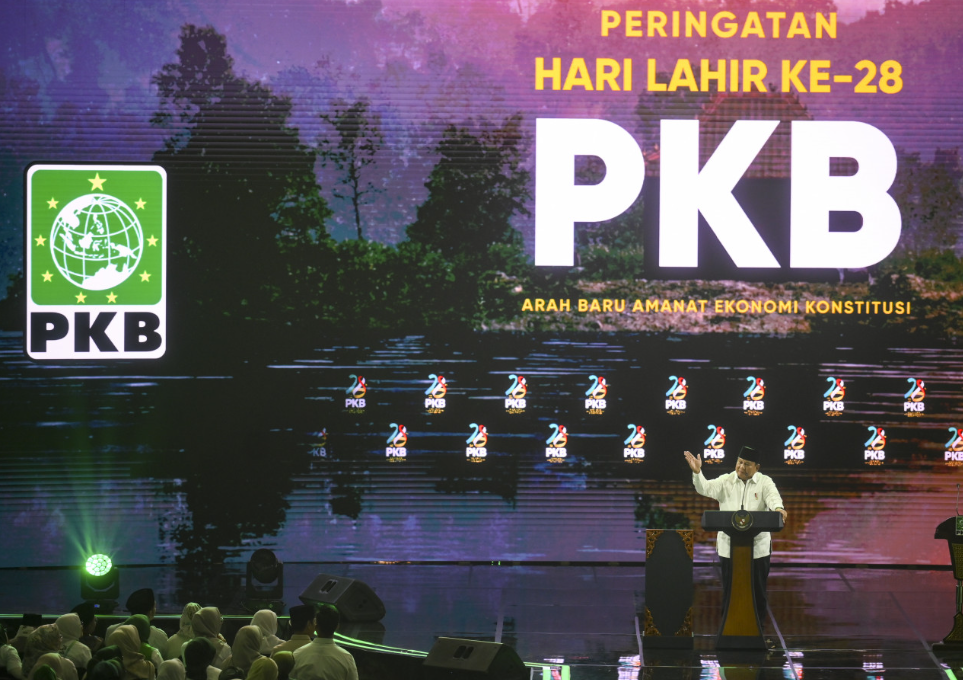
President Prabowo Subianto faces mounting pressure from the nation's major press organizations after using a historically loaded term to describe journalists during a political speech, reigniting concerns about media freedoms under his administration. Six separate press unions have formally condemned the remark and demanded a public apology, viewing the language as both denigrating to the profession and potentially damaging to Indonesia's democratic institutions.
The term in question, "londo ireng"—literally translating to "black Dutchman" in Javanese—carries deeply problematic historical baggage rooted in Indonesia's colonial past. During the Dutch East Indies period, the phrase initially referred to black West African mercenaries enlisted into the Royal Netherlands East Indies Military, or KNIL, particularly following the brutal 1825-1830 Diponegoro War. As Indonesia's independence struggle intensified, the terminology evolved to become a pejorative label for indigenous Indonesians perceived as collaborating with colonial authorities. By invoking this language, President Prabowo's comments carried the implicit accusation that journalists are modern-day traitors working against national interests.
Prabowo made the controversial remarks while addressing the National Awakening Party's 28th anniversary celebration on Thursday evening. In his speech, he acknowledged that his government welcomes criticism from various quarters, but then pivoted to assert that certain Indonesians maintain loyalty to foreign powers rather than their own nation. He explicitly stated that these individuals—whom he categorized as journalists, reporters, analysts, and NGO workers—represent a continuation of historical collaboration that once took the form of armed opposition to Indonesian independence. The president's grouping of journalists with this accusation proved particularly inflammatory given the delicate relationship between government and media in contemporary Southeast Asia.
The Alliance of Independent Journalists, alongside the Journalists Association of Indigenous Peoples of the Archipelago, Alternative Media Coalition, Society of Indonesian Environmental Journalists, Indonesian Photojournalist Association, and Archipelago Media Development Society, collectively rejected the characterization as baseless and professionally damaging. AJI chairwoman Nany Afrida articulated the unions' position in statements released over the weekend, emphasizing that such language fundamentally misrepresents the role and commitment of journalism in democratic societies. She underscored that applying a colonial-era slur to modern media professionals constitutes not merely poor word choice but a calculated delegitimization strategy that undermines public confidence in institutional journalism.
The press unions grounded their objection in Indonesia's legal framework governing media operations, specifically Law No. 40/1999 on Press, which establishes protections for journalistic work within the constitutional democracy. Under this statute, journalists operate with specific responsibilities and ethical obligations codified in the Journalists' Code of Ethics. Afrida stressed that journalists fulfill a constitutional role as watchdogs over government power, not as agents of foreign interests. The distinction matters considerably for how Indonesian society understands the relationship between critical reporting and national loyalty—a tension that authoritarian-leaning governments frequently exploit to suppress inconvenient coverage.
The timing of Prabowo's remarks and the coordinated response from multiple journalism organizations reflect deeper anxieties about press freedom trajectories under the new administration. Press unions noted that this was not an isolated incident but rather part of a pattern of hostility toward media professionals. Afrida highlighted instances where Prabowo has reportedly ordered journalists from rooms during public addresses, signaling a troubling comfort with excluding the press from official proceedings. Such behavior contrasts sharply with democratic norms that presume public access to government statements and accountability mechanisms rooted in transparent information flows.
Interestingly, Prabowo's own family history contains complicated colonial connections that add an ironic dimension to his accusations against journalists. His maternal great-grandfather, Captain Benjamin Thomas Sigar, served as a KNIL officer involved in the capture of Prince Diponegoro, the iconic resistance leader whose failed rebellion sparked the very conflict that gave rise to the "londo ireng" terminology. Meanwhile, on his paternal line, two uncles died in 1946 during the Lengkong incident in Tangerine, Banten, fighting Japanese occupation forces. These biographical details underscore how fraught colonial and postcolonial memory remains in Indonesia, and how readily political figures invoke historical grievances selectively to justify contemporary positions.
The press unions' response articulates a comprehensive vision of what press freedom requires in functioning democracies. Beyond the demand for an apology, the organizations insist that government must actively cultivate conditions enabling journalists to work without intimidation, violence, or criminal harassment. They argue that critical reporting on government policies represents not disloyalty but rather the essential mechanism through which democratic societies achieve governance improvements and accountability. When officials attack journalists rather than addressing substantive criticism, the unions contend, citizens lose access to reliable information needed for informed democratic participation.
The unions have demanded that President Prabowo and his entire cabinet cease stigmatizing and criminalizing the work of journalists, media observers, and civil society organizations. This comprehensive request reflects concerns that hostility toward press professionals might extend beyond rhetoric into concrete government actions—prosecution, defamation suits, harassment investigations, or resource starvation of critical outlets. Such tactics have become increasingly common across Southeast Asia as elected leaders seek to neutralize media scrutiny while maintaining formal democratic structures and electoral processes.
The incident underscores how historical language continues to shape contemporary political discourse in Indonesia and throughout the region. By consciously deploying a term steeped in colonial exploitation and national betrayal, Prabowo attempted to reframe legitimate journalistic scrutiny as a form of foreign servitude. The press unions' unified response suggests that Indonesian media professionals recognize this rhetorical gambit as fundamentally corrosive to democratic institutions. Their insistence on apology and behavioral change reflects an understanding that press freedom cannot be treated as a privilege granted by government but rather as a structural prerequisite for meaningful democracy.
As Indonesia navigates its relationship with press freedom under new leadership, this confrontation carries implications extending beyond individual organizations or personalities. The response from multiple journalism associations demonstrates that media professionals remain willing to organize collectively in defense of institutional prerogatives, even when challenging powerful government figures. Whether Prabowo responds constructively to these demands may signal broader trajectories regarding democratic governance, institutional independence, and the space available for critical voices in Southeast Asia's largest democracy.

