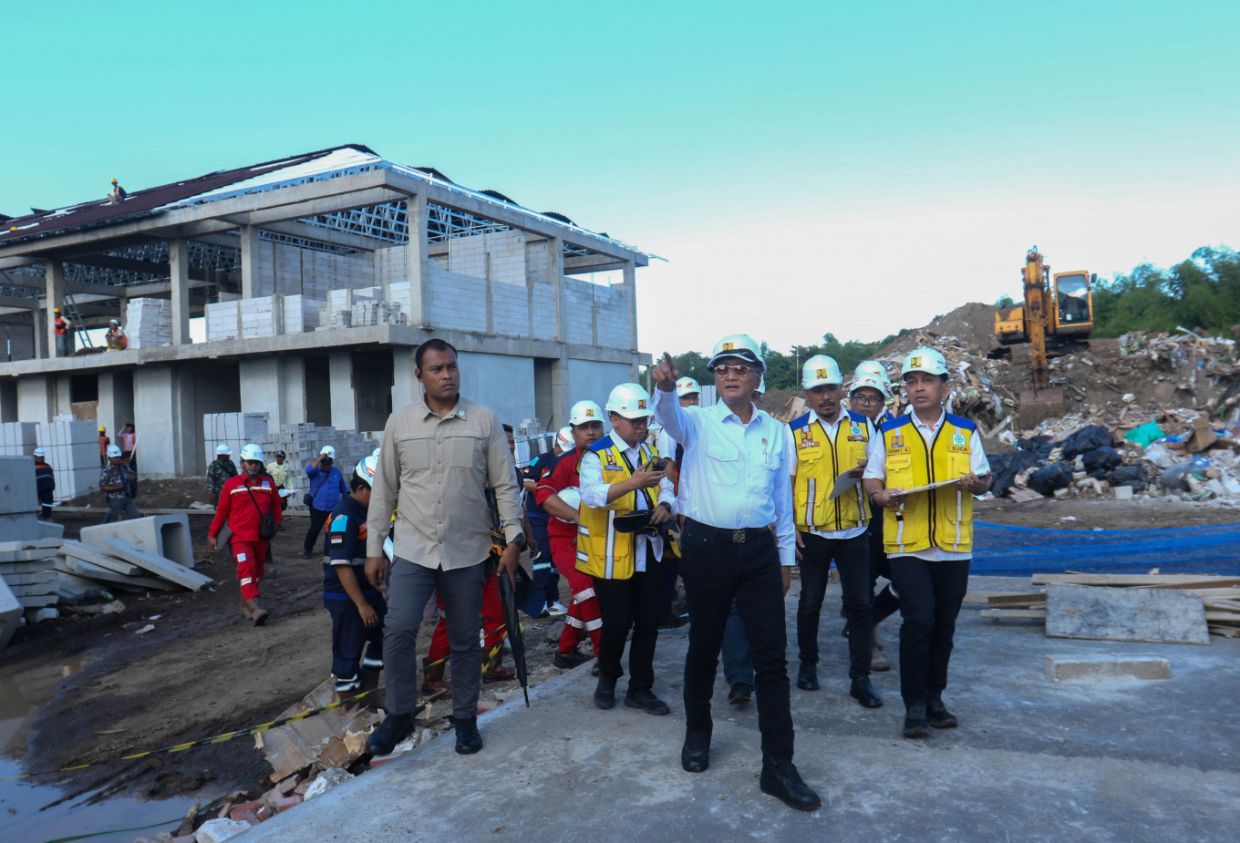
Indonesian Public Works Minister Dody Hanggodo is facing mounting pressure from government watchdogs and the public following the revelation that his wife and daughter were formally included in an official ministry delegation to the United States, raising fresh concerns about the appropriate use of state resources and the standards expected of senior government officials in the administration of President Prabowo Subianto.
The controversy emerged when a letter distributed widely across social media platforms revealed that the Public Works Ministry had officially documented eight individuals scheduled to travel to New York between July 13 and 19. The correspondence, signed by Ministry Secretary-General Apri Artoto on June 29, explicitly named Irma Hermawati, the minister's wife, and Aurellia Tsabitha Meidirama, his daughter, as participants in the planned journey. According to the travel document, Irma would be provided with a diplomatic passport for the trip, while Aurellia would travel on a standard passport.
The purpose of the delegation centres on attendance at a significant United Nations forum. The High-level Meeting on the Midterm Review of the New Urban Agenda, scheduled for July 16 and 17 in New York, brings together government representatives to assess progress on urban development initiatives under the auspices of the UN General Assembly and the UN Human Settlements Programme, known as UN-Habitat. This international engagement represents legitimate government business that requires official representation from Indonesia.
The inclusion of family members in what was presented as an official state delegation has generated considerable public backlash on social media platforms, with many commentators questioning the necessity of their participation and whether the arrangement aligns with the government's stated commitment to fiscal restraint. The Prabowo administration has positioned itself as committed to austerity measures and efficient use of public resources, making the appearance of family members on an official government trip particularly sensitive from a public perception standpoint.
In response to mounting criticism, the ministry moved to clarify its position on the financial arrangements. Apri stated that no allocation from the state budget would finance the expenses of Dody's family members, asserting instead that they would personally bear all associated costs if they chose to participate in the delegation. He further defended the decision to issue a diplomatic passport to the minister's wife, characterising it as consistent with applicable government regulations and standard protocol for officials travelling on state business.
Despite these assurances, the explanation has not satisfactorily addressed the concerns raised by institutional stakeholders. Maneger Nasution, a member of Indonesia's Ombudsman Commission, publicly called for substantially greater transparency from the ministry regarding multiple aspects of the arrangement. Beyond seeking clarity on the rationale for including Dody's wife and daughter in official travel documents, Nasution emphasised the need for rigorous guarantees that no state resources, financial or logistical, would be diverted to support their participation, and that all relevant regulations governing conflict of interest and appropriate use of authority would be scrupulously observed.
This controversy arrives at a moment when scrutiny of Dody's ministerial conduct has already intensified. The minister previously alleged that a coordinated effort by shadowy institutional actors, which he characterised as a "deep state," was underway to implicate him in corruption allegations. This claim emerged following the leak of an internal audit document from his ministry, adding another layer of tension to his tenure in what remains a strategically significant portfolio in the Indonesian government.
Further complicating the political backdrop are longstanding questions about Dody's pre-political business associations. Before his transition to electoral politics under the Democratic Party banner, the 60-year-old minister maintained commercial relationships with Andi "Haji Isam" Syamsuddin Arsyad, a prominent businessman based in South Kalimantan. Arsyad's corporate interests encompass investments in ventures directly connected to President Prabowo's ambitious megaproject in Merauke, South Papua, a large-scale agricultural development initiative intended to significantly boost domestic food production capacity.
For Malaysian observers, this incident illustrates the persistent governance challenges that confront large Southeast Asian democracies when managing transparency expectations at senior levels of government. The intersection of official state travel, family participation, and questions of financial propriety resonates across the region, where similar issues have generated controversy in neighbouring countries. The case demonstrates how even relatively routine diplomatic engagements can become flashpoints for broader debates about accountability and the distinction between legitimate official conduct and the appearance of impropriety.
The Ombudsman's intervention signals that institutional checks on executive authority remain active within Indonesia's governance architecture, though the eventual resolution of this matter will likely depend on whether the ministry provides the comprehensive documentation and assurances that independent oversight bodies are demanding. For Dody, the controversy represents a test of his political standing within the Prabowo cabinet, particularly given the administration's rhetorical commitment to clean governance and efficient resource management. The coming weeks will reveal whether the ministry's explanations prove sufficient to close this chapter or whether further investigation becomes necessary.

