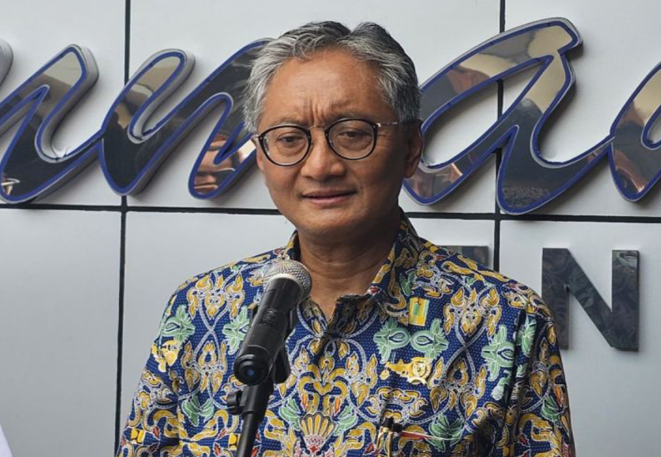
The Indonesian Public Works Ministry is experiencing significant internal disruption following the circulation of a confidential travel document that detailed Minister Dody Hanggodo's planned overseas delegation to the United States. The leaked paperwork, which was signed by the ministry's secretary-general Apri Artoto on June 29, revealed that Hanggodo's wife Irma Hermawati and daughter Aurellia Tsabitha Meidirama were among eight delegates scheduled to attend a United Nations-organised meeting in New York from July 13 to 19. The inclusion of family members sparked immediate public backlash, with critics questioning whether state resources were being misappropriated for personal benefit. The trip was subsequently cancelled following the controversy.
The disclosure of the document on social media triggered widespread speculation about retaliation within the ministry's ranks. Shortly after the leak became public, rumours circulated across online platforms alleging that Minister Hanggodo had reassigned numerous officials to regional postings, predominantly in locations outside Java, as punishment for whoever had released the sensitive material. These claims suggested a climate of fear and potential vindictiveness within the bureaucracy, raising questions about internal governance and personnel management practices at one of Indonesia's largest government departments.
When confronted by journalists on Wednesday about the transfer allegations, Hanggodo acknowledged that personnel reassignments had occurred but categorically denied they represented retaliation for the leaked document. In a characteristically defiant statement, the minister questioned the legitimacy of the criticism itself, stating "I have 38,600 employees, why shouldn't I be allowed to reassign them?" This response, reported by Kompas.com, reflects the minister's broader approach to managing the ministry and managing public perception of his administrative decisions.
During a subsequent press briefing on July 7, Secretary-General Apri provided an explanation for the family members' inclusion on the travel roster. He contended that their participation was administratively necessary to facilitate visa applications through Indonesia's Foreign Ministry, asserting simultaneously that state funding would not have covered their trip expenses. Apri also committed to investigating the source of the leak and warned of potential legal consequences for whoever had disclosed the document, emphasising that it was classified material never intended for public circulation.
Since assuming office in October 2024, the 60-year-old Hanggodo—an engineer by training with documented business connections to South Kalimantan entrepreneur Andi "Haji Isam" Syamsuddin Arsyad—has orchestrated multiple rounds of comprehensive personnel restructuring. Social media posts have documented more than 100 employees undergoing reassignment during his tenure, spanning positions from senior director generals to junior civil servants. This pattern of continuous reorganisation distinguishes his administration from typical government ministry operations and has generated considerable concern among both staff and elected officials.
The most recent major reshuffle occurred in May, when Hanggodo elevated seven high-ranking officials and appointed Apri as secretary-general, replacing Wida Nurfaida who had occupied the position for less than a year. This succession of rapid changes represents a distinctive feature of Hanggodo's leadership style and has created a volatile bureaucratic environment. Prior to Wida's appointment, another significant restructuring had taken place in July 2025, indicating a pattern of frequent leadership transitions that disrupts institutional continuity.
The accumulating instability has alarmed members of Indonesia's House of Representatives. During a June meeting, Yasto Soepredjo Mokoagow of Commission V, which oversees infrastructure matters, raised formal concerns about the repeated reorganisations. The PDI-P lawmaker specifically highlighted how disciplinary actions—including demotions of directors to non-structural positions—have created widespread anxiety among the ministry's workforce. Speaking during discussions on June 11, Mokoagow warned that these measures have generated a chilling effect, causing civil servants to become reluctant to execute their assigned programs and responsibilities due to fear of professional consequences.
Handling criticism of the constant restructuring, Hanggodo has invoked the concept of a "deep state" operating within the ministry. He characterises this alleged hidden network as destructive and parasitic, comparing it to termites that undermine institutional integrity from within. According to the minister, these structural reforms represent necessary corrective action against entrenched resistance and bureaucratic obstruction. This framing attempts to position the frequent reshuffles as principled reform rather than arbitrary personnel management.
Adding complexity to the ministry's challenges, several senior officials have faced corruption allegations related to water resources development projects. In June, the Jakarta High Prosecutor's Office identified multiple suspects in an ongoing investigation, including Dwi Purwantoro, the ministry's former water resources director general, and Yosiandi Radi Wicaksono, the former acting irrigation and swamp director. In response to these prosecutions, Hanggodo publicly committed to supporting law enforcement operations and pledged not to shield any personnel engaged in corrupt practices.
The minister's reputation has been further complicated by video footage circulating on social media showing his interactions with subordinates. One particularly notable clip captured Hanggodo reprimanding an employee during an April inspection of a school construction project in East Java, with the minister pointing at the worker and criticising him for making "dumb excuses." Such public displays of confrontational management style, combined with the broader pattern of reassignments and the travel document controversy, have contributed to perceptions of a tense and unstable work environment at the ministry.
For Malaysian observers and regional policymakers, the Indonesian Public Works Ministry's dysfunction carries practical implications. As a major regional economy, Indonesia's infrastructure development capacity directly affects regional supply chains, cross-border connectivity, and investment flows. Sustained internal instability within the ministry responsible for major infrastructure projects could potentially affect the pace and quality of development initiatives across Indonesia, with secondary effects on neighbouring economies including Malaysia. The incident also raises broader questions about governance practices in Southeast Asian bureaucracies and the management of professional civil service systems during periods of political transition.
The convergence of the travel document scandal, extensive personnel reshuffles, corruption investigations, and documented confrontational management practices creates a challenging institutional environment. Whether Hanggodo's approach ultimately strengthens the ministry by removing obstructive elements or whether it generates counterproductive dysfunction remains unclear. The coming months will likely reveal whether the repeated reorganisations achieve their stated objectives or whether they continue to undermine the ministry's operational effectiveness and employee morale.

