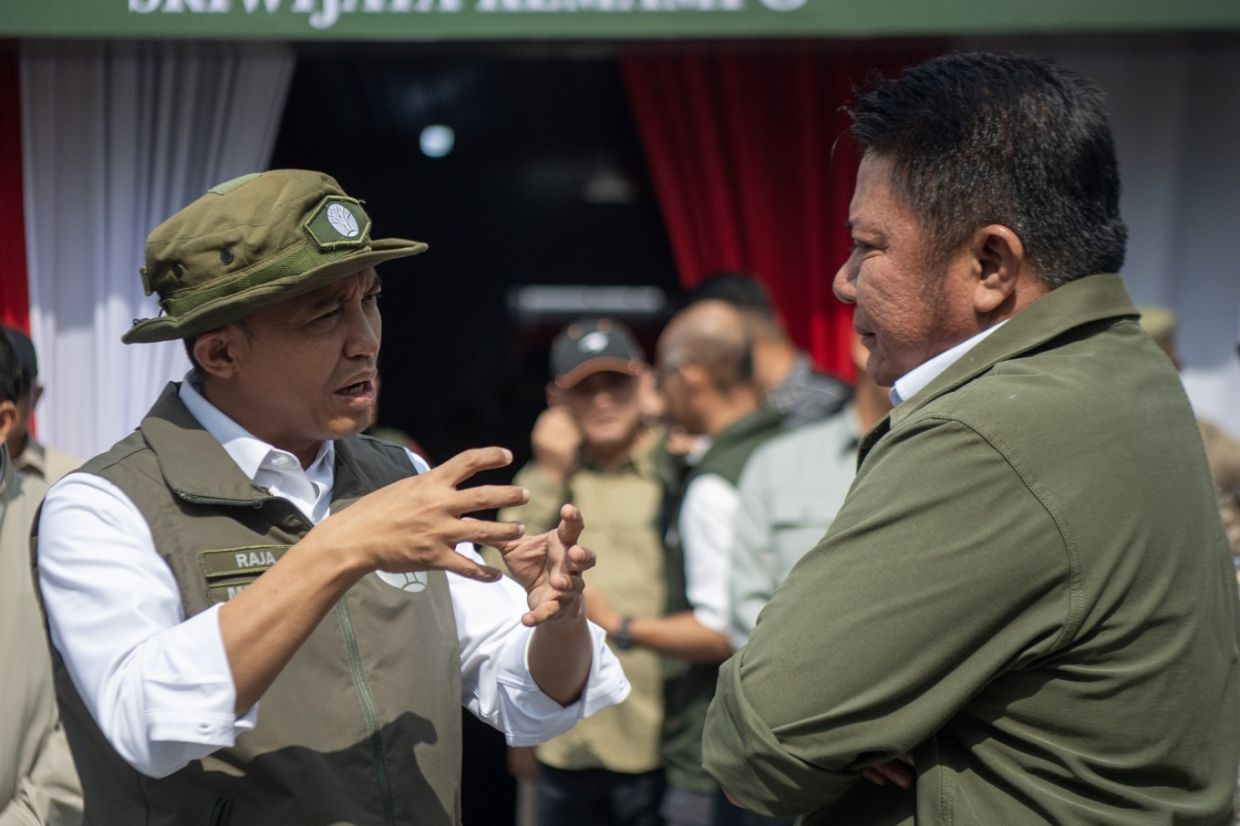
Indonesia's Corruption Eradication Commission (KPK) has reopened its investigation into allegations against Forestry Minister Raja Juli Antoni, focusing on suspected inconsistencies between the amount of illicit money the minister initially reported and what he actually received from Suhardiman Amby, the regent of Kuantan Singingi in Riau province. The antigraft agency, which has intensified corruption probes across multiple government sectors, views the discrepancy as potentially indicating that Raja Juli did not return the full sum of alleged kickbacks as claimed.
According to KPK spokesperson Budi Prasetyo, investigators are examining a significant gap in the documented trail of funds. The regent allegedly presented the Forestry Minister with an envelope containing Singapore dollars following an official meeting on June 2 between ministry officials and the Kuantan Singingi administration. The KPK has established that the envelope originally held S$14,000, equivalent to approximately US$10,919. This payment allegedly came as part of a broader scheme involving kickbacks to multiple ministry personnel, with other officials receiving S$12,500 from various officials associated with the regency administration.
Raja Juli initially claimed on July 3 that he had rejected the bribe and returned the envelope to Kuantan Singingi Police headquarters on June 12, a full ten days after receiving it. He stated publicly that he recognised accepting such a gift would constitute a violation of his duties in public office. However, the KPK's current investigation suggests the timeline and amounts may not align, prompting fresh scrutiny of the minister's account of events. The antigraft body is attempting to establish whether the discrepancies reflect genuine accounting errors or deliberate concealment.
The underlying issue that triggered the alleged bribery involves a substantial land-use proposal. The Kuantan Singingi administration had submitted requests to the Forestry Ministry seeking to reclassify more than 1,800 hectares of limited production forest (HPT) land. Such forest reclassification decisions carry significant financial implications, as they can unlock development opportunities and resource extraction rights. The KPK is investigating whether the alleged payments were intended to influence the ministry's decision-making process regarding these forest conversion permits, creating a direct link between the bribe and official action.
Under Indonesian law, public officials who receive improper gifts connected to their position must report such incidents to the KPK within 30 days of acceptance. Failure to comply with this reporting requirement itself constitutes a criminal violation. The penalty structure for state officials convicted of accepting illicit gifts is severe: convicted individuals face up to 20 years imprisonment and fines reaching Rp 1 billion (approximately US$55,867). This stringent framework underscores the government's stated commitment to anti-corruption efforts, though enforcement consistency remains a persistent concern among observers.
The investigation has revealed a pattern of contact between Raja Juli and Suhardiman extending beyond the single June meeting. According to Budi, the two men held at least three separate meetings spanning April, May, and June. The KPK has not yet publicly disclosed whether these additional meetings carried the same corrupt intent or served other purposes. The frequency of contact between the minister and the regent, combined with the alleged financial transfer, suggests a relationship potentially extending beyond routine administrative coordination between government entities.
Suhardiman himself faces serious legal jeopardy. The Riau regent, who maintains membership in President Prabowo Subianto's Gerindra Party, was arrested and designated as a suspect by the KPK in late June on separate charges involving kickbacks received from Zulkarnain, the regency's secretary, in connection with the latter's appointment to his administrative position. The KPK subsequently expanded its investigation into Suhardiman's case to encompass the alleged transfers to the Forestry Ministry, effectively linking multiple corruption threads within the same regency administration.
Raja Juli's political profile adds additional dimensions to the controversy. As secretary-general of the Indonesian Solidarity Party (PSI), a smaller coalition partner in the ruling government, the minister occupies a position balancing party loyalty with ministerial responsibilities. His involvement in corruption allegations threatens to undermine the PSI's political standing and complicates broader coalition dynamics. The controversy intensified when members of the House of Representatives Commission IV, which oversees forestry matters, demanded his appearance for questioning. Raja Juli notably absented himself from a scheduled July 14 meeting, with Commission IV deputy chair Alex Indra Lukman from the opposition Indonesian Democratic Party of Struggle (PDI-P) stating the minister was undertaking umrah (the minor Islamic pilgrimage).
The Forestry Ministry has issued statements reaffirming its commitment to cooperating fully with the KPK investigation and pledging to provide any requested documentation or information. Ministry officials have emphasised that no forest reclassification status has been granted to Kuantan Singingi to date. Of the three proposals submitted by the regency administration, the ministry reports that proposals have either been formally rejected or remain under verification procedures. This defensive positioning suggests ministry leadership recognises the investigation's potential to damage institutional credibility if connections between alleged bribes and ministerial decisions can be established.
For Malaysian observers and regional analysts, the Raja Juli case illustrates the persistent vulnerabilities within Indonesia's governance structures despite the KPK's institutional independence and investigative capacity. The investigation demonstrates both the antigraft agency's willingness to pursue high-ranking officials and the complex evidentiary challenges involved in establishing corruption involving international currency transfers and multiple government entities across different jurisdictions. The case also highlights how natural resource decisions—in this instance forest reclassification—remain vulnerable to corrupt influence across Southeast Asia, a region where competing pressures for land conversion and resource development frequently create opportunities for illicit arrangements.
The investigation's progression will carry implications extending beyond Raja Juli's personal legal exposure. A conviction would strengthen the KPK's narrative of institutional effectiveness while potentially deterring similar schemes within other ministries. Conversely, if evidentiary gaps result in acquittal or charges being dropped, it could fuel perceptions that high-ranking political figures retain protection from accountability. The scrutiny also reflects broader questions about whether Indonesia's anti-corruption efforts, despite significant resources and high-profile prosecutions, can effectively penetrate networks where ministerial authority intersects with resource allocation decisions affecting provincial administrations.

