Indonesia's foremost anti-corruption organisation has escalated its demands for a sweeping overhaul of President Prabowo Subianto's marquee free meals initiative, calling for an immediate suspension of the programme and the complete dissolution of the National Nutrition Agency managing it. The intervention from Indonesia Corruption Watch, a prominent civil society group advocating for transparency and accountability across political and economic systems, signals deepening concerns about governance failures within what has become one of the government's most visible and costly undertakings since Prabowo assumed office.
Wana Alamsyah, leading the law and investigation division at Indonesia Corruption Watch, has argued that authorities must go far beyond the handful of officials already detained in connection with alleged embezzlement. The scope of scrutiny must extend to all entities and individuals who may have profited from the programme's documented mismanagement, he contends, pointing to systemic weaknesses that enabled corrupt practices to flourish from inception. This stance reflects a broader assessment that the initial investigations have merely scratched the surface of potential wrongdoing within an agency established fewer than two years ago but already distributing meals to over 60 million beneficiaries nationwide.
The controversy intensified dramatically when authorities announced a formal corruption investigation into Dadan Hindayana, the agency's founding chief, following his abrupt dismissal. Four additional individuals, including two senior deputies under Dadan, have subsequently been apprehended as part of the inquiry. The rapid deterioration in the agency's credibility has prompted ICW to advocate not merely for targeted prosecutions but for a fundamental restructuring of how the programme operates, with particular emphasis on investigating procurement procedures, vendor relationships, and the composition of decision-making committees that approved expenditures.
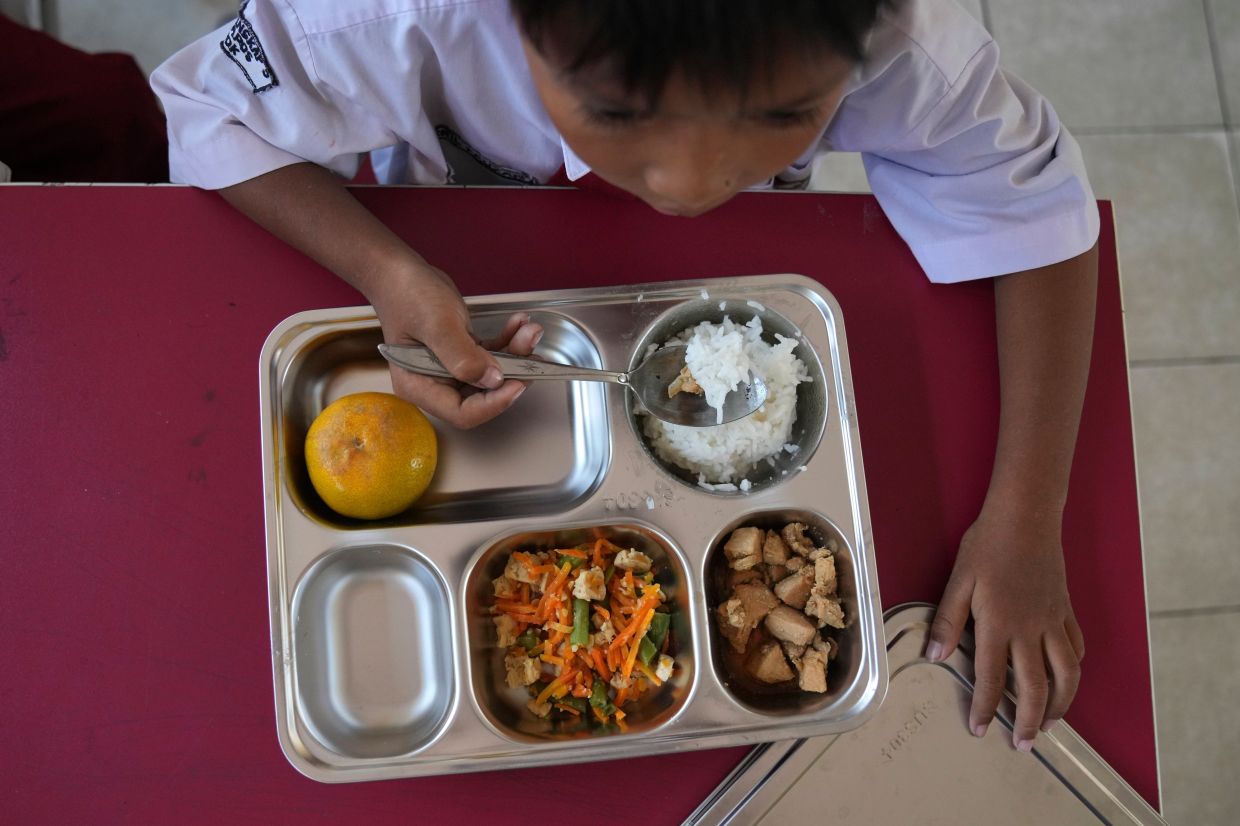
The free meals initiative represents an extraordinarily ambitious undertaking, with the government budgeting approximately 268 trillion rupiah—equivalent to roughly US$14.9 billion—to reduce malnutrition and poverty through universal school feeding and community nutrition programmes. However, this scale of spending has become entangled with questions about fiscal sustainability at a time when Indonesia's budget faces mounting pressure from other commitments. The programme's sheer scope and rapid rollout appear to have created vulnerabilities that opportunistic actors exploited, with inadequate oversight mechanisms failing to catch irregularities that were apparently visible to informed observers for months.
The newly appointed agency director, Nanik S. Deyang, has signalled a significant recalibration of ambitions and methodology. Rather than chasing the headline figure of 82.9 million daily recipients, the leadership now emphasises quality over quantity, proposing to concentrate resources on remote and underserved regions where nutritional deficiencies remain most acute. This represents a tacit acknowledgment that the initial approach was poorly calibrated, attempting to achieve universal coverage without the administrative infrastructure and oversight capacity necessary to prevent waste and corruption. The agency's stated intention to spend substantially below the full budget allocation suggests recognition that the original targets were neither fiscally prudent nor operationally achievable.
President Prabowo has publicly committed to eliminating corruption from the initiative, declaring to assembled officials and programme partners that he will not countenance theft of public funds. Yet Wana's observation raises uncomfortable questions about timing and motivation. If procurement problems were already widely discussed on social media and among civil society observers throughout 2025, why did the government wait until now to initiate formal investigations? The Philippines-based analyst suggests the answer lies in Indonesia's deteriorating fiscal position, with the government potentially needing to recalibrate spending in response to budget pressures. By sacrificing senior officials and restructuring the programme, the government may be attempting to legitimise a necessary retreat while preserving the initiative's underlying concept.
Public reaction has been volatile, with student-led protests erupting in Jakarta and cascading to major cities across the archipelago. Police deployed over 6,000 officers to manage demonstrations in the capital alone, with clashes reported between security forces and demonstrators challenging both the programme itself and the broader spending trajectory. These protests reflect genuine public anxiety about fiscal priorities and the opportunity cost of massive spending on food provision when other infrastructure and social needs remain underfunded. Investor nervousness about Indonesia's budgetary trajectory has also surfaced, with capital markets participants questioning whether the spending commitment is compatible with medium-term fiscal stability.
Economic analysts and independent research organisations have consistently highlighted structural problems with the programme's design and implementation. A Centre of Economic and Law Studies report found that nearly four-fifths of respondents identified potential conflicts of interest in the direct vendor appointment process, while earlier research warned of risks including uneven geographical distribution of benefits, inconsistent food quality, and inherent budgetary inefficiencies. These findings suggest that corruption was merely one manifestation of broader governance failures rather than an isolated aberration attributable to individual malfeasance.
ICW's earlier investigation into the 102 foundations operating meal kitchens across 38 provinces uncovered troubling patronage patterns, with numerous kitchen operations connected to politicians, military officers, bureaucrats, and business figures with political ties. This network structure creates structural incentives for corruption by embedding procurement decisions within relationships characterised by mutual obligation rather than competitive merit-based selection. The foundation model, ostensibly designed to build community ownership and decentralise management, instead appears to have created a fragmented landscape vulnerable to elite capture and insider dealing.
Deyang's recently announced moratorium on establishing new feeding kitchens represents an effort to impose minimal quality controls before further expansion occurs. The strategic shift toward utilising existing school canteens and community facilities rather than constructing dedicated kitchen infrastructure suggests an attempt to reduce the physical infrastructure footprint and associated procurement opportunities that have proven so vulnerable to exploitation. This incremental approach reflects the practical constraints facing policymakers who must balance the need for genuine reform against the political difficulty of dismantling a programme that has already become embedded in public expectations across dozens of provinces and thousands of schools.
For Malaysia and other Southeast Asian nations monitoring Indonesia's governance challenges, the free meals scandal offers instructive lessons about the perils of implementing massive social programmes without adequate institutional capacity for oversight and accountability. Indonesia's experience demonstrates that even signature presidential initiatives backed by substantial financial resources can rapidly become vehicles for systemic corruption when implementation occurs in advance of supporting administrative infrastructure. The unfolding investigation and reform efforts will likely shape regional discussions about programme design, highlighting the necessity of building anticorruption mechanisms into social policy architecture rather than treating them as afterthoughts to be addressed only when scandals surface.
The trajectory of Indonesia's free meals initiative—from celebrated flagship programme to corruption scandal to contested restructuring—reflects broader tensions within developing democracies attempting to combine ambitious social objectives with limited institutional capacity for transparent resource management. While President Prabowo's commitment to accountability and the new agency leadership's willingness to acknowledge and address deficiencies suggest possibilities for course correction, the fundamental question remains whether genuine systemic reform can be achieved or whether the restructured programme will merely perpetuate the underlying vulnerabilities in different forms. The coming months will test whether Indonesia's institutions can credibly address the concerns raised by civil society organisations and restore public confidence in governance of this consequential investment in human development.