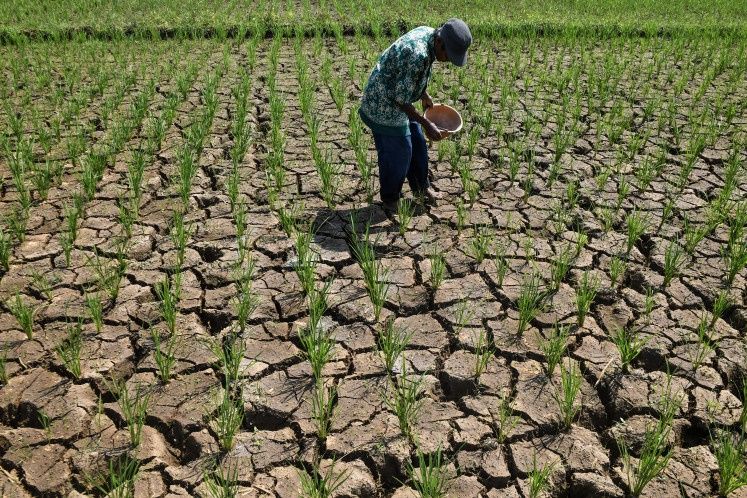
The Indonesian archipelago is confronting an escalating water crisis as drought conditions expand across numerous provinces, with meteorological authorities predicting an exceptionally severe dry season that could last until September. The National Disaster Mitigation Agency (BNPB) has been forced to continuously add new districts to its emergency alert list, most recently including Gunungkidul in Yogyakarta, Semarang in Central Java, and Jember in East Java. These three regions alone account for roughly 700 households without adequate water access, joining more than 7,100 others already struggling across Central Java, West Java, Yogyakarta, Banten, and eastern provinces, underscoring the scale of the developing humanitarian challenge.
The intensification reflects a broader meteorological shift linked to El Niño, a climate phenomenon characterized by anomalously warm ocean surface temperatures in the Pacific. By mid-June, more than one-third of Indonesia's climate zones had officially transitioned into the dry season, while nearly half the country was already experiencing below-normal rainfall patterns. Government meteorologists at the Meteorology, Climatology and Geophysics Agency (BMKG) have issued stark assessments, forecasting that conditions will deteriorate significantly through the critical July-September window, when they anticipate more than 80 per cent of the archipelago will endure rainfall below seasonal averages. This projection carries profound implications for a nation where agricultural productivity depends heavily on consistent moisture availability.
Government agencies have mobilized emergency response protocols across affected regions. Several districts, including Gunungkidul and areas across West Java, have activated 90-day drought alert statuses designed to streamline bureaucratic procedures for rapid resource deployment. In practical terms, this has translated into the deployment of water tanker trucks to distribute clean water to communities whose household supplies have dried up. The scale of this intervention, however, remains modest relative to the projected scope of the crisis. West Nusa Tenggara's West Lombok district declared a full drought emergency in mid-June after approximately 3,600 households lost reliable water access, while Banten province was still evaluating whether to issue a province-wide alert that would trigger systematic water distribution infrastructure.
The drought poses particular risks to Indonesia's agricultural sector and broader food security. Agricultural authorities, acutely aware that crop failures during critical planting seasons could undermine national self-sufficiency in staple crops, have begun advocating for adaptive farming strategies. BMKG's climatology deputy, Ardhasena Sopaheluwakan, has publicly recommended immediate adjustments to planting schedules, adoption of drought-resistant crop varieties, and accelerated cultivation of early-maturing agricultural varieties to circumvent prolonged dry spells. These recommendations acknowledge a fundamental vulnerability: Indonesia's agricultural calendar has traditionally relied on predictable rainfall patterns that El Niño disrupts significantly. The government's agriculture ministry, under Minister Amran Sulaiman, has sought to accelerate irrigation infrastructure deployment, particularly through expanded use of electric pumps to compensate for diminished rainfall and maintain production targets.
Official messaging around food supply has emphasized preparedness rather than panic. Sulaiman has repeatedly assured the public that national rice reserves remain at what he characterizes as a historically elevated level, sufficient to meet domestic demand through the following year. The House of Representatives' Commission IV, which exercises parliamentary oversight of agriculture and food production, has nonetheless urged accelerated assistance to vulnerable regions, specifically requesting enhanced distribution of seeds, fertilizers, farming implements, and livestock feed to minimize production disruptions. These interventions reflect political anxiety about the intersection of environmental crisis and food inflation, issues that directly affect urban consumers and rural agricultural workers alike.
However, policy experts contend that current emergency measures, while necessary, address only the immediate crisis without tackling underlying systemic vulnerabilities. Bagas Yusuf Kausan, a researcher at Yayasan Amerta Air Indonesia, a water policy research institution, has argued that Indonesia requires fundamental infrastructure investments in water systems, particularly in chronically drought-prone regions lacking reliable piped water access. Kausan advocates for substantially expanded provincial water utility services (PDAM) that would provide permanent, affordable water supplies to vulnerable communities, with government subsidies ensuring accessibility. This represents a departure from crisis-response thinking toward long-term resilience building, an approach that would require sustained political commitment and budgetary allocation.
Environmental degradation compounds the meteorological challenge, according to water policy analysts. Land conversion for development purposes has progressively reduced the integrity of water catchment areas across numerous regions, while excessive groundwater extraction has depleted aquifer reserves that previously served as drought buffers. Kausan emphasizes that El Niño's impacts are not purely climatic phenomena but reflect the intersection of natural climate variability with human-driven environmental transformation. He has specifically urged the government to leverage the current crisis as a catalyst for implementing stricter land conversion controls, particularly within watersheds and water catchment zones. Such restrictions would theoretically preserve the landscape's capacity to absorb and store rainfall, reducing vulnerability to seasonal dry spells.
For Malaysia and the broader Southeast Asian region, Indonesia's drought crisis carries important implications. The archipelago's agricultural sector, particularly its rice production, influences regional food prices and supply stability. Extended drought in Indonesia could trigger ripple effects throughout Southeast Asian commodity markets, potentially affecting prices for staple crops across Malaysia and neighboring countries. Additionally, the disaster highlights shared vulnerabilities across tropical Southeast Asia regarding climate variability and the need for regional coordination on water resource management and drought preparedness. Indonesian agricultural disruptions could influence regional food security discussions within ASEAN forums and inform policy discussions about climate adaptation investments across the region.
The unfolding situation also underscores the political economy of natural disaster response in a decentralized governance system. Indonesia's regional authorities bear primary responsibility for emergency response, yet many lack the financial capacity or technical expertise to implement comprehensive solutions. This structural reality creates pressure on the national government to provide resources and coordination, even as it maintains that current rice reserves and strategic planning will prevent serious food shortages. The tension between emergency measures and long-term adaptation investment remains unresolved, with policy discussions ongoing regarding whether the government will translate rhetorical commitment to drought resilience into substantive infrastructure and environmental protection spending. The outcome will substantially determine whether Indonesia successfully navigates this immediate crisis while building capacity to manage future El Niño episodes.

