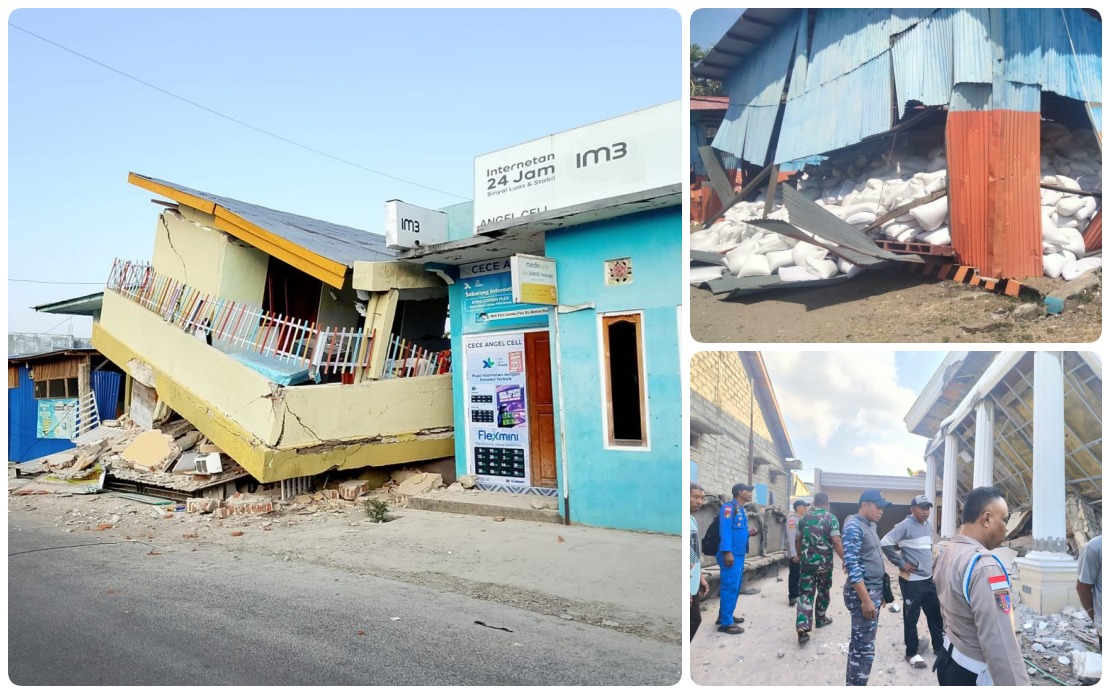
A powerful magnitude 7.7 earthquake has struck Indonesia's Flores Island, leaving at least 53 people dead and forcing thousands to seek shelter at evacuation centres as seismic activity continues to unsettle the region. The initial tremor, which occurred at 4.58 am local time with its epicentre approximately 30 kilometres from Mbay in Nagekeo district at a depth of 15 kilometres, set off a tsunami warning that was later lifted after authorities confirmed no significant sea-level changes. The disaster has triggered an unprecedented sequence of aftershocks, with the Meteorology, Climatology and Geophysics Agency recording 995 separate tremors by Sunday afternoon, creating a prolonged sense of uncertainty across the affected communities.
The scale of seismic activity following the main quake underscores the geological volatility of the region and the compounding psychological impact on residents already traumatised by history. Abdul Muhari, the National Disaster Management Agency's deputy for prevention, explained that although nearly 1,000 aftershocks have been detected, only a fraction were strong enough for residents to perceive. Nevertheless, the relentless nature of these subsidiary tremors, combined with widespread structural damage to homes and public buildings, has kept approximately 9,290 people confined to temporary shelters as of Saturday night. The agency's assessment revealed 135 injuries across the seven affected regencies and cities, with no persons currently listed as missing—a finding that suggests either successful rescue operations or grim conclusions already reached.
For many residents of Flores, the current earthquake carries particular psychological weight because of the devastating 1992 Flores earthquake and tsunami that killed thousands. That historical trauma remains embedded in collective memory, making current aftershocks feel not merely as natural phenomena but as echoes of catastrophe. The combination of physical danger from structural instability and psychological distress from memories of the previous disaster has proven powerful enough to keep evacuees at relief centres even as emergency responders work to secure damaged areas. This layering of past and present danger illustrates how major natural disasters create generational vulnerability, where survivors and their descendants remain acutely sensitive to seismic signals that others might dismiss as minor tremors.
Authorities mobilised a comprehensive emergency response operating at multiple levels across three key locations. The National Disaster Management Agency established response coordination posts in both Labuan Bajo and Maumere, the region's major urban centres, while simultaneously activating logistics hubs in Jakarta, the capital, plus the two regional cities. This three-point distribution strategy allows for more efficient deployment of relief supplies, specialised equipment, and rescue personnel, avoiding bottlenecks at single distribution points. The agency also placed aircraft and helicopters on standby status, recognising that Flores's terrain and compromised road infrastructure might necessitate aerial supply routes and rapid evacuation capability should conditions deteriorate or secondary disasters occur.
Infrastructure restoration has become a parallel priority running alongside immediate humanitarian aid. A critical road section through Reok in Manggarai district that had been blocked by landslides was cleared sufficiently to allow fuel tanker trucks to pass, addressing potential shortages of petrol and diesel across the region. Electricity supply has been progressively restored to several areas that experienced widespread blackouts in the earthquake's immediate aftermath. These infrastructure repairs matter significantly because without functioning supply chains and power networks, evacuation centres cannot sustain thousands of people for extended periods, and hospitals cannot operate effectively to treat the injured. The restoration efforts therefore serve dual purposes: they enable humanitarian operations and signal to anxious residents that normalcy, however distant, remains achievable.
Casualty figures continue to be refined as response teams work through affected areas and update information systems. The 53 confirmed deaths and 135 injured represent the verified toll at a particular moment, but Abdul Muhari emphasised that the National Disaster Management Agency maintained ongoing data verification processes. In disaster situations, especially in remote or mountainous regions like parts of Flores, initial casualty figures often shift as search teams access previously unreachable areas or as medical facilities report additional fatalities from injuries sustained during the initial event. The absence of missing persons reports, however, suggests that within the areas thus far surveyed, the casualty assessment has been relatively comprehensive, or that survivors and remains have been located with efficiency.
The Indonesian disaster response framework demonstrates considerable sophistication in coordinating between national agencies and regional infrastructure. The coordination between BMKG's seismic monitoring capability, the National Search and Rescue Agency's field operations, and the broader disaster management structure reflects lessons learned from previous major earthquakes and tsunamis. Basarnas, the search and rescue agency, explicitly maintains registries of missing persons and actively solicits reports from residents, families, and field teams. This systematic approach helps prevent people from falling through bureaucratic gaps, though it also requires adequate communication infrastructure—itself often damaged by earthquakes—to function reliably.
For Malaysia and other Southeast Asian nations, Indonesia's Flores earthquake serves as a sobering reminder of the region's geological volatility and the cascading challenges that major seismic events present. The Pacific Ring of Fire, which runs through the Indonesian archipelago, generates approximately 90 per cent of the world's earthquakes. While Malaysia sits in a relatively stable zone geologically, the region's economic interdependence with Indonesia means that major disasters there have ripple effects across trade, tourism, and labour migration. Additionally, Southeast Asian nations increasingly share best practices in disaster preparedness, so the evolving Indonesian response to Flores offers lessons in evacuation logistics, multi-site relief distribution, and managing prolonged aftershock sequences that could inform regional protocols.
The extended sequence of aftershocks that will likely continue for weeks or months presents particular challenges for evacuation management and psychological recovery. Aftershocks themselves can trigger additional building collapses, particularly in structures already weakened by the initial quake. The decision by thousands of residents to remain at evacuation centres, despite the discomfort and disruption this entails, reflects rational risk assessment rather than panic. As long as aftershocks continue and damage assessment remains incomplete, many residents correctly judge that the risk of remaining in damaged buildings exceeds the hardship of temporary shelter. This rational calculus, however, also puts pressure on supply chains and administrative systems that must sustain large displaced populations indefinitely.
Longer-term recovery will depend heavily on external support and reconstruction financing. Indonesia's central government and provincial authorities face immediate humanitarian obligations, but rebuilding homes, restoring critical infrastructure, and supporting traumatised populations requires resources often beyond immediate governmental capacity. International humanitarian assistance, whether from neighbouring countries or global organisations, typically becomes necessary. The 1992 Flores earthquake remained a defining moment in that region's recent history, one that shaped community memory and infrastructure planning for decades. The current earthquake will similarly reshape how Flores residents, administrators, and planners approach seismic risk, building codes, and disaster preparedness. Early indicators suggest response coordination has been relatively effective, potentially limiting secondary disasters and improving survival outcomes compared to other comparable events.

