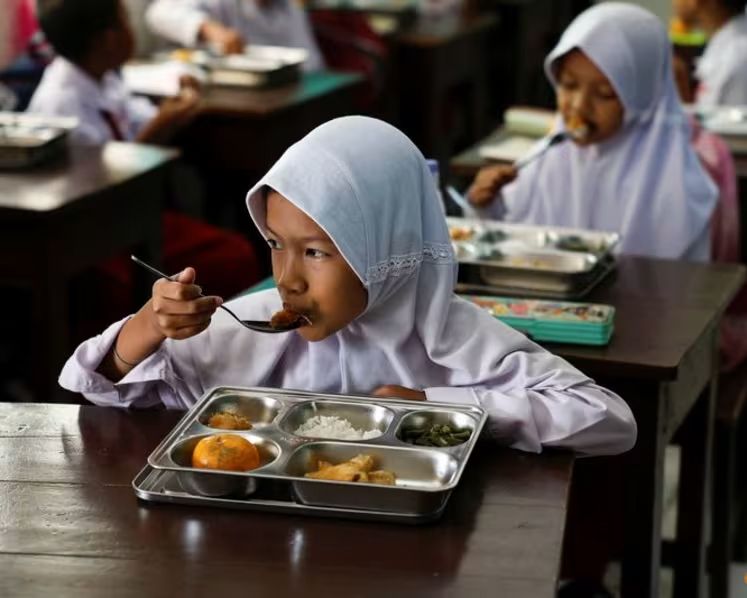
Indonesia's ambitious free meals initiative, touted as President Prabowo Subianto's flagship policy achievement, is facing fresh turmoil as the head of the agency managing the scheme announced her resignation on Wednesday, citing medical reasons that she attributed to extreme stress from the role. Nanik Sudaryati Deyang's departure marks the second significant upheaval in leadership at the National Nutrition Agency within just over a month, signalling deepening dysfunction within an institution tasked with overseeing one of Southeast Asia's most expansive social programmes.
Declaring her decision through a Facebook post, Nanik explained that health considerations necessitated her immediate departure from the post she had assumed in June. She revealed that her cardiologist had warned of arterial blockages resulting from prolonged occupational pressure, prompting her physician to recommend immediate overseas treatment. The resignation underscores the mounting pressures facing the agency, which has grappled with recurring logistical failures, quality deterioration, and multiple instances of foodborne illness outbreaks since the initiative commenced in January 2025. Her account emphasises not merely operational challenges, but the personal toll that managing a programme of such magnitude and controversy has exacted.
Nanik's exit follows the ouster of her predecessor, who was apprehended on corruption allegations directly linked to the multibillion-dollar scheme. The previous agency head was dismissed by Prabowo following a raid on the National Nutrition Agency's headquarters, representing an early warning sign of the institutional fragility plaguing the organisation. This pattern of rapid turnover in senior positions raises significant questions about leadership stability and suggests potential systemic governance issues that transcend individual personnel changes.
Reflecting on her tenure, Nanik sought to reframe the free meals initiative as a non-partisan health intervention targeting childhood malnutrition and maternal welfare, attempting to deflect criticism from political commentators who characterise the scheme as an election promise rather than genuine public health policy. However, her framing rings somewhat hollow given that the programme remains fundamentally attached to Prabowo's electoral mandate and faces intense scrutiny over its fiscal implications. She disclosed that the president has expressed willingness to establish an oversight board to improve governance, and she has been requested to chair this supervisory mechanism, suggesting efforts to salvage institutional credibility through structural reorganisation.
The timing of Nanik's departure carries particular significance for Indonesia's fiscal trajectory. Her resignation announcement occurred just one day after the agency disclosed that its 2026 budget allocation had undergone a second substantial reduction, shrinking from 268 trillion rupiah to 229 trillion rupiah—equivalent to approximately US$12.79 billion. This latest contraction represents a staggering decline from the initial budgetary allocation of 335 trillion rupiah, meaning current funding now stands more than 100 trillion rupiah below original projections. These successive reductions signal mounting concern within government circles about the programme's sustainability and its impact on Indonesia's broader fiscal position.
The budgetary constraints carry profound implications for the scheme's original scope and beneficiaries. Initially conceived to deliver complimentary meals to 83 million individuals encompassing children and expectant mothers, the programme's reach has already contracted to 62.5 million recipients prior to the latest funding review. Administrators have cautioned that further budget reductions remain probable pending additional fiscal assessments, meaning the programme could experience even more dramatic downsizing in coming months. For Malaysian observers monitoring regional economic trends, Indonesia's struggle to sustain this initiative offers instructive lessons about the fiscal challenges inherent in large-scale social programmes, particularly those initiated without comprehensive long-term funding frameworks.
The underlying causes of the free meals programme's deteriorating circumstances extend beyond mere budgetary constraints. Since its January 2025 launch, the initiative has confronted persistent supply chain complications, product quality deterioration, and multiple documented cases of mass food poisoning that have triggered public alarm and media scrutiny. These operational failures suggest not simply resource scarcity, but potentially inadequate planning, insufficient infrastructure development, and deficient monitoring systems. The convergence of logistical breakdown, criminal investigations, budget retrenchment, and personnel instability paints a picture of an institution struggling to manage ambitions that may have exceeded its organisational capacity.
The criminal investigation mentioned in connection with the previous agency head indicates corruption concerns that transcend operational mismanagement. The apprehension of Nanik's predecessor on graft charges raises uncomfortable questions about whether elements within the implementing bureaucracy have exploited the programme's vast financial resources for personal enrichment. Such allegations, whether ultimately substantiated or not, erode public confidence in government institutions and complicate efforts to defend the programme's legitimacy. For a nation attempting to consolidate democratic institutions and combat endemic corruption, these developments represent a significant setback.
Looking forward, the institutional architecture proposed to stabilise the National Nutrition Agency—specifically the supervisory board—reflects acknowledgment that existing governance structures have proven inadequate. However, governance improvements require not merely supervisory oversight but fundamental reforms in procurement procedures, quality assurance mechanisms, supply chain transparency, and accountability frameworks. Without such comprehensive institutional reconstruction, successive leadership changes and supervisory mechanisms will provide only superficial remedies to underlying systemic dysfunction.
For Southeast Asian observers, Indonesia's free meals programme exemplifies the inherent difficulties governments encounter when implementing massive social welfare initiatives rapidly. While the objective of addressing childhood nutrition and maternal health remains laudable and necessary, the execution has revealed troubling gaps between political ambition and administrative capacity. The programme's trajectory—from electoral triumph to institutional crisis—offers regional lessons about the importance of phased implementation, robust pre-launch infrastructure assessment, and realistic fiscal planning that acknowledges long-term sustainability requirements.
The absence of immediate clarity regarding Nanik's successor compounds uncertainty about the programme's near-term direction. While she indicated that her replacement would emerge from within the agency's existing hierarchy, the perpetual instability suggests that institutional culture itself may require substantial remediation. For Prabowo's administration, reversing the programme's current trajectory demands not merely personnel replacement but comprehensive operational restructuring, accompanied by honest public communication about realistic objectives and sustainable funding levels. Without such fundamental reorientation, Indonesia's flagship social initiative risks becoming emblematic of government overreach rather than enlightened social policy.

