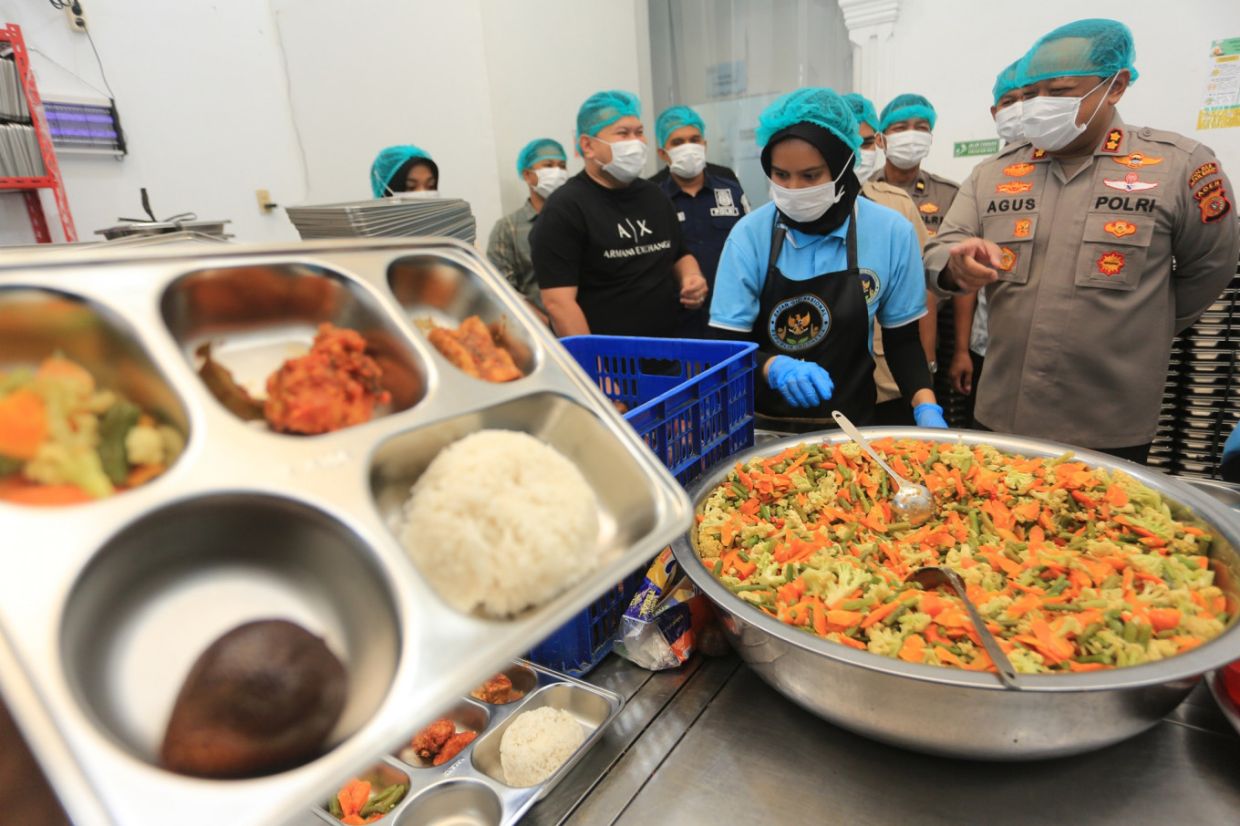
Indonesia's ambitious free nutritious meals initiative, launched by President Prabowo Subianto as a cornerstone policy to combat malnutrition, is creating an unintended environmental crisis through staggering levels of food waste that governance critics say the government failed to anticipate. An April assessment by the Jakarta-based Centre for Economic and Law Studies (CELIOS) revealed the scale of the problem, estimating that between 62 million and 120 million meal packages distributed weekly under the scheme end up discarded, representing a substantial drain on public resources and environmental sustainability.
The magnitude of weekly waste is striking: at least 7,700 tonnes of cooked rice and 3,400 tonnes of prepared side dishes are thrown away each week, translating into economic losses exceeding Rp1.27 trillion, or approximately US$71 million, annually. For context, this waste volume from a single government programme rivals the total food waste of many developing nations, underscoring how a well-intentioned initiative designed to improve nutrition outcomes has created a parallel waste management emergency. The National Nutrition Agency (BGN), which oversees the programme serving roughly 62 million beneficiaries nationwide, has come under mounting pressure to address these losses.
The programme itself launched in January 2025 with the explicit goal of reducing stunting rates among Indonesia's vulnerable populations. However, beyond the waste issue, it has been beset by governance challenges that reveal deeper institutional weaknesses. Repeated foodborne illness outbreaks, including a mass poisoning incident affecting around 1,200 people in Semarang and Jayapura, have undermined public confidence. Additionally, corruption allegations involving former senior BGN officials have further tarnished the scheme's credibility, suggesting that weak oversight permeates multiple aspects of the operation.
In response to mounting criticism, the Environment Ministry announced in early August a pivot toward what officials term a circular economy approach to food waste management. Deputy Environment Minister Diaz Hendropriyono indicated that kitchens partnered by the government would be encouraged to convert leftover food and wastewater into livestock feed and agricultural materials. This strategy shifts from simple disposal to resource recovery, with participating kitchens already experimenting with such conversions. The circular model represents an attempt to salvage environmental credibility from an inherently wasteful system.
However, skepticism from independent researchers tempers optimism about this remedial approach. CELIOS researcher Isnawati Hidayah contends that recycling measures, while welcome, do not address the root cause of the waste crisis. She argues that poor programme governance—encompassing demand forecasting, production planning, and distribution logistics—generates the waste in the first place. Without fixing these foundational flaws, she maintains, the circular economy approach amounts to managing symptoms rather than curing the disease. Her critique points to a governance failure in matching supply with actual consumption patterns across 28,000 kitchens dispersed nationwide.
Environmental advocacy group Greenpeace Indonesia has sounded alarms about the public health implications of accumulating organic waste. Decomposing food waste in landfills releases methane, a potent greenhouse gas that contributes to climate change while creating fire hazards and enabling disease transmission. The organisation has characterised the food waste volume as evidence of systemic mismanagement rather than inevitable collateral damage from a large-scale feeding programme. Such criticism carries weight in a country where waste management infrastructure remains inadequate in many regions.
Indonesia's broader food waste challenge provides sobering context for the free meals programme's contribution. According to a United Nations report, Indonesia ranked eighth globally in food waste generation during 2024, disposing of more than 14.7 million tonnes throughout the year. The free meals scheme, despite serving a laudable social purpose, is exacerbating a longstanding national problem. This reality has prompted the BGN to issue binding regulations: a March directive required all kitchens to implement waste management protocols throughout the entire food cycle, from planning through production to consumption.
New BGN leadership has signalled stricter enforcement of these standards. Sudaryono, appointed as BGN head on July 22 to replace former chief Nanik S. Deyang, wasted little time implementing discipline. During his first week in office, he ordered the closure of 883 kitchens—roughly three percent of the 28,000 operating nationally—citing failures in hygiene standards, operational compliance, and inadequate wastewater treatment infrastructure. The scale of these closures underscores how widespread deficiencies were before intervention, raising questions about oversight mechanisms prior to his appointment.
Sudaryono, a politician from President Prabowo's Gerindra Party, has committed to continued monitoring and enforcement against kitchen operators who breach standards. He has encouraged kitchens to expand waste recovery initiatives, including converting used cooking oil into biodiesel. Yet even this expansion of circular economy practices depends entirely on kitchen operators' willingness to invest in necessary equipment and processes, something enforcement alone may not guarantee across the archipelago's diverse regions and varying resource availability.
The free meals programme illustrates a persistent tension in large-scale social policy implementation in Indonesia: ambitious goals can mask inadequate planning for operational realities. Feeding 62 million people daily demands precision in logistics, procurement, preparation, and distribution that many kitchen operators lack the capacity or incentive to provide. Cultural factors also play a role; in some regions, nutritional preferences or portion size expectations may diverge from programme standards, contributing to wastage.
For Malaysian observers, Indonesia's experience offers cautionary lessons should Malaysia consider similar large-scale meal subsidy schemes. The episode demonstrates that nutritional goals, however worthy, require equally sophisticated waste management and logistical planning. Southeast Asia's broader food security challenges, compounded by climate variability and population growth, make efficient resource use increasingly critical. Wastage at the scale Indonesia is experiencing represents a failure not merely of administration but of stewardship in a region where food security remains contested.
The ultimate resolution will depend on whether Indonesia treats food waste reduction as integral to programme success rather than a secondary concern. This requires moving beyond circular economy optics to fundamentally redesigning how kitchens forecast demand, manage inventory, and coordinate with distribution networks. Without such systemic reform, the free meals programme risks becoming a cautionary tale of good intentions undermined by implementation failures—a particular disappointment given the pressing nutritional needs it was designed to address.

