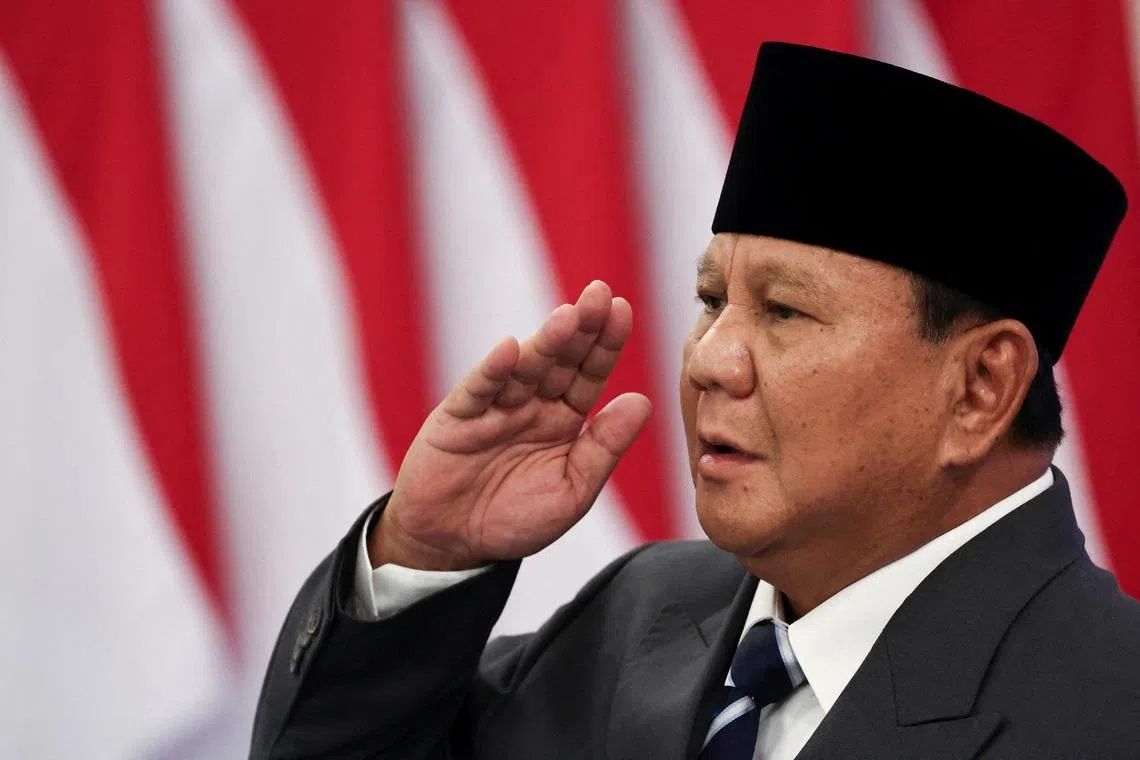
Indonesia's human rights watchdog has called for an immediate halt to military training requirements for prospective managers of President Prabowo Subianto's ambitious village cooperative programme, citing the deaths of five participants in just the first ten days of a 45-day training course. The intervention by the country's human rights commission signals growing concern about how Prabowo's signature economic initiative is being administered and raises questions about the appropriateness of military involvement in what are fundamentally civilian economic institutions.
The Red and White Cooperatives scheme, launched in July last year, represents a cornerstone of Prabowo's economic agenda. The initiative aims to establish approximately 80,000 village cooperatives across the archipelago, with the stated dual purpose of generating employment and underpinning the administration's ambitious target of achieving 8% economic growth by 2029. These cooperatives are designed to function as basic goods retailers while distributing subsidised cooking gas and fertiliser to rural communities, making them essential infrastructure for extending government support to Indonesia's hinterland.
However, the programme has introduced a controversial requirement: nearly 35,000 prospective cooperative managers must complete basic military training before assuming their positions. This training commenced on June 14 and is scheduled to continue through July 31 across several regional military installations. The militarisation of economic management has proven contentious, with the recent fatalities intensifying scrutiny of whether such preparation is either necessary or appropriate for individuals whose responsibilities centre on business operations and member services rather than defence matters.
The defence ministry acknowledged the deaths occurred between June 17 and June 26, attributing them to diverse medical conditions including cardiac arrest, heat stroke, tuberculosis and pneumonia. Major General Ketut Gede Wetan, heading the ministry's human resource development division, defended the training's conduct, emphasising that all participants had undergone medical screening beforehand and were declared fit. He also stressed that the programme focused on basic military concepts rather than combat techniques and involved no demanding physical exertion. Yet this characterisation sits uneasily with five deaths occurring within such a compressed timeframe, prompting questions about whether health monitoring protocols were adequately robust.
Pramono Ubaid Tantowi, speaking for Indonesia's human rights commission, articulated a fundamental objection to the military training framework. He noted that cooperatives are fundamentally economic organisations whose management demands competence in business administration, member services and organisational governance—skillsets entirely distinct from military preparation. The commission's position reflects international best practice regarding the separation of military and civilian institutional spheres, particularly where economic development is concerned.
The rights body has recommended that capacity-building for cooperative managers pivot toward what it considers genuinely relevant competencies: managerial expertise, leadership capabilities and financial literacy. Such skills, Pramono argued, form the bedrock of effective cooperative operation and directly advance the programmes' stated economic objectives. Military training, by contrast, contributes nothing measurable to these core competencies and appears to serve broader institutional interests rather than cooperative management efficacy.
Beyond demanding an immediate cessation of military training, the human rights commission has called for a comprehensive government inquiry into the deaths and urged police to commission forensic autopsies that could shed light on the precise causes. This forensic demand carries particular significance given potential criminal liability questions—deaths occurring during training programmes raise inevitable accountability concerns, particularly when participants were screened as medically suitable beforehand yet still succumbed to conditions such as heat stroke, suggesting possible inadequacies in field safety management.
The defence ministry has responded by promising a thorough programme evaluation encompassing enhanced health monitoring, earlier identification of participants with underlying health vulnerabilities and adjusted activity intensity levels. The health ministry is to be incorporated into training oversight, signalling recognition that medical considerations warrant greater prominence. Nevertheless, these proposed adjustments appear reactive rather than addressing the fundamental question of whether military training belongs in this programme architecture at all.
Prabowo's expansion of military roles across civilian governance domains since assuming office in 2024 represents a notable policy shift, and the cooperative programme provides a concrete illustration of this trend. The initiative's militarisation raises broader implications for how Indonesia's development programmes are structured and administered. The tension between rapid scaling of ambitious economic projects and adequate safety protocols has been made starkly visible by these deaths, and the human rights commission's intervention suggests civil society will remain vigilant about institutional overreach.
For Malaysia and other Southeast Asian nations observing Indonesia's governance trajectory, this episode offers instructive lessons regarding programme implementation and institutional accountability. Large-scale economic initiatives, particularly those targeting rural development, require careful calibration between ambition and execution capacity. The deaths in this training programme underscore how hastily assembled procedures lacking sufficient safety infrastructure can undermine even well-intentioned policy objectives, a cautionary note applicable across the region as governments pursue comparable cooperative and rural economic schemes.
The ultimate resolution of this dispute will reveal much about Prabowo's willingness to recalibrate flagship initiatives in response to human rights concerns versus his apparent commitment to military integration in civilian institutions. Should the government persist with mandatory military training despite the deaths and the rights commission's objections, it would signal prioritisation of military institutional interests over both programme efficacy and participant welfare—a message likely to reverberate throughout Indonesian civil society and across Southeast Asia's democratic discourse.

