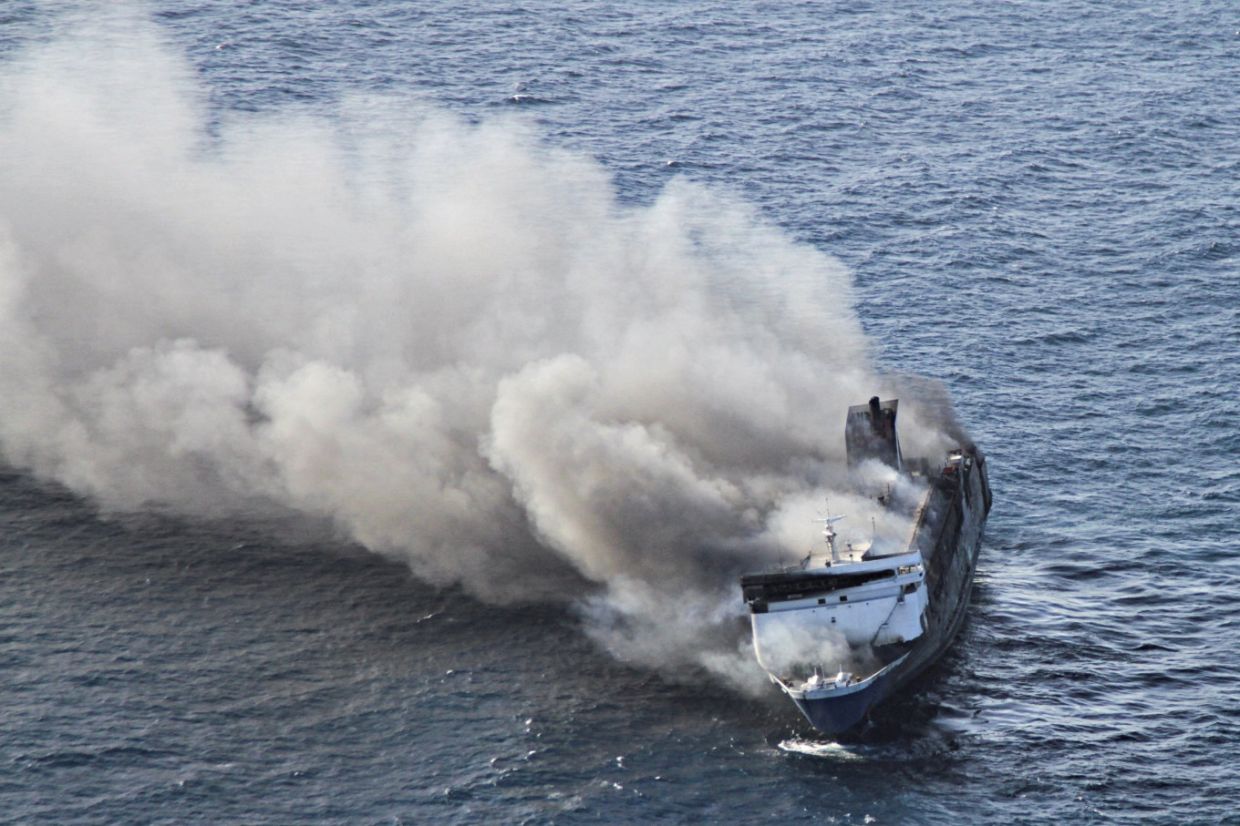
The fatal fire aboard the KMP Mutiara Sentosa II on August 2 has thrust Indonesia's maritime safety regime into the spotlight once more, with industry figures and government officials now grappling with uncomfortable questions about whether the nation's regulatory framework adequately protects the thousands of passengers who depend on ferries for their livelihoods and travel. The vessel, which had been en route from Surabaya in East Java to Makassar in South Sulawesi, went up in flames at approximately 6am, claiming at least five lives and leaving two people unaccounted for. Among the 236 passengers aboard were logistics and truck drivers, many of whom ply the interisland trade routes that form the commercial backbone of Indonesia's economy. The presence of 39 crew members raises particularly troubling questions about why evacuation procedures apparently broke down so catastrophically during the emergency.
Witnesses and survivors have painted a harrowing picture of the evacuation that unfolded as the 160-meter vessel caught fire. Udin Karo Karo, chairman of the Makassar–Surabaya Truck Drivers Association, has emerged as a vocal critic of the company's handling of the emergency, contending that crew members abandoned their duty to guide passengers to safety. According to his account, roughly 40 percent of the drivers rescued themselves through their own initiative rather than following organized evacuation procedures. The situation deteriorated further as passengers found themselves compelled to leap into the sea, their safety dependent entirely on life jackets with no visible lifeboats or inflatable rescue rafts to supplement their escape. This catalogue of failures, Karo argues, represents a profound violation of established maritime regulations that explicitly mandate crew-led evacuation protocols.
Karo's demands for accountability extend beyond mere investigation; he is calling for a thorough examination of whether the operator, PT Atosim Lampung Pelayaran (ALP), had maintained adequate operational readiness and safety compliance standards. The association has also pressed authorities to ensure compensation reaches the victims and their families, transforming this incident from a technical mishap into a matter demanding corrective action with financial consequences. Such pressure from the commercial shipping community is significant because it suggests that those who depend on these vessels daily—professional drivers whose income relies on timely interisland transport—have lost confidence in the safety assurances provided by regulatory authorities.
What renders this disaster particularly troubling is its historical context. The KMP Mutiara Sentosa I, an earlier vessel operated by the same company, suffered a similar catastrophe on May 19, 2017, near Madura, also killing five people. That such a tragedy could occur on a sister ship operated by the identical company raises the uncomfortable possibility that institutional failures, rather than isolated technical problems, may be endemic to the operator's safety culture. Edi Priyanto, deputy chairman of the East Java Occupational Safety and Health Council, has articulated this concern with clinical precision, suggesting that the underlying issues transcend mechanical failure and point instead to deficiencies in the company's approach to safety culture, organizational learning, and risk management systems.
Priyanto's analysis moves beyond surface-level causation to examine systemic weaknesses. He notes that every maritime incident should catalyze improvements throughout the industry, yet the persistence of similar accidents involving the same operator suggests that lessons from the 2017 fire were never translated into meaningful operational change. This observation cuts to the heart of maritime safety philosophy: a single ship catching fire may be tragic but ultimately remediable through better maintenance and equipment. When similar incidents recur on related vessels, the problem ceases to be about isolated equipment failure and becomes instead a question of whether management, training protocols, and safety procedures are fundamentally broken. Priyanto emphasizes that investigators must examine not merely what ignited the blaze, but why it spread with such lethality and whether the vessel's emergency systems operated as designed.
Transportation Minister Dudy Purwagandhi has indicated that the government will conduct a comprehensive evaluation of PT ALP once the National Transportation Safety Committee (KNKT) completes its investigation into the fire's cause. However, his cautious language—stating that evaluation depends on initial findings—suggests bureaucratic deliberation rather than swift remedial action. Purwagandhi has acknowledged that PT ALP carries a troubling history of maritime incidents, yet his response appears measured and procedural rather than decisive. This measured approach may reflect the complexity of Indonesian maritime regulation, where numerous operators manage aging fleets across vast distances with limited oversight capacity, but it is unlikely to satisfy those demanding immediate safeguarding of passenger lives.
The KMP Mutiara Sentosa II fire arrived just one month after another ferry sank near Selayar, a small island off South Sulawesi, carrying over 70 passengers and claiming at least four lives with fourteen still missing when search operations concluded. This clustering of disasters within weeks has transformed what might otherwise be dismissed as separate incidents into a pattern suggesting systemic vulnerability. Abdul Hadi, a member of the House of Representatives Commission V responsible for oversight of transportation and infrastructure, has characterized the KMP Mutiara Sentosa II fire as a clarion warning that Indonesia's maritime safety system requires fundamental reexamination rather than incremental adjustment. His words carry weight given his legislative authority over the sector.
Hadi's particular concern focuses on the erosion of safety inspection procedures into hollow administrative routines. He warns that seaworthiness certificates, inspections, and safety protocols must cease functioning as bureaucratic checkboxes and must instead genuinely reflect vessel conditions and operational readiness. This critique suggests that somewhere in the regulatory chain—whether in port authority inspections, classification society reviews, or company-level compliance—corners are being cut and documents are being stamped without thorough substantiation. For Malaysian readers, this resonates particularly sharply because Malaysia's own ferry operators navigate many of the same regional waters and commercial pressures that characterize Indonesia's maritime sector. The regulatory environments in Southeast Asia are sufficiently similar that deficiencies in one nation's oversight carry implications for neighboring states.
The broader implications for maritime safety across Southeast Asia merit careful attention. Ferries represent vital infrastructure for island nations and archipelagic states, moving not merely tourists but essential commercial traffic and ordinary citizens conducting daily business across maritime boundaries. Indonesia's experience demonstrates how rapidly procedural shortcuts can cascade into tragedy when vessels operate in remote waters far from immediate rescue resources. The regulatory frameworks governing ferry operations across the region—including the certification of vessels, crew training requirements, and the enforcement of safety procedures—deserve scrutiny from policymakers and industry observers throughout the Southeast Asian maritime community. Malaysia's own ferry operators and regulators might usefully examine whether similar vulnerabilities exist in their respective systems.
PT ALP has declined immediate comment on the disaster, a silence that itself speaks volumes about the company's stance toward public accountability. As investigations proceed and the KNKT compiles findings, the fundamental question remains whether Indonesia's maritime regulatory authorities possess the political will and institutional capacity to impose meaningful consequences on operators whose safety culture remains demonstrably inadequate. The victims of the KMP Mutiara Sentosa II fire deserve more than procedural investigation; they deserve assurance that their deaths will prompt genuine systemic reform rather than ceremonial investigation followed by business as usual. For a nation whose economic vitality depends on maritime commerce, allowing such systemic vulnerabilities to persist represents both a humanitarian failure and an economic liability that ultimately undermines the prosperity these shipping routes are meant to facilitate.

