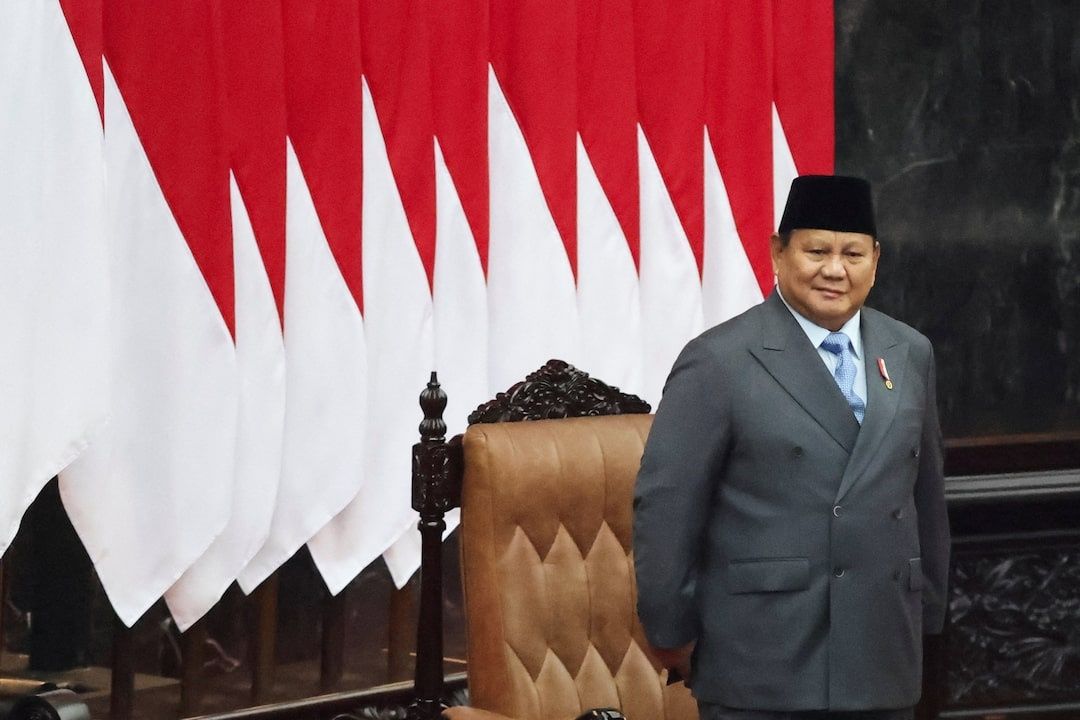
Indonesian President Prabowo Subianto faces a pivotal moment this week as he presents his 2027 budget proposals on Friday, August 14, with his domestic political standing and international investor confidence both under mounting pressure. The former special forces commander, who swept to electoral victory in 2024 after pledging to eradicate corruption, accelerate economic growth to 8% annually, and provide free meals to vulnerable children, must now demonstrate concrete delivery on those ambitious campaign commitments. However, his first year in office has been marked by economic headwinds and policy missteps that have eroded public faith in his administration and rattled capital markets across the region.
The decline in Prabowo's political standing has been dramatic and swift. Polling data from the previous month revealed his approval rating had plummeted by 30 percentage points within eight months of taking office, settling at 51%. This sharp deterioration has been driven primarily by deteriorating macroeconomic conditions and widespread dissatisfaction with the government's law enforcement approach. The momentum from his landslide election victory in 2024 has dissipated rapidly, leaving him little room for error as he confronts an increasingly skeptical electorate and business community.
Economic conditions have proven far more challenging than officials anticipated when Prabowo assumed the presidency in October 2024. The Indonesian rupiah has experienced significant depreciation against major currencies, undermining corporate balance sheets and consumer confidence. Simultaneously, the stock market has underperformed expectations, reflecting investor wariness about policy direction and macroeconomic stability. These twin pressures have exposed vulnerabilities in the broader economy that campaign promises of growth acceleration have yet to address. For regional observers, Indonesia's economic stumbles carry implications across Southeast Asia, given the country's size as the region's largest economy and its importance to commodity and trade flows.
One of Prabowo's most visible policy initiatives, the free meals programme for schoolchildren, has become emblematic of the administration's implementation challenges. The signature social welfare scheme has suffered budget cuts and attracted allegations of mismanagement, undermining the president's anti-corruption messaging and raising questions about institutional capacity. This slippage on a high-profile commitment has further damaged Prabowo's credibility with voters who elected him partly on the strength of his reform platform.
Pervasive concerns about fiscal discipline have also weighed on investor sentiment. The government faces mounting criticism over spending patterns and questions about the independence of Indonesia's central bank. The fiscal deficit currently stands at approximately 2.8% of gross domestic product for 2025, placing the nation on a trajectory to approach the constitutional ceiling of 3% once again. This fiscal tightness leaves limited room for additional stimulus or investment in the ambitious programmes the Prabowo administration has championed, creating a fundamental tension between campaign promises and budgetary reality.
Friday's presentation will unfold in two stages, with Prabowo first delivering a morning address marking Indonesia's Independence Day before unveiling the budget framework in the afternoon. The timing underscores the president's effort to frame fiscal policy within a broader national narrative. Economists and analysts anticipate that this budget will serve as a crucial test of Prabowo's ability to restore investor confidence after a tumultuous eighteen months of policy surprises and economic disappointment. According to Irman Faiz, an economist at Bank Danamon, the 2027 budget represents "one of the most important credibility checkpoints for global investors in recent years," particularly given Indonesia's track record of policy reversals and unexpected announcements that have destabilised markets.
One of the most contentious policy initiatives facing investors and analysts is Prabowo's plan to consolidate all critical natural resources exports under a centrally managed state entity called Danantara Sumberdaya Indonesia. The president initially unveiled this proposal in May during a parliamentary address that sent tremors through commodity markets. The original announcement suggested the new entity would assume direct control of export flows, a move that alarmed international traders and resource companies already operating in Indonesia. However, subsequent statements from various administration officials have suggested the entity's role may be limited to supervision rather than operational control, creating confusion about the true scope and impact of the policy.
Commodities markets remain particularly attentive to any clarification Prabowo may offer regarding Danantara Sumberdaya Indonesia's actual mandate and operational structure. Palm oil analysts and other commodities traders are listening intently for signals about how the government intends to balance its resource nationalism agenda with the practical need to maintain functional relationships with foreign investors and international buyers. The ambiguity surrounding this initiative has become a source of investor uncertainty that extends beyond Indonesia's borders, as regional supply chains and global agricultural and mineral markets depend on Indonesia's resource exports.
Yose Rizal Damuri, executive director of the Center for Strategic and International Studies, has emphasized the critical importance of the budget presentation in clarifying the government's policy trajectory. The absence of transparency around major initiatives has contributed to market nervousness and capital outflows. Investors need reassurance that the government possesses a coherent economic strategy and the institutional capacity to implement it effectively. The budget, therefore, must serve not merely as a fiscal accounting document but as a statement of policy intent that reduces uncertainty and signals competent stewardship of the economy.
Arya Fernandes, head of politics and social change at CSIS, notes that Prabowo faces an exceptionally difficult balancing act. He must simultaneously address mounting economic doubts among the public while credibly explaining how his signature programmes will be funded and executed within fiscal constraints. The administration must convince skeptical voters that it can deliver on anti-corruption promises and social programmes while reassuring investors that fiscal discipline and macroeconomic stability remain government priorities. Given the current trajectory of approval ratings and economic conditions, achieving both objectives represents a formidable challenge that will likely consume much of the president's political capital in the coming months.
The stakes for Friday's budget presentation extend well beyond Indonesia's borders. Regional economies from Malaysia to Thailand depend on Indonesian growth and stability for trade, investment, and financial flows. A credible budget presentation that restores investor confidence could help stabilize regional asset prices and currency movements. Conversely, further policy confusion or fiscal deterioration could trigger broader Southeast Asian market volatility and capital reallocation away from the region. For Malaysian observers particularly, Indonesia's trajectory matters enormously given the deep economic integration between the two largest Southeast Asian economies and their interconnected financial systems.

