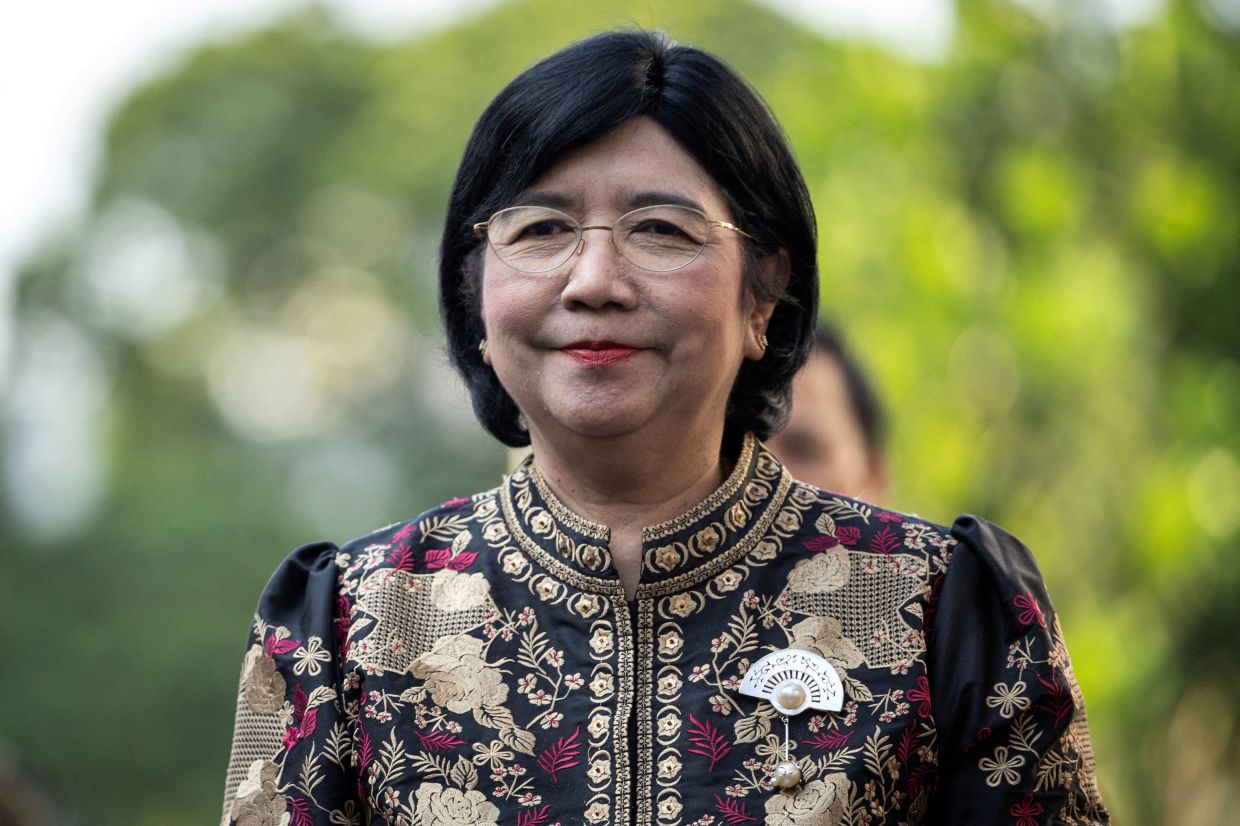
Indonesia's President Prabowo Subianto has selected Destry Damayanti as the sole contender to helm the central bank, according to a statement from his office released on Monday. The nomination comes roughly a month after Perry Warjiyo unexpectedly stepped down from the position, citing personal grounds. Damayanti, who currently holds the title of senior deputy governor at Bank Indonesia, has been carrying out the governor's duties in an interim capacity since Warjiyo's departure, positioning her as the frontrunner in what observers had anticipated would be a closely watched selection process.
Markets have responded positively to Damayanti's nomination, with the rupiah climbing to its strongest position against the United States dollar since mid-June. This movement reflects investor optimism that the appointment of a figure with deep institutional knowledge and continuity in leadership may provide stability to monetary policy during a period of economic uncertainty. The currency's recovery is particularly significant given the turbulence that followed Warjiyo's abrupt resignation, which had rattled confidence among international investors assessing Indonesia's economic direction.
Damayanti brings considerable experience to the role, having served as the central bank's second-in-command since 2019. Her tenure in this position has given her exposure to the institution's technical operations, policy frameworks, and the complex challenges facing monetary authorities in Southeast Asia's largest economy. The continuity her appointment would provide contrasts sharply with the uncertainty that had gripped markets following Warjiyo's unexpected departure, which left stakeholders questioning the stability of Indonesia's monetary governance.
Parliament now bears responsibility for either endorsing or rejecting Prabowo's nomination within a thirty-day window. The legislature, which operates under the governing coalition solidly backing the president, has historically proved accommodating toward presidential selections for this critical post. No sitting president has seen a central bank governor nominee rejected by parliament since 2008, suggesting that Damayanti's approval is highly probable, though formal procedures must still be observed.
Warjiyo's sudden exit triggered renewed jitters among international investors already grappling with concerns about Indonesia's economic trajectory. Prior to the resignation, sentiment toward the country had been deteriorating amid apprehension regarding government spending habits, questions about the independence of monetary authorities from political pressure, governance issues affecting equity market operations, and broader geopolitical tensions in the Middle East affecting commodity prices and capital flows. The central bank leadership vacuum temporarily amplified these concerns, making swift resolution through nomination and confirmation procedurally important for restoring investor assurance.
Indonesia faces mounting pressure to accelerate economic expansion, with Prabowo's administration targeting growth of approximately 8 percent compared to the current rate of around 5 percent. This ambitious objective has created competing demands on the central bank, which must simultaneously pursue price stability, exchange rate management, and financial system soundness while facing implicit or explicit encouragement to support government growth initiatives. Balancing these objectives represents a fundamental challenge for any incoming governor, and Damayanti's appointment will test whether the institution can maintain its policy independence while responding to developmental expectations.
Under Warjiyo's leadership, Bank Indonesia pursued an array of measures intended to defend the rupiah and attract foreign investment flows. The institution raised its benchmark interest rate by a hundred basis points throughout the year, introduced incentive schemes for rupiah-denominated hedging instruments, and launched high-yielding short-term securities designed to draw capital inflows. These interventions reflected the central bank's struggle to prop up the currency amid outflows and depreciation pressure, illustrating the complex environment that will confront Damayanti as she assumes formal leadership.
The appointment of Damayanti also carries symbolic significance within the context of Indonesia's institutional development. Her elevation to the top monetary policy position represents advancement for a senior female figure in a traditionally male-dominated sphere of economic governance. This development may signal the Prabowo administration's commitment to merit-based selection and institutional continuity, though observers will assess whether her tenure truly permits autonomous decision-making or becomes subject to political interference.
Investors and regional economic analysts will be closely monitoring the parliamentary confirmation process and Damayanti's early policy statements for signals about the central bank's future direction. The appointment offers an opportunity to restore confidence in Indonesia's monetary institutions and demonstrate that governance independence remains intact despite competing pressures from the executive branch. Her success in this role could substantially influence Indonesia's ability to attract sustained foreign investment and stabilize macroeconomic conditions, with implications extending across Southeast Asia's economic ecosystem.

