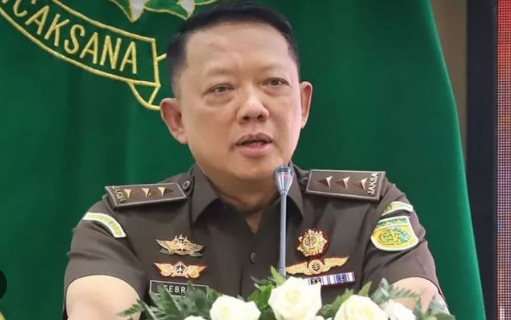
Indonesian President Prabowo Subianto's commitment to eliminating corruption within government ranks is encountering one of its most delicate challenges yet. When he assumed office, Prabowo made clear his expectation that officials would purge themselves of wrongdoing or face enforcement action. The investigation into Febrie Adriansyah, who until recently held the position of deputy attorney general overseeing special crimes and Indonesia's most prominent anti-corruption prosecutor, now tests whether that pledge can withstand institutional pressures and questions about how agencies should police their own.
The case has already triggered substantial debate among legal analysts, centred not primarily on the charges themselves but on a procedural decision that many view as problematic. Police announced they would hand the investigation over to the Attorney General's Office, the institution where Febrie spent the bulk of his career. This transfer, announced days after authorities seized US$26 million in cash and gold bars from one of his residences and designated him a suspect, marks an unusual course that some constitutional scholars argue may lack legal foundation under Indonesia's criminal procedures.
Febrie's detention status has drawn particular attention. Despite being named a suspect in cases alleging money laundering, the former prosecutor has remained free while the investigation proceeded. One co-suspect in the case was arrested on July 10, highlighting what observers see as inconsistent treatment. The police have provided no public explanation for this difference in handling, a silence that feeds scepticism about the investigation's independence. Even as the Attorney General's Office assumed nominal control, police retained involvement in authenticating seized materials, including gold bars, with assistance from the FBI, the US Secret Service, and diplomatic missions from the United States and Singapore.
Former Constitutional Court Chief Justice Mahfud MD has raised serious concerns about the legality of transferring an active police investigation to prosecutors mid-process. He warned that such a move could expose the entire case to successful pretrial challenges, potentially unravelling the prosecution's work. Indonesian lawmakers took the matter seriously enough to establish a working group specifically to monitor the investigation's conduct. Some parliamentarians have called for the Attorney General's Office to establish an independent unit entirely separate from its regular prosecution apparatus, a step that might lend credibility to proceedings against one of the institution's most prominent former figures.
Zaenur Rohman, an anti-corruption researcher at Gadjah Mada University, has characterised the case transfer as essentially a political accommodation designed to ease tensions between police and prosecutors rather than a legally grounded decision. The transfer arrangement places prosecutors in the awkward position of investigating a leader who spent his career building influence within their own ranks, an inherent conflict of interest that critics argue makes the Corruption Eradication Commission, a separate agency operating under executive oversight, a more appropriate investigator. However, prosecutors and police have publicly downplayed institutional tensions, insisting their coordination remains functional and undamaged by the case's complications.
Coordinating Minister for Law, Human Rights, Immigration and Corrections Yusril Ihza Mahendra defended the transfer decision on procedural grounds, arguing it would streamline investigations and improve efficiency between agencies. Yet he simultaneously acknowledged public unease, recognising the resonance of the Indonesian expression "oranges eating oranges," a colloquialism implying institutional self-protection. Reports indicated that Prabowo personally met with both the police chief and attorney general to provide direction on managing the case transfer, suggesting executive engagement with a matter ostensibly within law enforcement's purview.
The underlying institutional landscape makes such cases inherently contentious. Police and prosecutors have occupied overlapping territory in corruption investigations for years, generating periodic competition for influence, media visibility, and control over politically significant cases. This structural ambiguity frequently surfaces when cases touch powerful figures or sensitive programmes. Febrie's particular prominence amplifies the stakes considerably. As head of the Attorney General's Office's Special Crimes Division, he exercised enormous influence over major investigations involving state enterprises such as Pertamina and Timah, airlines including Garuda Indonesia, and notably Prabowo's flagship free-meals initiative. He also oversaw inquiries into former Education Minister Nadiem Makarim, placing him at the centre of the administration's enforcement activity.
The visual theatre surrounding the raids themselves underscored the case's sensitivity. Armed soldiers were deployed around Febrie's South Jakarta residence during police operations, a show of force that generated public concern. In his resignation statement, Febrie acknowledged ownership of the raided house but denied that the seized currency and precious metals were his property. Immigration authorities subsequently barred him from international travel for 20 days at police request, effectively confining him within Indonesia pending investigation outcomes. As of the investigation's public updates, Febrie's specific whereabouts had not been disclosed, though his absence from his formal position was absolute.
Since last week's dramatic raids, visible institutional tension has cooled somewhat. Prabowo publicly called for institutional "introspection" from all sides, and the National Police chief made a point of appearing with the attorney general to deny any rift between them. Yet behaviour by the Attorney General's Office in parallel matters suggests underlying friction persists beneath diplomatic statements. The office ordered regional prosecutors to cease data collection related to the US$15 billion free-meals programme, citing conclusion of an initial inquiry phase and warning against misuse of prosecutorial authority. This directive emerged shortly after the office had identified an active police brigadier general as a suspect in a related investigation, creating an apparent tit-for-tat dynamic despite official denials of institutional conflict.
Aditya Perdana, a political scientist at the University of Indonesia, observed that while the sequence of events does not explicitly demonstrate institutional rivalry, the pattern itself conveys a narrative suggesting tensions beneath the surface. The raids occurred as Prabowo intensified his broader anti-corruption campaign, highlighted through televised press conferences showcasing seized assets, cash quantities, and luxury goods. This public relations dimension has become characteristic of Indonesian anti-corruption enforcement, serving both to demonstrate government action and to build political capital.
The case has also illuminated shifting power dynamics among Indonesia's enforcement apparatus. Recent legal changes in 2025 modified the institutional landscape significantly. A revision to military law now permits active-duty military officers to serve in the Attorney General's Office without first retiring from armed forces, reversing previous practice. Separately, legal amendments expanded the Attorney General's Office's authority to request military protection for prosecutors, a function previously managed solely by police. These changes reflect strategic repositioning within the security establishment and suggest Prabowo's administration is reshaping relationships among enforcement institutions.
Jacqui Baker, a senior lecturer in Southeast Asian politics at Murdoch University, notes that corruption investigation authority represents a prize jealously guarded by Indonesian law-enforcement agencies because it fundamentally determines their political and economic influence. Successive presidents have attempted to maintain balance among police, prosecutors, and military rather than permitting institutional dominance. Under Prabowo, this balancing continues, though the recent legal modifications indicate a shifting equilibrium. Whether the Febrie investigation unfolds with sufficient independence to demonstrate Prabowo's anti-corruption commitment, or whether institutional considerations ultimately limit accountability, will signal much about his administration's capacity to subordinate factional interests to institutional integrity.

