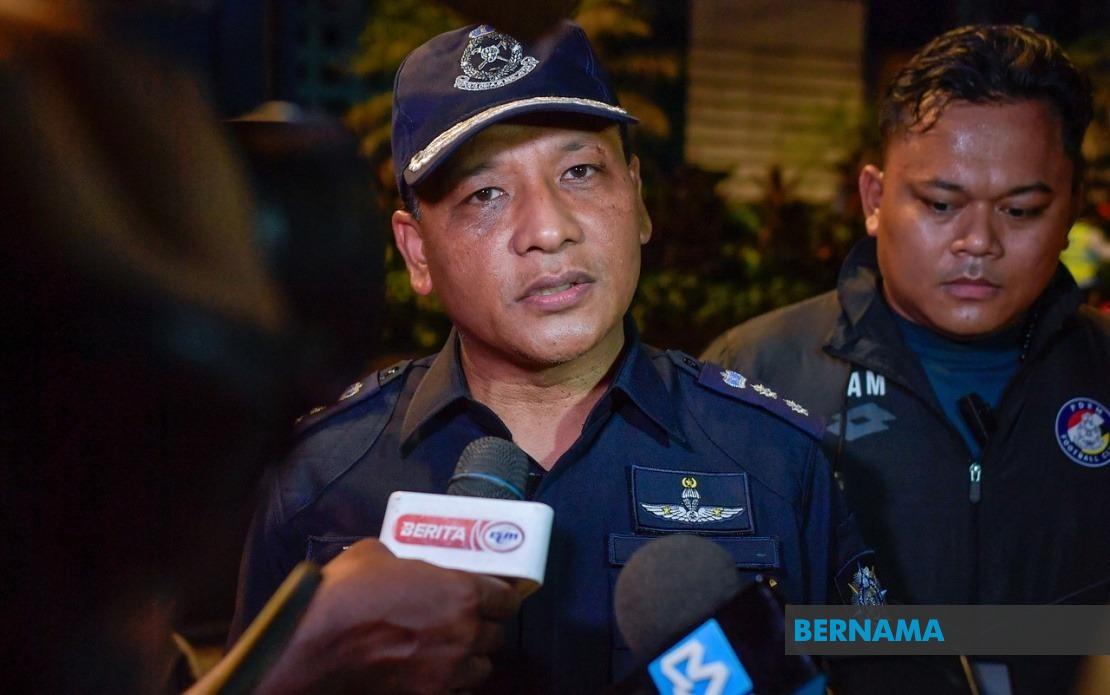
The investigation into a deadly collision involving a Kuala Lumpur Immigration Department truck will be forwarded to the Attorney General's Chambers tomorrow, marking a crucial step toward potential criminal charges. The early morning crash claimed the lives of three family members and hospitalised a fourth with serious injuries, prompting an urgent probe by the Kuala Lumpur Traffic Investigation and Enforcement Department. According to ACP Mohd Zamzuri Mohd Isa, the chief of the traffic unit, the timing of the referral follows coordinated discussions with the Kuala Lumpur Prosecution Director to ensure proper handling of this high-profile case.
The submission represents a standard procedural transition in Malaysian criminal investigations. Once received by the Head of the General Crime and Public Order Division at the Attorney General's Chambers, the case file will be examined by both the prosecution director and investigating officer to determine what charges, if any, should be brought against those involved. This deliberative stage is critical, as it ensures legal sufficiency of evidence before charges proceed to court.
Police have already taken preliminary action by securing a one-day remand order for two individuals: the driver of the Immigration Department truck and the operator of a Proton Saga that was struck during the incident. Both are being held under investigation under Section 41(1) of the Road Transport Act 1987, a provision typically applied to traffic offences resulting in death or serious injury. The legal framework allows authorities to examine whether negligence, recklessness, or other culpable conduct contributed to the tragedy.
The fatal collision unfolded in the early hours of the morning on Jalan Sultan Ismail when the Immigration Department's distinctive black truck, colloquially known as a "Black Maria," was en route to Chow Kit to conduct an operation targeting illegal immigrants. According to witness accounts and preliminary investigations, the truck entered a busy junction while its traffic light displayed red, though its emergency beacon and siren were activated. The vehicle was empty at the time, having not yet reached its intended destination for the enforcement operation.
A Proton Saga proceeding through the same intersection on a green light collided with the truck, triggering a chain of events that proved catastrophic. The impact caused the heavy truck to lose control and veer across the road surface, ultimately striking multiple pedestrians and damaging another vehicle—an Inokom Matrix—in its path. The sequence of events raises questions about right-of-way protocols, beacon and siren usage, and whether emergency vehicle privileges should override standard traffic signals in such circumstances.
Three members of the same family perished in the collision. Shaik Mohd Firdaus Shaikh Yahya, aged 53, died along with two of his daughters: Siti Nor Sazlin, 25, and Siti Darwisyah Auni, just 12 years old. The human toll extended beyond fatalities; his wife, Norhayati Razali, 55, sustained injuries serious enough to require intensive care admission at Kuala Lumpur Hospital. The concentration of casualties within a single family unit amplifies the tragedy's impact on those left behind and raises broader community concerns about road safety.
This incident occurs against a backdrop of ongoing debates regarding emergency vehicle operations in Malaysian urban centres. While beacon and siren activation is intended to alert other road users and facilitate rapid response, the balance between operational urgency and intersection safety remains contested. Traffic engineers and road safety advocates have long questioned whether activated warning systems should automatically grant vehicles exemption from traffic signal compliance, particularly in congested city areas where pedestrian presence is high.
The referral to the Attorney General's Chambers will likely examine multiple dimensions of culpability. Investigators must assess whether the truck driver exercised appropriate caution when approaching the red light, whether beacon activation justifies entry despite the signal, and whether the Proton Saga driver bore any contributory responsibility. The prosecution must determine the precise legal characterisation of the incident and whether charges should reflect negligence, recklessness, or other categories under Malaysian traffic law.
For Malaysian road safety advocates, this case underscores the need for clearer guidelines governing emergency vehicle operations within populated areas. Many Southeast Asian nations struggle with similar questions about balancing rapid response capabilities with pedestrian protection. The investigation's findings may influence future policy discussions around traffic law enforcement and emergency vehicle protocols, potentially affecting how government agencies approach high-priority operations in urban environments.
The submission timeline—with the referral occurring within 24 hours of the incident—reflects the serious nature of the case and its public prominence. Multi-fatality traffic incidents typically receive accelerated investigation and prosecutorial attention, ensuring that public accountability mechanisms function swiftly. The involvement of a government vehicle and personnel adds a layer of public interest, making transparent handling essential for maintaining confidence in official investigations.
As the case moves into the prosecutorial phase, attention will focus on what charges the Attorney General's Chambers recommends. Malaysian traffic law provides graduated options ranging from lesser breaches to serious traffic offences carrying substantial penalties. The evidence gathered by traffic investigators will form the foundation for this determination, making the quality of the initial probe particularly significant in a case with such tragic consequences.

