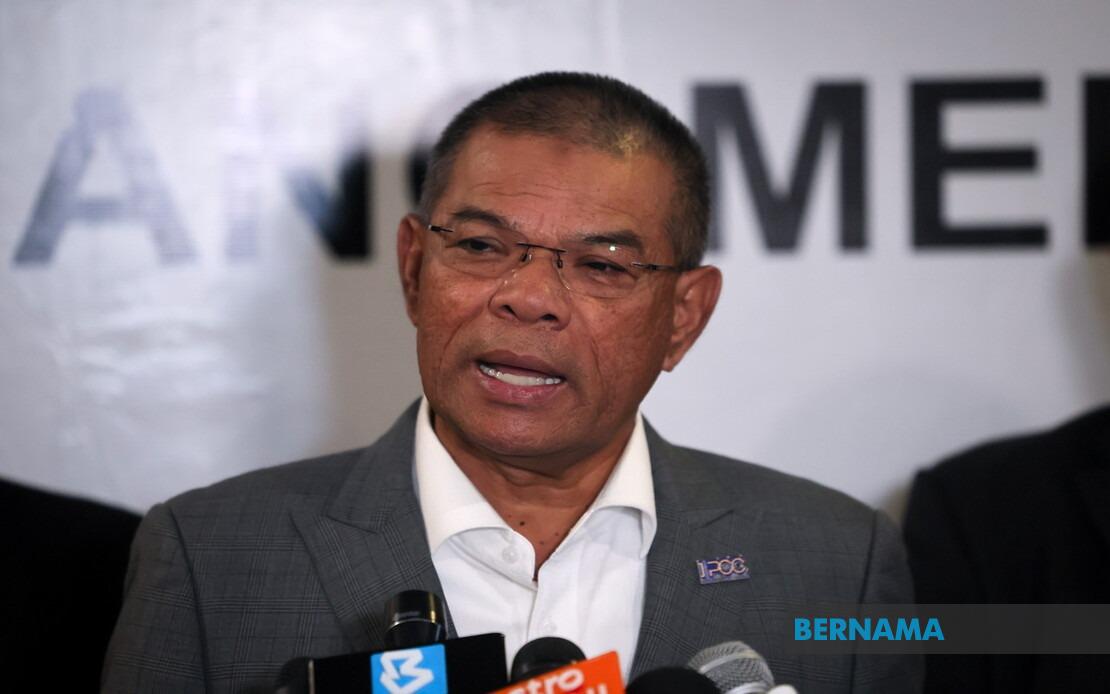
The Independent Police Conduct Commission (IPCC) has demonstrated measurable institutional growth since commencing operations in 2023, processing a total of 1,635 public complaints through July 24, 2026. Home Minister Datuk Seri Saifuddin Nasution Ismail unveiled these figures at a press conference in Putrajaya on July 27, characterising the volume as evidence of strengthening public trust in an independent mechanism designed to scrutinise police conduct and redress grievances.
Of the complaints lodged, 844 cases representing 76 per cent have reached resolution, a completion rate that suggests the commission has established functional processes for managing public grievances. The ministry received 372 complaints during 2026 alone through mid-July, indicating sustained or escalating public engagement with the complaint mechanism. This trajectory becomes particularly significant when considering that institutional credibility often develops gradually; the IPCC's ability to process nearly three-quarters of its caseload suggests operational maturity beyond what many newly established oversight bodies achieve within their opening years.
The complaint profile illuminates systemic challenges within police-public relations. The most prevalent grievance category involves members of the public failing to receive feedback regarding complaints they submitted against police officers. This pattern reveals a fundamental communication gap—complainants who invest time and effort in formal channels subsequently encounter silence, which undermines confidence in institutional responsiveness. Such opacity can discourage future complaint submissions and suggests that process improvements in complaint tracking and acknowledgment systems warrant priority attention from both the IPCC and the Royal Malaysia Police.
The IPCC's operational framework incorporates a triage mechanism that routes cases to appropriate authorities based on complaint characteristics. Allegations containing corruption elements proceed to the Malaysian Anti-Corruption Commission, exemplifying interagency coordination. This segmentation prevents duplication of investigative effort and ensures specialised bodies address matters within their purview. However, such referral processes create complexity for complainants navigating multiple institutional touchpoints, potentially explaining delays in resolution timelines that frustrate those seeking swift accountability.
Among the 791 unresolved complaints, a substantial portion reflects either complainant dissatisfaction with police investigation outcomes or continued absence of police responsiveness. These categories highlight two distinct institutional weaknesses: investigative conclusions that fail to satisfy complainants' expectations, and administrative failures wherein police simply do not respond. The former suggests potential divergence between public expectations of accountability and investigative findings, while the latter represents a more straightforward service delivery failure remediable through procedural tightening.
The IPCC has initiated 22 investigation papers, including five during the current year, with eleven cases completed and eleven ongoing. These investigations constitute the commission's most robust accountability mechanism, examining alleged misconduct with sufficient seriousness to warrant formal examination. Completion of half the investigations indicates steady progress, though the extended timelines some cases require underscore how thoroughly investigating police misconduct demands meticulous documentation and analysis to withstand potential legal challenges.
While characterising the complaint volume as relatively modest, Saifuddin Nasution framed the numbers as reflecting institutional legitimacy. The characterisation merits scrutiny—modest complaint numbers could indicate either genuine scarcity of police misconduct or, conversely, lingering public scepticism about whether complaint mechanisms produce meaningful consequences. For Malaysian readers accustomed to discussing police accountability challenges, the magnitude requires contextualisation against population size and police interaction frequency. Southeast Asian public opinion research consistently identifies policing transparency as a governance priority, making complaint mechanisms' effectiveness particularly consequential.
The government facilitated distribution of IPCC complaint posters to Royal Malaysia Police information centres nationwide, seeking to amplify public awareness of available grievance channels. This outreach initiative acknowledges that institutional accessibility remains incomplete when citizens lack knowledge of complaint procedures. Strategic visibility in police facilities represents a counterintuitive but potentially effective approach—placing information about independent oversight in the very venues where public-police interaction occurs could normalise complaint filing and reduce perception barriers.
Simultaneously, the Home Minister highlighted the arrest of twelve police personnel suspected of extorting RM2 million from a Vanuatu national, characterising this action as evidence of zero-tolerance approaches to internal misconduct. The high-profile prosecution simultaneously demonstrates that institutional mechanisms can produce accountability and potentially signals to the broader force that internal discipline operates. For international observers and ASEAN partners, visible consequences for serious police crimes enhance confidence in Malaysian institutional integrity.
The IPCC's performance metrics require evaluation against international benchmarks. Comparable independent review bodies in other democracies often process substantially higher complaint volumes relative to police force size, suggesting Malaysia's IPCC may still face a public awareness challenge. Building institutional credibility involves not merely processing received complaints competently but actively encouraging reporting from those hesitant to engage formal mechanisms. The modest complaint figures likely reflect both genuine police conduct improvements and residual public wariness about whether complaints trigger meaningful investigation.
For Malaysian policymakers, the data highlights priorities for the second phase of IPCC operations. First, expediting feedback mechanisms to ensure complainants receive timely acknowledgment regardless of eventual outcome strengthens perceived institutional responsiveness. Second, clarifying investigation timelines and publicly reporting resolution statistics could improve public understanding of why certain complaints require extended examination. Third, targeted awareness campaigns in communities experiencing higher police interaction might expand complaint submission rates among populations potentially most vulnerable to misconduct.
The IPCC represents institutional evolution in Malaysia's governance landscape—acknowledging that police self-regulation requires supplementation by independent oversight. The three-year performance record, while demonstrating operational capacity, simultaneously reveals systemic friction points in police-public communication. As Malaysia positions itself as a regional governance model, the effectiveness and public perception of mechanisms like the IPCC become markers of broader institutional maturity and democratic commitment.

