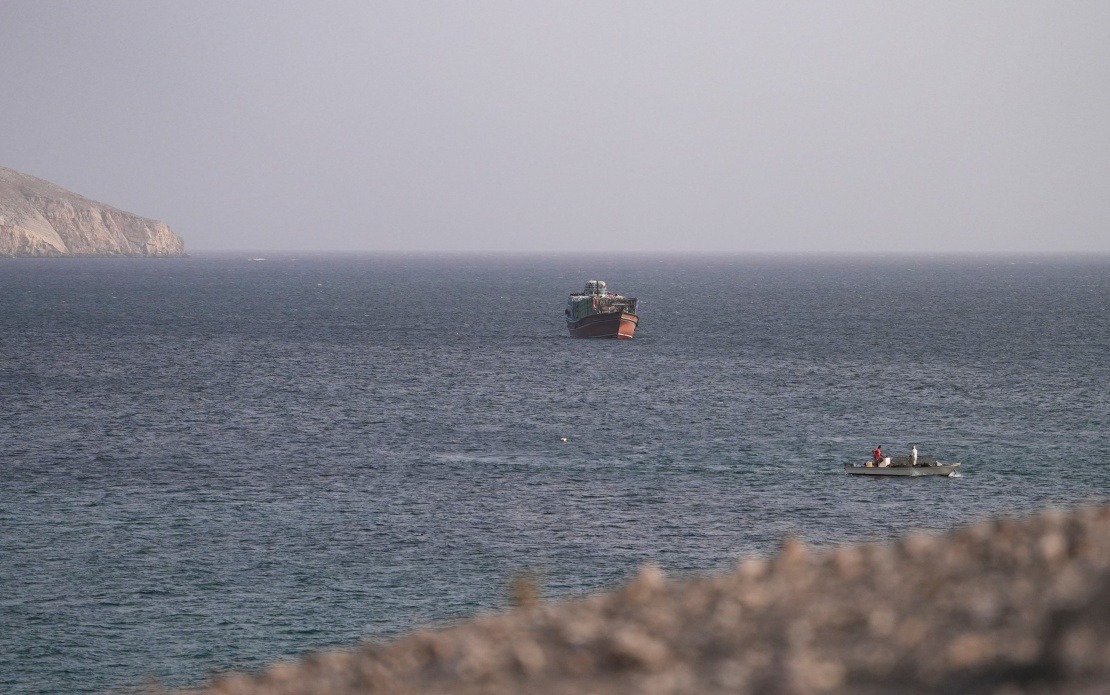
Iran and Oman are moving to create operational frameworks for overseeing maritime traffic through the Strait of Hormuz, according to Foreign Minister Abbas Araghchi, signalling a significant regional initiative to manage one of the world's most strategically vital waterways. Speaking during a diplomatic conversation with British Foreign Secretary Ed Miliband on Friday, Araghchi underscored Tehran's commitment to developing these bilateral operational mechanisms, a position that reflects Iran's longstanding insistence on controlling transit arrangements in the corridor that borders its coastline.
The initiative represents a calculated effort by Iran to establish its preferred model for governance of the Strait—one that vests administrative authority primarily within Iranian hands rather than international bodies or external powers. For Southeast Asian nations and global maritime commerce, this development carries significant implications, as approximately one-third of all traded oil passes through these waters, making the region's stability directly relevant to fuel prices and shipping insurance costs that affect Malaysian businesses and consumers. Any arrangement that consolidates Iranian influence over passage mechanisms could reshape the calculations of international shipping operators and insurance markets.
Araghchi issued a pointed warning that involvement by third parties in this Oman-Iran process would serve only to exacerbate existing tensions and destabilise the region further. This language carries implicit criticism of American involvement in managing Strait security, reflecting the broader strategic competition between Washington and Tehran for influence over this critical chokepoint. The message suggests that Iran views international mediation efforts, particularly those led by Western powers, as inherently problematic rather than constructive for achieving lasting stability.
The diplomatic conversation also revealed deeper rifts in Iran-UK relations. Araghchi took the opportunity to condemn what he characterised as Britain's "complicity" in conflicts he attributes to American and Israeli actions against Iran, describing such support as both unjustifiable and condemnable. He pressed the British government to reconsider its geopolitical orientation and alignment, seeking to drive a wedge between London and the broader Western security framework that has maintained sanctions and military presence in the Persian Gulf.
Miliband responded by emphasising that Britain's newly formed government does not view itself as a belligerent in any conflict with Iran and remains committed to diplomatic channels as the primary mechanism for resolving accumulated disagreements. This position reflects the Labour government's initial messaging of prioritising dialogue over confrontation, though it remains unclear whether this rhetorical commitment will translate into substantive policy shifts that address Tehran's core security concerns. Miliband additionally stressed the necessity of sustained diplomatic engagement to help lower tensions throughout the broader Middle Eastern region.
The broader context involves a June memorandum of understanding signed by Washington and Tehran, brokered through mediation by Qatar and Pakistan, which included ceasefire provisions and created pathways toward comprehensive negotiations on ending the underlying conflict. This development suggested that intensive diplomatic pressure from regional actors and the threat of further escalation had pushed both parties toward the negotiating table. However, fundamental disagreements persist regarding the precise terms and mechanisms for any final settlement.
A central point of contention between America and Iran concerns maritime security protocols. Washington has demanded that Iran cease attacks on merchant vessels transiting the region and provide unconditional guarantees of free passage through the Strait, conditions that reflect American preferences for an open, uncontrolled navigation regime. Tehran, conversely, has insisted that any vessel transiting the waterway should operate under a regulatory framework that Iran either administers independently or dominates through its partnership with Oman, giving Tehran meaningful leverage over international commerce.
This fundamental disagreement about governance structures reveals the deep strategic distrust between the parties. From Washington's perspective, Iranian control over transit mechanisms creates unacceptable risks of arbitrary harassment, blockades, or weaponisation of commerce. From Tehran's perspective, American demands for unregulated passage represent an attempt to deny Iran legitimate authority over waters adjacent to its territory and to undermine its capacity to deter hostile actions by regional adversaries and their international backers.
Recent weeks have witnessed renewed military tensions, with American forces conducting strikes against Iranian targets and Tehran responding with attacks directed at American military installations and equipment distributed across the region. These cycles of escalation and retaliation, though sometimes portrayed as isolated incidents, reflect the underlying volatility of the situation and the difficulty of maintaining restraint when both sides possess the capability and motivation to strike back. Each confrontation carries risks of catastrophic miscalculation that could transform the entire region's security landscape.
For Malaysia and other Southeast Asian economies heavily dependent on Gulf oil and maritime trade, the stakes in this Iranian-American confrontation are substantial. Disruptions to Strait traffic would immediately raise global energy costs, squeeze regional supply chains, and increase insurance expenses for vessels navigating contested waters. The Oman-Iran framework announcement, if it progresses toward formal mechanisms, could either stabilise navigation through independent regional management or conversely could entrench Iranian leverage in ways that create new uncertainties for international shipping.
The emerging arrangement between Tehran and Muscat also reflects Oman's historically important role as a mediator between Iran and Western powers, positioning the sultanate as a pragmatic actor capable of facilitating communication across deep ideological divides. Oman's willingness to partner with Iran on maritime governance suggests it views such mechanisms as preferable to unchecked escalation, though the arrangement also inevitably aligns Oman more closely with Iranian interests in ways that may complicate its traditionally balanced approach to Gulf affairs.
Maliland's emphasis on continued diplomatic engagement represents a potential opening for de-escalation, particularly if Britain can leverage its historical relationships and international standing to encourage American and Iranian negotiators to move beyond positional bargaining toward creative compromises on Strait governance. Whether such diplomatic opportunities will materialise depends partly on whether the June memorandum framework holds and whether both capitals remain committed to negotiated settlement rather than seeking strategic advantage through military means.

