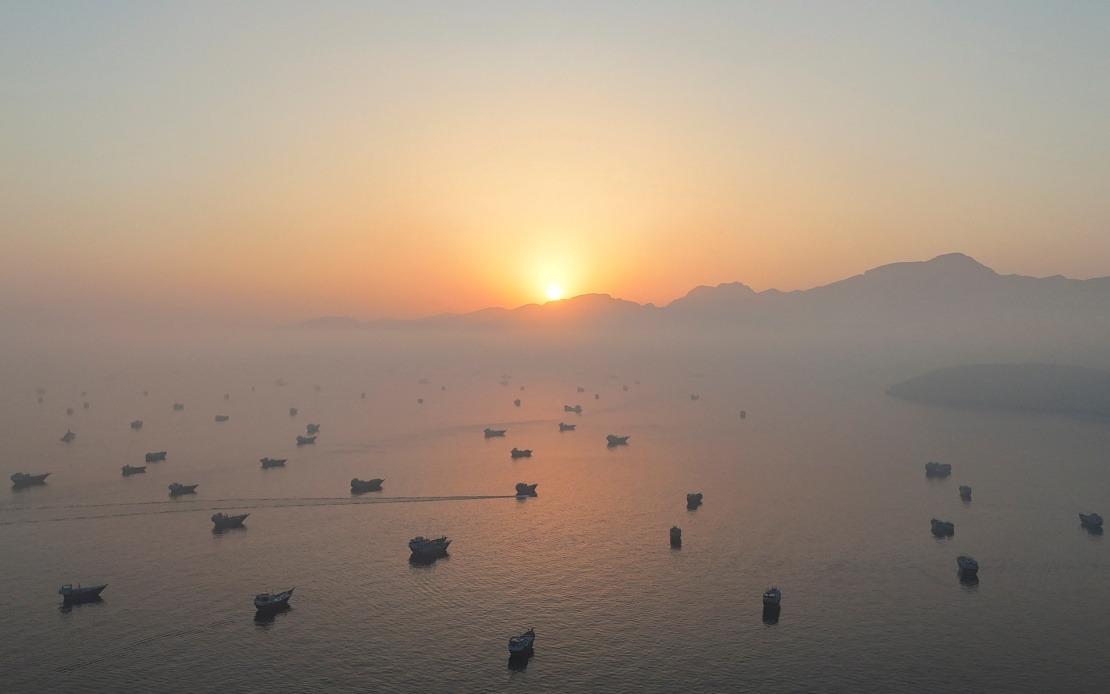
Iran has declared that it will reassert exclusive control over the Strait of Hormuz within the next month, according to Foreign Minister Abbas Araghchi, speaking at a press conference in Baghdad on June 28. The announcement signals a dramatic escalation in tensions between Tehran and Washington, coming as their temporary ceasefire arrangement appears to have collapsed under the weight of renewed military confrontations. For Malaysia and other Southeast Asian nations dependent on stable maritime trade routes, the implications are significant: any disruption to the strait could directly impact regional shipping costs and energy security.
The Strait of Hormuz stands as one of the world's most critical waterways, channelling approximately one-third of all seaborne traded oil and serving as a lifeline for global commerce. Through this narrow chokepoint between Iran and Oman, tankers carrying energy supplies navigate to markets across Asia, Europe, and beyond. For a maritime trading nation like Malaysia, whose economy is deeply connected to international shipping networks and energy imports, the stability of this passage is not merely academic—it translates directly to fuel prices at the pump and manufacturing costs across the economy.
Araghchi's statement carried explicit warnings to any external power contemplating intervention. He stressed that Iran's administration of the strait must remain absolute and without interference, cautioning that any attempt by third parties to establish competing or parallel structures would only heighten tensions and prolong the closure of this vital conduit. The language reflected Tehran's determination to leverage control of the waterway as a bargaining chip in ongoing negotiations with the United States.
This present standoff represents a dramatic reversal from earlier agreements. The US and Iran had recently established a framework that explicitly included provisions for reopening the Strait of Hormuz to shipping. Under this accord, which was meant to underpin a 60-day negotiation period, Iran committed to refraining from levying charges or fees on vessels transiting the waterway. The collapse of this arrangement in just months underscores the fragility of agreements between the two adversaries and the deep mistrust that continues to characterize their relationship.
Historical precedent demonstrates Iran's capacity and willingness to disrupt the strait. In February of this year, following attacks by Israel and the United States, Iran responded by effectively halting shipping traffic through the passage using a combination of military threats and direct attacks on vessels. That episode lasted weeks and caused significant disruptions to global energy markets, driving up crude prices and creating uncertainty for importing nations. The prospect of a repeat scenario has already begun to unsettle international markets and diplomatic circles.
Iran's leverage stems from its geographical position. Control of one side of the strait gives Tehran considerable ability to disrupt traffic, and this advantage has become a central element of its negotiating strategy with Washington. By periodically threatening or executing actions that impede shipping, Iranian leadership has repeatedly demonstrated that it can inflict economic pain on a scale sufficient to command international attention and bring adversaries back to the negotiating table.
The planned discussions between Iran and Oman represent the next potential avenue for de-escalation. Oman, which controls the opposite shore of the strait and maintains historically cordial relations with both Iran and Western powers, may serve as an intermediary to establish ground rules acceptable to multiple parties. However, one thorny issue looms: the question of fees and charges. While the current accord prohibits Iran from imposing fees during negotiations, analysts and international law experts anticipate that this provision will become a contentious flash point once the 60-day negotiation window closes. Iran may seek to monetize its control, while importing nations and Western powers will resist any unilateral revenue-raising schemes.
For Malaysia and its Southeast Asian neighbours, the implications extend beyond energy security to broader regional stability. An unstable Strait of Hormuz creates unpredictability for shipping companies operating in Asian waters, inflates insurance premiums, and complicates supply chain planning for manufacturers across the region. Moreover, any major disruption could indirectly affect Malaysia's standing as a reliable trading partner, as delays and cost increases cascade through the global economy.
The deterioration of the US-Iran ceasefire also carries geopolitical ramifications for Southeast Asia's strategic environment. A Middle East locked in perpetual military escalation diverts international diplomatic attention from regional concerns, including South China Sea tensions and maritime security issues that directly affect Malaysian interests. The international community's preoccupation with Iranian-American conflict reduces bandwidth for engagement on Asian concerns.
Looking ahead, the next 30 days will prove critical. If Iran follows through on its assertion of sole control and the United States responds with military measures, the world could be witnessing a return to the tense pattern of 2024, with all its attendant economic consequences. Conversely, if both parties use this interval to restart serious negotiations, particularly with Oman's mediation, there remains a possibility of preventing outright conflict. The outcome will likely determine whether Malaysian businesses and consumers face continued uncertainty or renewed stability in maritime commerce over the coming months.

