Iran's Foreign Ministry signalled tangible progress on Monday following high-level talks held in Burgenstock, Switzerland, where representatives from multiple parties gathered to advance negotiations toward a final accord with the United States. The assertion of "important steps" being achieved reflects Iran's effort to project momentum in discussions that have long been stalled, while also indicating that substantive agreement on procedural matters has finally emerged after months of diplomatic stalling.
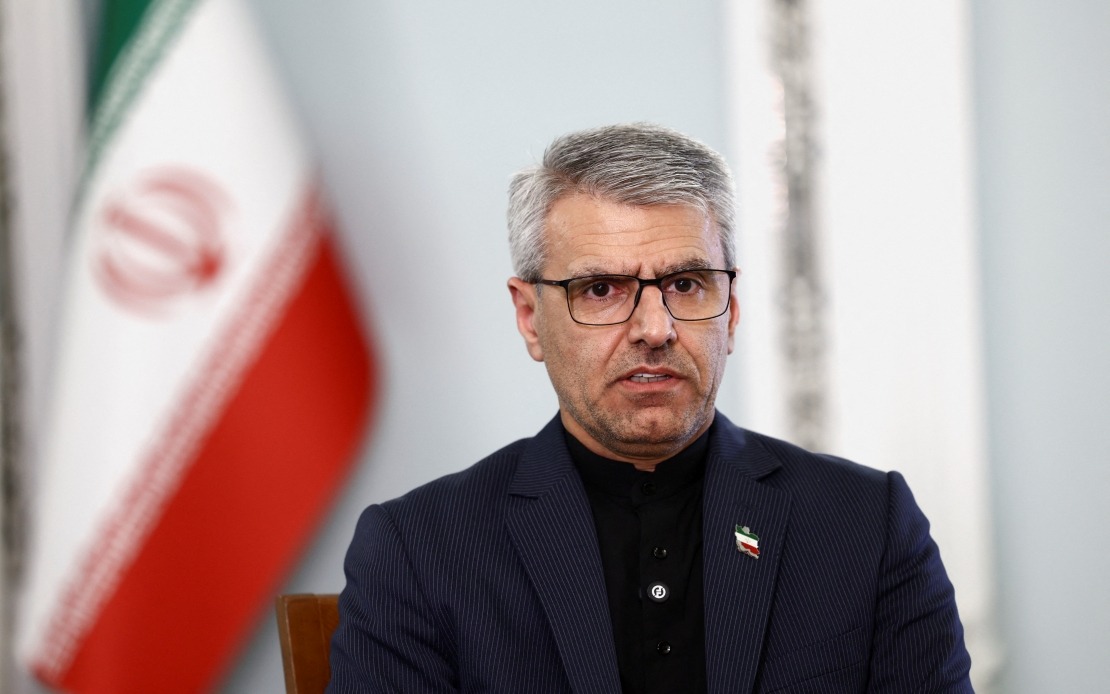
Foreign Ministry spokesman Esmaeil Baghaei detailed several concrete outcomes from the four-party negotiations, most notably the establishment of a "deconfliction cell" designed to function as a monitoring mechanism with involvement from mediating nations. This institutional framework would specifically oversee the maintenance of existing ceasefire agreements and monitor adherence to halts in hostilities, with particular emphasis on regional stability in Lebanon where Iranian-backed militias and Israeli forces remain in close proximity. The creation of such a body suggests both parties recognise the necessity of having institutionalised channels to prevent miscalculation or rapid escalation.
Beyond the security architecture, the Iranian delegation underscored that constructive exchanges took place regarding critical economic dimensions that have consistently complicated negotiations. Specifically, Baghaei highlighted discussions concerning the regulatory approvals needed for Iranian crude oil to re-enter global markets and the mechanisms for unfreezing or releasing Iranian assets that have been subject to international restrictions. Both matters directly affect Iran's economic capacity and have served as major sticking points in previous rounds, so their inclusion in discussions indicates a willingness to address concerns that go beyond purely security-related provisions.
The talks also addressed freedom of navigation through the Strait of Hormuz, one of the world's most strategically vital shipping lanes through which millions of barrels of oil transit daily. The parties reportedly agreed in principle to establish a mechanism intended to guarantee maritime security across this chokepoint, a development that carries significance far beyond Iran and the United States given the region's role in global energy security. For Southeast Asian economies heavily dependent on Persian Gulf oil and stable passage through these waters, any agreement that reduces the risk of maritime disruption or Iranian harassment of shipping represents a material interest.
Despite these reported breakthroughs, Baghaei injected a note of caution into proceedings by stating that Iran "hope[s] that in implementation, we will witness seriousness from the other side." This formulation suggests that while both parties have committed to frameworks and pathways on paper, the Iranian delegation remains unconvinced that the United States will follow through with genuine implementation. The conditional language reflects historical scepticism rooted in previous instances where agreements were signed but subsequently abandoned or undermined, creating an atmosphere of mutual distrust that continues to complicate negotiations even when progress appears imminent.
Concurrently, Qatar and Pakistan issued a joint statement as mediators, announcing that the first round of high-level talks at the Lake Lucerne Summit had concluded with what they characterised as substantial advancement. Most significantly, the mediators announced agreement on a roadmap stipulating that a final peace agreement could be achieved within 60 days, a compressed timeframe that suggests either genuine momentum or else optimistic framing designed to maintain diplomatic pressure and international attention. This timeline extends from memoranda of understanding signed the previous week, documents intended to formalise the cessation of hostilities that commenced on February 28.
The reference to a memorandum signed to conclude the "US-Israeli war" reveals the broader context enveloping these negotiations: the talks are not narrowly confined to bilateral United States-Iran relations but implicate the regional security architecture involving Israel and multiple non-state actors. This expanded scope renders negotiations exponentially more complex, as compromises must satisfy multiple parties with divergent security concerns and strategic objectives. The involvement of Qatar and Pakistan as mediators reflects the geographic distribution of interests and the difficulty of assembling any agreement without interlocutors capable of persuading both principal parties.
From a Southeast Asian perspective, the outcome of these negotiations carries implications extending well beyond the Middle East itself. Regional economies maintain substantial trade relationships with Iran and depend heavily on stable energy supplies from the Persian Gulf. Any agreement that reduces geopolitical tension, increases the predictability of shipping through the Strait of Hormuz, and normalises Iranian participation in international commerce would provide economic benefits across the region. Conversely, should negotiations collapse or proceed ineffectively, renewed tensions could trigger energy price spikes and reinforce supply chain disruptions that Southeast Asian manufacturers and consumers have only recently begun to overcome.
The establishment of technical working groups to address implementation details suggests that negotiators recognise the distinction between framework agreements and operational reality. Moving from agreed principles to concrete mechanisms for monitoring compliance, releasing funds, and regulating commerce requires sustained technical engagement that cannot be rushed without introducing ambiguities that future parties might exploit. Whether these technical teams can actually bridge remaining substantive disagreements within the stated 60-day window remains uncertain, particularly given the historical pattern of nuclear negotiations with Iran slipping past initial deadlines.
The appointment of Qatar and Pakistan as lead mediators reflects both their geographic proximity to the principal parties and their diplomatic credibility with multiple stakeholders. Both nations maintain channels to Iran while also preserving relationships with the United States and its regional allies. However, mediation success ultimately depends on whether the principal parties possess genuine political will to compromise, a variable that remains outside mediators' control. If senior decision-makers in Tehran and Washington continue viewing negotiations primarily as tactics within broader strategic competition rather than genuine efforts toward durable settlement, even the most skillfully managed diplomatic process will falter.
The coming weeks will prove decisive in determining whether the announced 60-day timeline represents a realistic aspiration or merely diplomatic theater designed to preserve face while substantive disagreements fester. Technical working groups must demonstrate tangible progress on specific issues—the precise parameters of the deconfliction cell, the mechanisms for asset release, the regulatory frameworks for oil sales—to convert announced principles into operative reality. For Malaysian policymakers and business leaders tracking regional stability and energy security, monitoring these technical negotiations will prove more informative than rhetorical claims about breakthrough agreements.