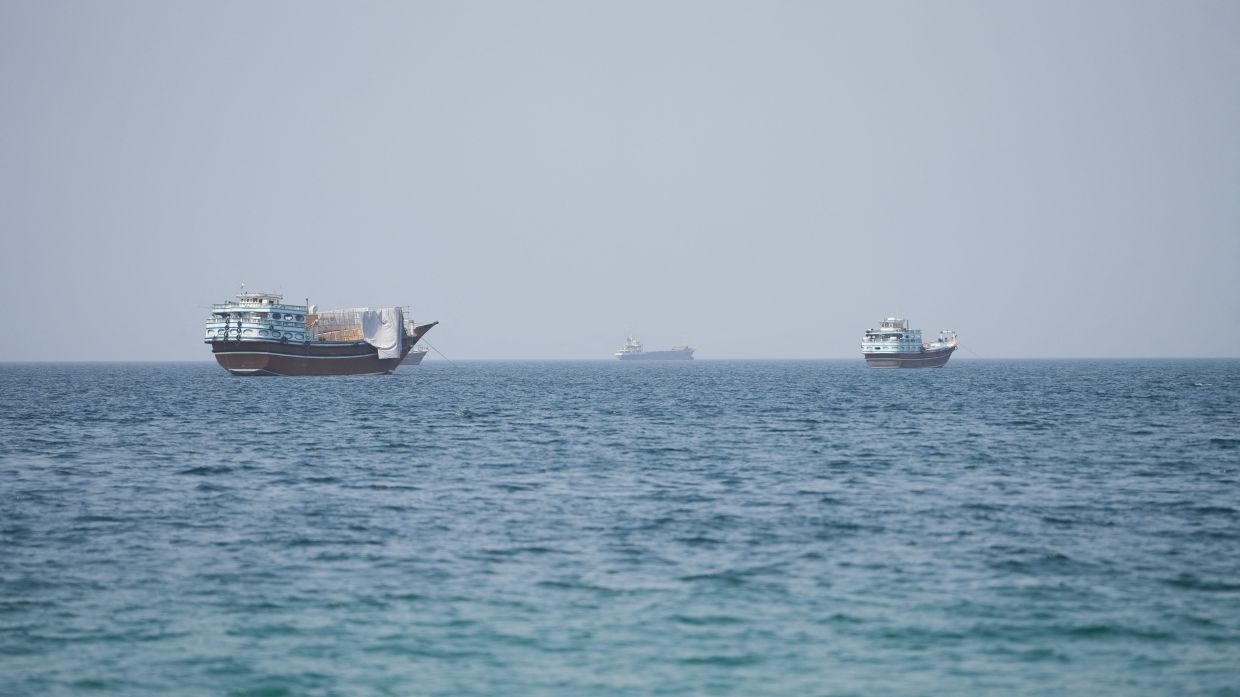
Iran's Foreign Minister Abbas Araqchi declared on Saturday that negotiations with neighbouring Oman over control of the strategically vital Strait of Hormuz had reached an advanced stage, yet he cautioned that resolving access to the waterway demanded far more than a bilateral maritime arrangement. His statement reflected the complex diplomatic landscape surrounding one of the world's most critical energy chokepoints, where ongoing military tensions continue to disrupt global commerce and fuel inflation worldwide.
The breakthrough in Iran-Oman talks, if realised, would address the immediate mechanics of shipping through the 21-mile-wide passage connecting the Persian Gulf to the Indian Ocean. According to Araqchi, the two nations were exploring a temporary shipping corridor while longer-term technical and legal frameworks were developed. However, he emphasised that Iran would not accept pre-war conditions, signalling that Tehran views the current negotiations as an opportunity to reshape regional maritime governance in its favour. The existing traffic separation scheme that had governed the strait for decades is no longer acceptable to Tehran, he stated, indicating that any agreement must acknowledge Iran's security concerns and strategic interests.
U.S. officials have signalled confidence that a narrower maritime accord could emerge soon. An unnamed Washington official told Reuters on Friday that the Trump administration anticipated an agreement enabling normal oil traffic to resume, and promised that once such an arrangement was announced, the United States would lift its blockade of Iranian ports. The statement suggested Washington may be willing to accept interim arrangements that keep commerce flowing while broader political questions remain unresolved. Yet American officials have previously rejected any arrangement granting Iran control over vessel access to the gulf, fearing it would allow Tehran to extract tolls or leverage its position in future disputes.
The Iranian Revolutionary Guards quickly complicated matters by insisting that opening the Strait of Hormuz remained contingent upon Washington accepting undisclosed preconditions, separate from the Oman negotiations. Guards spokesperson Hossein Mohebbi declared that the United States must cease interference in regional mediation efforts, though he did not elaborate on specific Iranian demands. This positioning suggests that Iran's military leadership views maritime negotiations as merely one element of a broader confrontation, and that resolving shipping access alone would not satisfy Tehran's strategic objectives in the wider conflict that erupted following American and Israeli strikes on February 28.
The five months of military escalation since those initial attacks have transformed the Strait of Hormuz into a contested zone marked by deliberate targeting of commercial vessels. The UAE reported on Saturday that Iran had struck a carrier affiliated with its national oil company using a missile, the latest in a pattern of maritime attacks. The incident underscores how security incidents continue even as diplomatic channels remain open, creating uncertainty about whether agreements, once reached, would genuinely halt hostilities. These strikes have inflicted casualties, with Abu Dhabi National Oil Company reporting that 15 of its vessels were hit in unprovoked attacks, resulting in one crew member killed and 20 wounded since the conflict began.
The disruption to shipping through the waterway has cascading effects far beyond the immediate region. The Strait of Hormuz carries roughly one-fifth of the world's oil and liquefied gas exports, making it essential infrastructure for global energy markets. Iranian attacks, combined with assaults by its Houthi allies in the Red Sea further west, have fractured shipping patterns and triggered a sustained spike in energy prices that has fuelled inflation across North America, Europe, and Asia. For Malaysia and other Southeast Asian economies reliant on stable energy supplies and global trade, the continuation of these disruptions threatens growth forecasts and increases input costs for manufacturers and consumers alike.
Recent Iranian tactics reveal an attempt to extract economic and political leverage from maritime control. Iran has imposed tolls on oil tankers attempting to transit the strait and attacked vessels that refuse to comply with its directives, though Iranian media typically characterises these strikes as responses to navigational violations rather than deliberate coercion. This framing allows Iranian officials to maintain plausible deniability while nonetheless demonstrating the capacity to disrupt commerce. The strategy has proven effective in raising global energy costs, effectively spreading the economic burden of Iran's conflict with the West across all trading nations.
The proposed Iran-Oman framework would nominally grant Tehran oversight authority over vessels entering the gulf through the strait, according to Iranian officials and regional sources. Such an arrangement would represent a historic shift in maritime governance of the passage, elevating Iran's role from coastal state to de facto control authority. However, American officials have repeatedly stated they would never accept such an arrangement, viewing it as an unacceptable threat to freedom of navigation and global trade security. The gap between what Iran demands and what the United States will permit remains substantial, suggesting that even if an Oman deal is finalised, the broader diplomatic settlement remains elusive.
The pattern of recent diplomatic signals illustrates the cyclical nature of negotiations. The Trump administration has repeatedly suggested that an agreement could materialise within days, only to have Iran subsequently deny that substantive talks are underway. This back-and-forth dynamic reflects mutual distrust and the difficulty of bridging deep disagreements about regional power balances. For observers in Southeast Asia monitoring these developments, the unpredictability itself creates policy challenges, as shipping companies, insurers, and governments cannot confidently plan for when normal operations might resume through this vital corridor.
The involvement of Oman as mediator reflects the sultanate's traditional role as a neutral actor and its geographic position straddling the strait. Muscat has historically maintained diplomatic relationships across regional divides and benefits from stability in the waterway that borders its territory. However, Oman's capacity to broker a durable solution appears limited if the core dispute between Iran and the United States remains unresolved. Any temporary shipping arrangement negotiated through Oman would likely require American acquiescence or tacit acceptance, but such acceptance would in turn depend on Iran demonstrating commitment to broader de-escalation.
The coupling of maritime negotiations with wider conflict resolution reflects the reality that shipping access cannot be divorced from underlying political grievances. Iran conditions reopening the strait on U.S. compensation, a demand that fundamentally reframes the question from technical maritime management to financial reparations. Similarly, American insistence on performance-based verification suggests Washington views any agreement as provisional and subject to suspension if Iran violates its terms. These competing frameworks indicate that even if shipping flows resumed, the arrangement would likely remain fragile and subject to collapse if tensions reignite.
For Malaysia's trading sector and other Southeast Asian economies, the potential reopening of the Strait of Hormuz represents a significant development with far-reaching consequences. Stable access to this waterway would help normalise energy prices and restore predictability to shipping lanes that Asian manufacturers and traders depend upon. Yet the glacial pace of negotiations and the evident gaps between the parties suggest that even optimistic timelines may prove unrealistic. Companies and governments across the region should prepare for a prolonged period of uncertainty, elevated logistics costs, and potential disruptions that could persist for months or even longer if the underlying political settlement remains unachieved.

