The standoff between Iran and the United States intensified sharply on Wednesday when Tehran's military issued an explicit warning that every American military facility scattered across the Middle East would become fair game for Iranian drone operations should Washington continue its alleged violations of an established ceasefire arrangement. The declaration, distributed through Iran's state broadcaster IRIB, represents a dramatic escalation in rhetoric and suggests both nations are prepared to move beyond the current cycle of tit-for-tat strikes into a more comprehensive confrontation. For regional observers, particularly those in Malaysia and Southeast Asia with commercial interests in Middle Eastern stability, the threat signals that the delicate balance maintaining relative calm in one of the world's most critical shipping corridors may be on the verge of collapse.
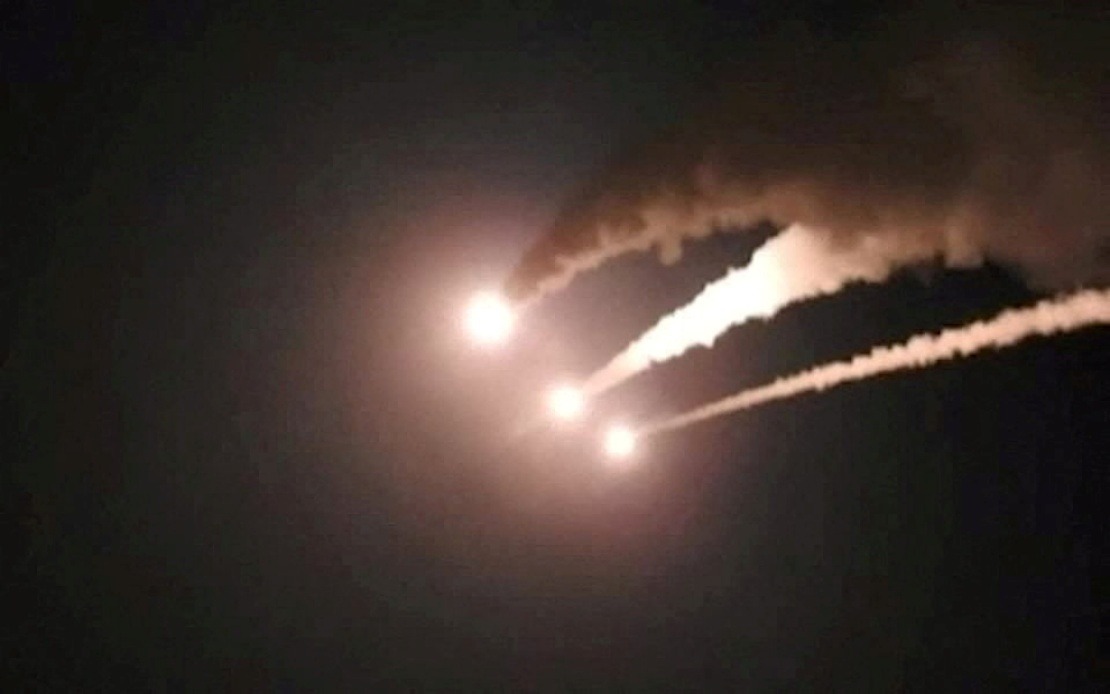
Iran's military claimed responsibility for launching drone and missile attacks on Wednesday targeting what it described as concentrations of American personnel at Sheikh Isa Air Base in Bahrain. The operation, according to statements carried by Iranian state media, was framed as retaliation for what Tehran characterised as American "hostile aggression" directed at both military installations and civilian areas in Iran's southern regions. The Iranian military further asserted that this response was provoked by Washington's repeated disregard for the fourteen-point ceasefire agreement that ostensibly governs the conduct of both nations. This narrative framing is significant because it positions Iran as the aggrieved party responding to American provocation, a message designed for both domestic consumption and international audiences.
The scope of Iranian military capabilities on display Wednesday was substantial. The Islamic Revolutionary Guard Corps, Iran's elite paramilitary force, claimed it had orchestrated a coordinated operation involving both missiles and unmanned aerial vehicles against eighty-five separate American military targets across the region. The list of alleged targets encompasses significant facilities including Salman Port, which serves as headquarters for the United States Navy's Fifth Fleet based in Bahrain, and Ali Al-Salem Air Base located in Kuwait. Such specificity in identifying targets suggests Iranian planners have conducted detailed reconnaissance and possess detailed knowledge of American force dispositions throughout the Persian Gulf and surrounding areas. For maritime trading nations including Malaysia, which depends heavily on free passage through the Strait of Hormuz, these Iranian capabilities directly threaten the security of vital shipping lanes.
Defensive responses from American allies in the Gulf region were immediate. Kuwait's Ministry of Defence announced that its air defence systems had successfully intercepted incoming Iranian missiles and drones throughout Wednesday. Meanwhile, air raid alert systems activated across Bahrain, indicating that Iranian missiles and drones did penetrate closer to their intended targets than the interception statistics might suggest. These defensive engagements underscored the very real kinetic nature of the confrontation and the vulnerability of even well-equipped regional air defence networks when facing coordinated, multi-vector attacks. The activation of civil defence measures also demonstrated the psychological impact of escalation on civilian populations throughout the Gulf states.
The American military response was equally swift and comprehensive. United States Central Command announced that American forces had executed a new round of strikes against Iranian targets, reportedly hitting more than eighty locations throughout Iran. According to CENTCOM's official statement, these operations were conducted as a direct and immediate counter to Iranian attacks on commercial shipping vessels navigating through the Strait of Hormuz. This justification pivots the narrative away from military installations toward the disruption of international commerce, positioning American action as defensive of global trade interests rather than offensive military aggression. However, the scale of the American response—matching Iran's claimed target count—suggests a measured symmetry in escalation, where both sides remain locked in a mathematical game of proportional retaliation.
The ceasefire agreement that both nations reference appears increasingly fragile and subject to conflicting interpretations. Iran's insistence that the United States has violated fourteen specific articles of this agreement indicates that a comprehensive formal understanding exists between the nations, yet the fundamental differences in how each side characterises ceasefire compliance suggests deep structural problems with the agreement's implementation mechanisms. The absence of any neutral monitoring body or agreed arbitration process means accusations and counter-accusations flow freely without resolution. For Malaysia and other nations dependent on regional stability, this absence of enforcement mechanisms represents a critical weakness that could allow further deterioration.
Geographically, the concentration of American military installations across the Arabian Peninsula and in facilities like Bahrain and Kuwait creates a dense network of potential targets for Iranian retaliation. These bases serve as the infrastructure supporting American military operations throughout the Middle East and Indian Ocean region, and their vulnerability to drone and missile attack has become progressively more apparent. Iran's threat to designate all such facilities as legitimate targets removes the distinction between strategic assets and command centres that might previously have been considered less vulnerable to attack. The psychological impact of this declaration extends beyond military planners to include families of American service personnel stationed in the region, commercial contractors, and host nation governments concerned about collateral damage to their own infrastructure.
The commercial implications demand serious attention from Southeast Asian stakeholders. The Strait of Hormuz remains one of the world's most critical maritime chokepoints, with approximately one-third of global seaborne oil passing through its waters daily. Malaysian shipping companies, refineries, and petrochemical facilities depend on the uninterrupted flow of Middle Eastern crude oil. Escalating Iranian-American tensions directly threaten these supply chains, potentially driving up energy costs across the entire region and creating insurance and navigation complications for vessel operators. Disruptions to Hormuz transit would inevitably ripple through Southeast Asian economies dependent on affordable energy imports and just-in-time supply chain operations.
The rhetoric emanating from Tehran reflects a calculation that regional deterrence can be achieved through threats of escalation. By declaring all American bases as legitimate targets, Iran may be attempting to raise the costs of continued American military operations in the region sufficiently to induce a change in American behaviour. Simultaneously, such declarations create pressure on American decision-makers to either capitulate to Iranian demands or commit additional military resources to defending the expanded target set. This classic security dilemma dynamic creates space for unintended escalation, where miscalculation or unauthorized actions by subordinate commanders could trigger a broader conflict. The historical pattern of regional conflicts demonstrates how such cycles of threat and counter-threat can spiral beyond the control of political leadership.
For Malaysia's foreign policy establishment, the situation underscores the importance of maintaining diplomatic channels and supporting multilateral frameworks aimed at de-escalation. ASEAN's commitment to regional peace and the principle of non-interference in the internal affairs of other nations provides a template that could potentially be extended to encourage restraint among Middle Eastern protagonists. Malaysian diplomatic initiatives emphasizing the economic costs of conflict to all parties, the vulnerability of global supply chains, and the mutual interest in maritime security could contribute meaningfully to moderating tensions. The current trajectory toward expanded targeting and comprehensive military escalation serves no party's interests, yet the absence of off-ramps and face-saving mechanisms makes de-escalation increasingly difficult to achieve.

