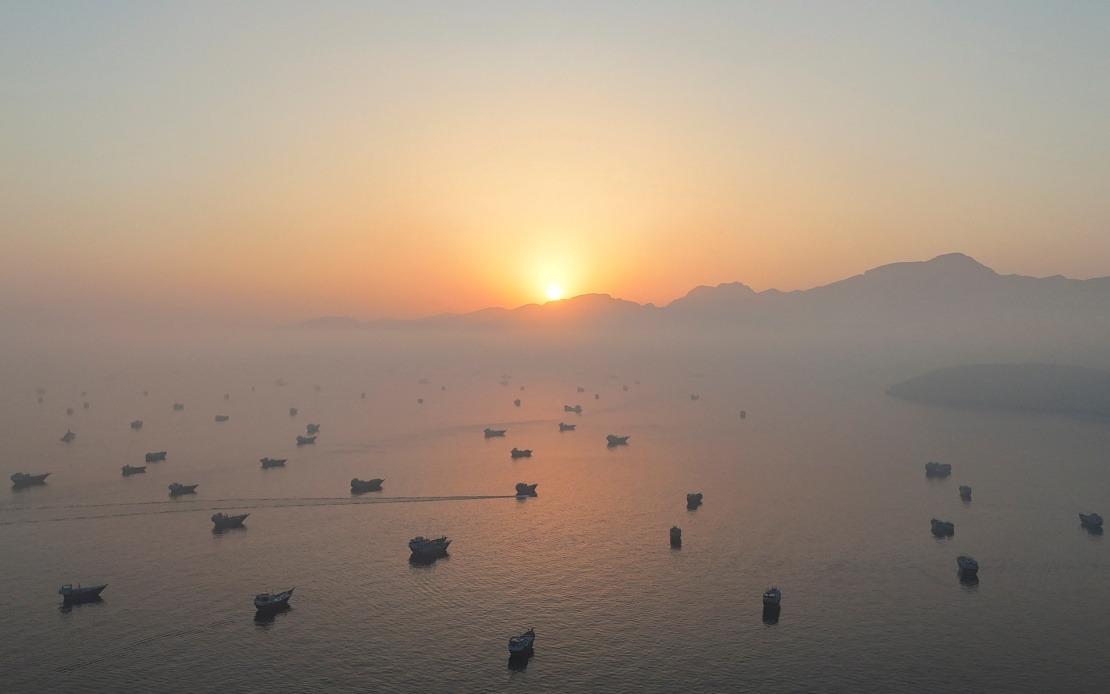
Iran's military command has escalated its control over one of the world's most strategically vital shipping corridors, issuing a stark warning on Sunday that no commercial tanker carrying hydrocarbons or other commodities will be allowed through the Strait of Hormuz without prior Iranian authorisation. The Islamic Revolutionary Guard Corps (IRGC) attributed the new restrictions to incidents involving vessels it characterised as violators, which had attempted to navigate through restricted waters while disabling their navigation systems. This declaration represents a significant hardening of Iran's position regarding maritime traffic in the Persian Gulf, a body of water through which approximately one-third of the world's seaborne oil trade passes annually.
According to statements released by the IRGC on Sunday, four vessels backed by American interests attempted to transit what Iranian authorities deemed an unsafe route in the strategic waterway after deliberately switching off their tracking systems. Of these vessels, two were forced to halt operations following incidents, whilst the remaining two vessels reversed course and departed the area. The IRGC characterised these occurrences as deliberate violations of Iranian maritime regulations and safety protocols that it maintains are necessary to protect regional shipping lanes and prevent unauthorised activities in Iran's territorial waters.
The broader context for Iran's intensified enforcement posture stems from escalating tensions between Tehran and Washington that have spiralled since early July. Beginning on July 8, the United States launched multiple bombing campaigns against Iranian targets, with American military leadership claiming these strikes were justified responses to Iranian interference with commercial shipping passing through the Strait of Hormuz. The stated rationale suggested that Iranian forces had endangered maritime commerce and posed threats to international navigation through the contested waterway.
In response to American military action, Iran has conducted retaliatory strikes against United States military installations positioned throughout the region, demonstrating both the willingness and capability to project force across multiple West Asian countries. This tit-for-tat pattern of escalation has dramatically heightened tensions and created an unpredictable security environment for commercial shipping operators who depend on the Hormuz passage for their operations. The cycle of military action and counter-action has raised legitimate concerns about the safety and accessibility of one of the globe's most important energy chokepoints.
The IRGC's new proclamation asserts Iranian sovereignty over maritime routing decisions within the Strait of Hormuz, claiming that Tehran maintains absolute control over the waterway and unilaterally determines which passages are safe for international shipping. This assertion contradicts established international maritime law principles, which typically guarantee vessels the right of transit passage through international straits. The Iranian military's position essentially converts the Hormuz strait into a controlled zone where passage is contingent upon Tehran's explicit approval, a stance with potentially far-reaching implications for global commerce and energy markets.
For Malaysia and other Southeast Asian nations with significant energy and maritime trade interests, Iran's new permitting requirements introduce considerable operational and economic uncertainty. Malaysian shipping companies, refineries dependent on Middle Eastern crude oil, and LNG importers all face potential disruption to their supply chains if tensions persist or Iranian enforcement measures expand further. The Strait of Hormuz remains critical infrastructure for regional energy security, and any sustained disruption could translate into higher energy costs and inflationary pressures throughout Southeast Asia.
The practical implementation of Iran's permit system raises questions about transparency, fairness, and the criteria Tehran will apply when evaluating tanker passage requests. International shipping operators typically prefer predictable, rules-based systems rather than discretionary permitting regimes that could be subject to political manipulation or sudden policy shifts. The absence of clearly articulated standards for permit approval threatens to inject further uncertainty into maritime commerce and could incentivise vessel operators to seek alternative routes, though few viable options exist that avoid the Hormuz bottleneck for most Persian Gulf traffic.
EnergyMarkets remain particularly vulnerable to disruptions in Hormuz traffic, given that approximately 30 percent of globally traded oil and significant quantities of liquefied natural gas transit through this strategic chokepoint daily. Any sustained constriction of traffic through Iranian-controlled waters would inevitably trigger price increases for crude oil and natural gas globally, including throughout Southeast Asia where energy security remains a critical policy consideration. Malaysia, as both an energy producer and consumer, faces complex implications from this escalating situation, with potential effects on its own energy export competitiveness and import costs for energy-intensive industries.
The IRGC's unilateral assertion of control over Hormuz traffic, combined with the ongoing military confrontation with the United States, suggests that diplomatic resolution remains distant. Regional powers, including Saudi Arabia, the United Arab Emirates, and other Gulf Cooperation Council members, must navigate this dangerous environment whilst protecting their own maritime commerce and energy exports. International maritime organisations have expressed concern about the deteriorating security situation, warning of risks to civilian shipping and the potential for accidental escalation arising from military operations conducted in congested waters.
Iran's permit requirement system reflects broader assertions of regional power and attempts to impose costs on American-aligned states through control of critical infrastructure. By conditioning tanker passage on Iranian approval, Tehran gains both economic leverage and political negotiating power, whilst simultaneously signalling its determination to contest American military dominance in the Persian Gulf region. The strategy carries substantial risks, however, including potential confrontation with international shipping powers and the possibility of triggering international intervention to restore freedom of navigation through this critical waterway.

