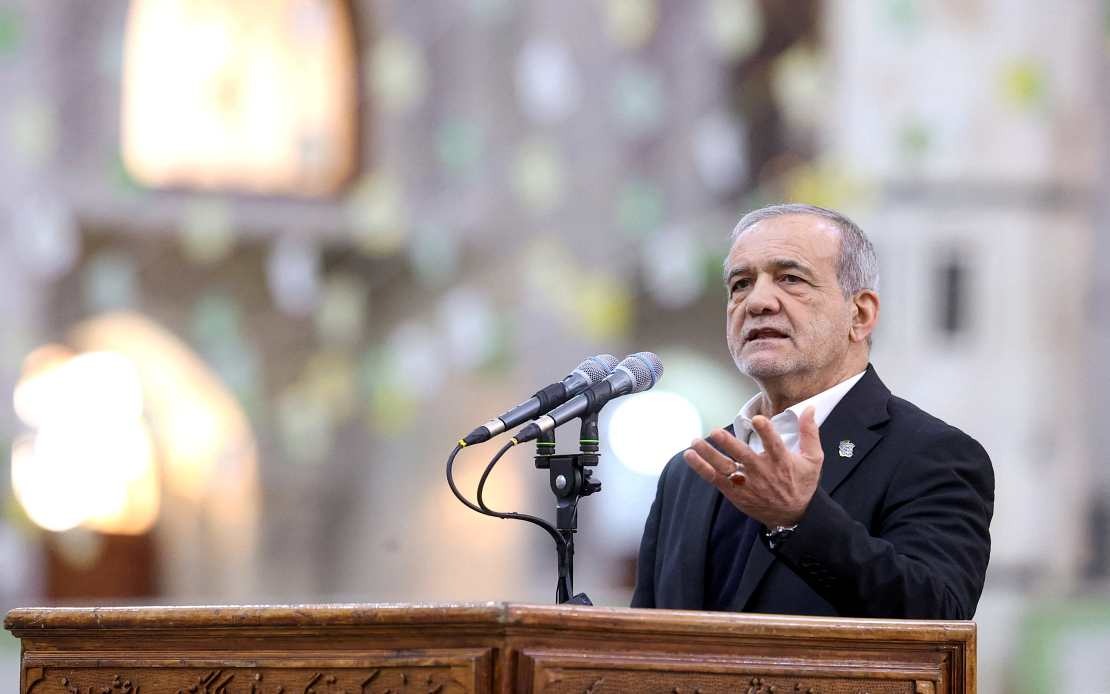
Iran's government has confirmed it will receive US$6 billion in previously frozen assets currently held in Qatar as a cornerstone of an emerging preliminary agreement with the United States, according to President Masoud Pezeshkian. The announcement marks a significant development in protracted negotiations aimed at de-escalating regional tensions and potentially resolving months of conflict across the Middle East. Pezeshkian made the statement through Iran's state broadcaster IRIB, signalling that asset transfers would commence once formal negotiations between the two nations began in earnest.
The return of these funds represents a critical first step in what both sides describe as a confidence-building phase. The US$6 billion figure has long been a point of contention in Iranian-American relations, with Tehran arguing the money rightfully belongs to its central bank and people. The frozen reserves in Qatar, a fellow Gulf state that has historically maintained diplomatic channels with both Washington and Tehran, effectively serve as collateral in broader negotiations. For Iran, unlocking this capital would provide immediate liquidity to an economy facing sustained international sanctions and foreign exchange pressures that have constrained development and foreign trade.
Yet even as Iran signals optimism about asset recovery, Pezeshkian has reinforced Tehran's unwillingness to compromise on its nuclear programme. His declaration that "we will never give up our right to enrich uranium" underscores a red line that Iranian leadership has consistently maintained throughout negotiations with the West. This assertion suggests that while preliminary discussions may progress, fundamental disagreements over Iran's nuclear trajectory remain unresolved. The comment reflects Tehran's position that uranium enrichment constitutes a sovereign right protected under the Nuclear Non-Proliferation Treaty, a stance that has historically generated friction with the United States and its regional allies.
The framework for these talks was formally established when both nations signed a memorandum of understanding on Wednesday, setting conditions for technical-level discussions designed to address the broader Middle East conflict and restore navigational freedom through the strategically vital Strait of Hormuz. The strait, which links the Persian Gulf to the Arabian Sea, remains one of global commerce's most critical chokepoints; disruptions to shipping through these waters create ripple effects across international energy markets and supply chains. Reopening unrestricted passage through the strait would benefit not only regional economies but also the broader global trading system, including Southeast Asian nations heavily dependent on stable oil prices and reliable maritime transit.
Delegations from both countries have now arrived in Switzerland for the initial round of technical negotiations. The talks are taking place in Burgenstock, a location chosen partly for its diplomatic neutrality and Switzerland's established role as a mediator in international disputes. The US side will be represented by Vice President JD Vance, signalling the high-level commitment Washington is bringing to these discussions. Iran's negotiating team comprises Parliament Speaker Mohammad Bagher Qalibaf and Foreign Minister Abbas Araghchi, both experienced in international relations and nuclear diplomacy. Pakistan has been designated as the mediating power, a role that reflects Islamabad's geopolitical interests in regional stability and its own complex relationships with both Washington and Tehran.
For Malaysian readers and Southeast Asian observers, these developments carry tangible implications. The region's economies are deeply interconnected with Middle Eastern energy supplies and rely heavily on unobstructed maritime routes for trade. The Strait of Hormuz alone accounts for roughly one-third of globally traded seaborne oil; any prolonged disruption raises energy costs for manufacturing-dependent economies like Malaysia. Furthermore, political instability in the Middle East historically triggers broader regional security concerns and can redirect international diplomatic attention and resources away from Southeast Asian priorities. A successful de-escalation between Iran and the United States could help normalise energy markets and reduce geopolitical volatility that affects regional investment climates.
The preliminary nature of this agreement warrants careful assessment. While the US$6 billion asset transfer and initial negotiation framework represent progress, substantial obstacles remain. The fundamental divide over Iran's nuclear programme, the extent of sanctions relief Tehran might receive, and the parameters for verifying any commitments create complex technical and political hurdles. Historical precedent, including the fraught experience with the 2015 Joint Comprehensive Plan of Action (JCPOA), demonstrates that even detailed nuclear agreements face implementation challenges and political contestation. Both sides enter these talks with deeply entrenched positions, and the current preliminary accord may represent merely an opening move rather than a comprehensive resolution.
The timing of these negotiations also reflects broader geopolitical shifts. Rising concerns about great power competition and the emergence of new security threats have prompted both Washington and Tehran to recalculate strategic priorities. For the United States, de-escalating Middle Eastern tensions could free resources and diplomatic capital for other regions, particularly the Indo-Pacific. For Iran, reducing isolation and securing asset recovery offers economic breathing room at a time when domestic pressures are mounting. Pakistan's mediation role suggests that India, China, and Russia—all with significant interests in Persian Gulf stability—remain engaged in these discussions through back channels.
The path forward will depend on whether initial technical discussions can bridge fundamental differences over verification mechanisms, sanctions removal timelines, and the scope of any final agreement. The fact that negotiations are proceeding at all, and that asset transfers are being discussed, suggests both parties perceive mutual benefit in pursuing de-escalation. However, the complexity of Middle Eastern geopolitics, combined with entrenched domestic constituencies in both countries opposed to accommodation, means that optimism must be tempered with realism about the obstacles ahead.
%22%2F%3E%3C%2Fpattern%3E%3C%2Fdefs%3E%3Crect%20width%3D%22100%25%22%20height%3D%22100%25%22%20fill%3D%22url(%23ph221v5g)%22%2F%3E%3Crect%20width%3D%22100%25%22%20height%3D%22100%25%22%20fill%3D%22url(%23ph221v5p)%22%2F%3E%3Ctext%20x%3D%2250%25%22%20y%3D%2250%25%22%20text-anchor%3D%22middle%22%20dominant-baseline%3D%22central%22%20fill%3D%22rgba(255%2C255%2C255%2C0.95)%22%20font-family%3D%22Georgia%2C%20'Times%20New%20Roman'%2C%20serif%22%20font-weight%3D%22700%22%20font-size%3D%22320%22%20letter-spacing%3D%22-0.02em%22%3EMUDA%3C%2Ftext%3E%3C%2Fsvg%3E)