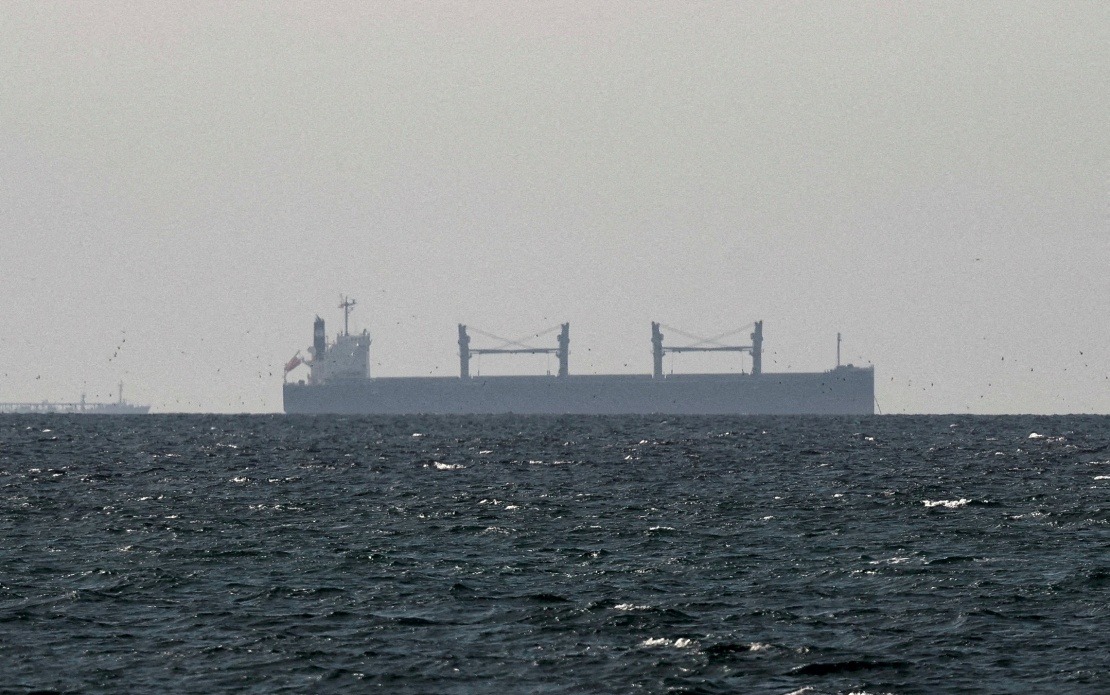
Iran's Islamic Revolutionary Guard Corps released a statement Friday accusing two oil tankers of striking mines in the Strait of Hormuz, with both vessels subsequently catching fire as they attempted to traverse the southern passage. The IRGC Navy, citing Fars News Agency, further alleged that American intelligence services had deliberately guided the commercial ships into the dangerous zone earlier that day, though it provided no substantiating evidence for this claim.
The military establishment declined to release identifying details about either vessel, including their names, flag states, ownership registries, or the number of crew members affected. This lack of transparency raises significant questions about the veracity of the allegations, as no independent maritime authorities or vessel tracking services have corroborated the incident. International media organisations and maritime monitoring agencies typically report such major incidents swiftly, yet confirmation from neutral sources remains absent.
In an escalatory rhetorical stance, the IRGC declared the Strait of Hormuz to be in a state of extreme danger and entirely sealed to traffic, effectively warning the global shipping community away from one of the world's most strategically important waterways. The military body further asserted that petroleum, natural gas, and chemical fertiliser shipments originating from the Persian Gulf region would remain blocked indefinitely unless the United States ceased military operations in the theatre.
The Strait of Hormuz functions as the primary maritime gateway linking the Persian Gulf to the Gulf of Oman and the Arabian Sea, making it indispensable to global energy security. Approximately one-fifth of the world's crude oil and a substantial proportion of liquefied natural gas exports transit through this narrow waterway annually. Any sustained disruption to shipping lanes through the strait carries profound implications for energy prices, supply chains, and economic stability across Asia-Pacific markets, including Malaysia's critical fuel imports.
Malaysia and other Southeast Asian nations depend heavily on stable energy flows through the Strait of Hormuz, both for direct imports and through the broader impact on global energy markets and pricing. Repeated incidents—whether genuine or claimed—create uncertainty that ripples through regional economies dependent on predictable fuel costs and uninterrupted energy supply chains. The escalating rhetoric from Tehran represents a threat not merely to bilateral US-Iran relations but to the commercial interests of dozens of countries that rely on unobstructed passage through this bottleneck.
The backdrop to Friday's incident involves a complex and deteriorating security environment. The United States and Iran have been engaged in a series of tit-for-tat military actions that suggest the memorandum of understanding reportedly brokered by Pakistan last month—ostensibly aimed at ceasing hostilities and achieving a durable peace settlement—carries limited practical weight. Regional analysts question whether such diplomatic frameworks can realistically constrain state actors when underlying strategic competition remains intense.
The IRGC's warning to international shipping companies reflects a deliberate strategy to weaponise uncertainty about maritime safety. By declaring the strait unsafe and encouraging vessels to avoid the route, Iran signals its willingness to disrupt global commerce as a negotiating tactic. For Malaysian shipping companies and those operating regional supply chains, such pronouncements create immediate operational challenges: insurance premiums spike, rerouting becomes necessary, and delivery schedules face compression.
The credibility problem surrounding Friday's claim deserves careful examination. The IRGC's failure to provide standard maritime information—vessel names, nationality, casualty figures—suggests either that the incident occurred in a manner difficult to document or that the allegation serves primarily propagandistic purposes. In an era of comprehensive satellite monitoring, automated identification systems, and global shipping databases, a major maritime disaster involving two tankers would typically generate immediate corroboration from multiple independent sources.
The broader pattern of escalation in the Strait of Hormuz reflects deeper strategic anxieties. The United States maintains a robust naval presence in the region specifically to ensure freedom of navigation, while Iran views such deployments as existential threats to its sovereignty and regional influence. This fundamental mismatch in strategic perspectives has created an environment where misunderstandings readily escalate into military confrontations, and where both sides employ inflammatory rhetoric to signal resolve to domestic and international audiences.
For Southeast Asian policymakers and business leaders, these recurring incidents underscore the fragility of global energy security and the concentration of critical chokepoints in regions of geopolitical tension. Malaysia's energy security planning must account for the possibility of prolonged disruptions to Strait of Hormuz transits, whether from actual military conflict, accidental incidents, or deliberate economic coercion. Regional cooperation on energy diversification, storage capacity, and alternative supply routes becomes increasingly valuable as traditional energy corridors face mounting uncertainty.
The absence of independent confirmation also highlights how information warfare compounds physical security threats in contemporary maritime disputes. When military actors make unverified claims about incidents in disputed waters, neutral observers struggle to distinguish genuine emergencies from strategic communications designed to deter shipping, influence markets, or escalate tensions. This information vacuum ultimately undermines the predictability and stability that global commerce requires.

