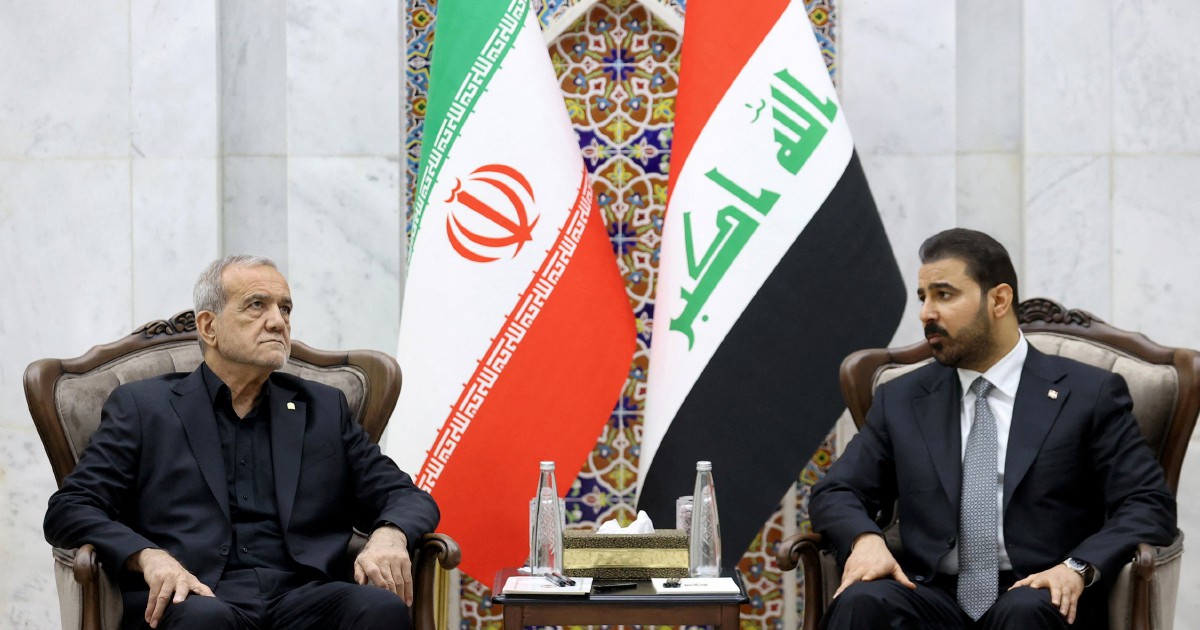
Iraqi Prime Minister Ali al-Zaidi has reaffirmed Baghdad's commitment to the Organization of the Petroleum Exporting Countries in a televised interview, dismissing speculation about potential withdrawal even as the government intensifies efforts to secure more favourable production terms. Speaking to Saudi-owned broadcaster Al Arabiya TV, al-Zaidi emphasized that Iraq views continued membership as strategically important, despite growing frustration within policymaking circles over production constraints that many officials believe underutilize the nation's substantial reserves and technical capabilities.
Iraq's insistence on remaining within Opec, while simultaneously lobbying for revised quotas, reflects the complex balancing act facing Baghdad as it navigates geopolitical pressures and economic imperatives. The Middle Eastern oil producer holds the world's fifth-largest proven crude reserves, yet has historically operated below its potential output capacity due to various Opec-mandated production cuts and a complicated post-conflict reconstruction period that left much of its energy infrastructure damaged. Al-Zaidi's statement suggests that rather than abandoning the cartel framework, Baghdad intends to work within established channels to renegotiate terms that it regards as inequitable relative to its reserve endowments and production potential.
The timing of al-Zaidi's remarks comes amid broader regional uncertainty within Opec, where member states frequently clash over production allocations and pricing strategies. Several nations have grown increasingly vocal about their dissatisfaction with existing quota arrangements, viewing them as outdated mechanisms that fail to account for changing geological conditions, technological advances, and evolving geopolitical circumstances. Iraq's position reflects a pragmatic acknowledgment that wholesale departure from the organisation would isolate Baghdad from a crucial negotiating platform whilst potentially inviting coordinated market responses that could damage Iraqi oil revenues in the short to medium term.
For Malaysia and other Southeast Asian nations, Iraq's steadfast commitment to Opec carries important implications for regional energy markets and crude pricing dynamics. As a major crude importer, Malaysia's downstream sector and overall economic competitiveness are substantially influenced by global oil price trajectories, which in turn depend significantly on Opec's collective production decisions and quota management. Should Iraq successfully obtain higher production allocations, additional supply entering global markets could exert downward pressure on crude prices—potentially benefiting petroleum-importing economies across Asia, though such developments would require careful coordination with other Opec members to prevent market destabilization.
The underlying tensions driving Iraq's renewed focus on quota fairness extend beyond simple production economics. Baghdad has invested considerable capital and diplomatic effort in rehabilitating its upstream sector following decades of conflict and sanctions, bringing new fields into production and modernizing existing facilities. Officials in Iraq view their nation's geological advantages and recently enhanced technical capacity as justifications for expanded production rights, arguing that current quota levels represent an inefficient allocation of global productive resources. This argument has gained traction within some international energy circles, particularly among economists and analysts who contend that Opec quotas should more directly reflect members' actual production capabilities and reserve bases.
Iraq's strategy of reaffirming loyalty whilst pressing for internal reforms also serves important domestic political purposes. Baghdad faces substantial pressure to maximize government revenues from oil exports, given the enormous fiscal demands of reconstruction, military operations against residual militant groups, and basic state services across a population exceeding forty million. Higher production quotas would translate directly into increased hard currency earnings, enabling the government to address legitimate public grievances regarding infrastructure, healthcare, and education whilst funding essential security expenditures. The Prime Minister's public statements therefore function simultaneously as reassurance to international partners, positioning Iraq as a responsible Opec member committed to cartel cohesion, and as a signal to Baghdad's domestic audience that the administration is actively pursuing policies to strengthen the nation's economic foundations.
Historically, Iraq's relationship with Opec has proven complicated, shaped by geopolitical upheaval and shifting regional alignments. The country's ability to assert its interests within the organisation depends substantially on maintaining constructive relationships with other major producers, particularly Saudi Arabia and the United Arab Emirates. Al-Zaidi's emphasis on seeking equity within the existing framework, rather than threatening unilateral action, suggests recognition of these diplomatic realities. By framing Iraq's position in terms of fairness and proper accounting of reserves and capabilities, Baghdad seeks to build coalitions with other members harbouring similar grievances about quota allocations, thereby strengthening its negotiating hand during future Opec meetings and ministerial discussions.
The broader question of whether Opec's quota system can accommodate Iraq's aspirations remains unresolved, with resolution dependent upon complex negotiations spanning multiple dimensions including economic analysis, technical assessments of production capacity, and political calculations across member states. Some analysts argue that establishing more transparent, objectively derived formulas for quota allocation could reduce acrimony and create frameworks more amenable to periodic adjustment as circumstances evolve. Others contend that the organisation's consensus-based decision-making processes, whilst sometimes cumbersome, have provided sufficient flexibility to accommodate shifting member interests across decades of volatile market conditions.
Looking forward, Iraq's determined effort to secure fairer production terms represents one of several centrifugal pressures facing Opec as member states reassess the value of cartel membership against the opportunity costs of production constraints. Al-Zaidi's reaffirmation of commitment, coupled with his forthright advocacy for quota revision, signals that Baghdad views this as a solvable problem within the cartel framework rather than a fundamental reason for withdrawal. The resolution of Iraq's quota dispute may substantially influence how other Opec members approach similar grievances, potentially reshaping the organisation's internal power dynamics and decision-making processes in ways that could affect global energy markets for years ahead.

