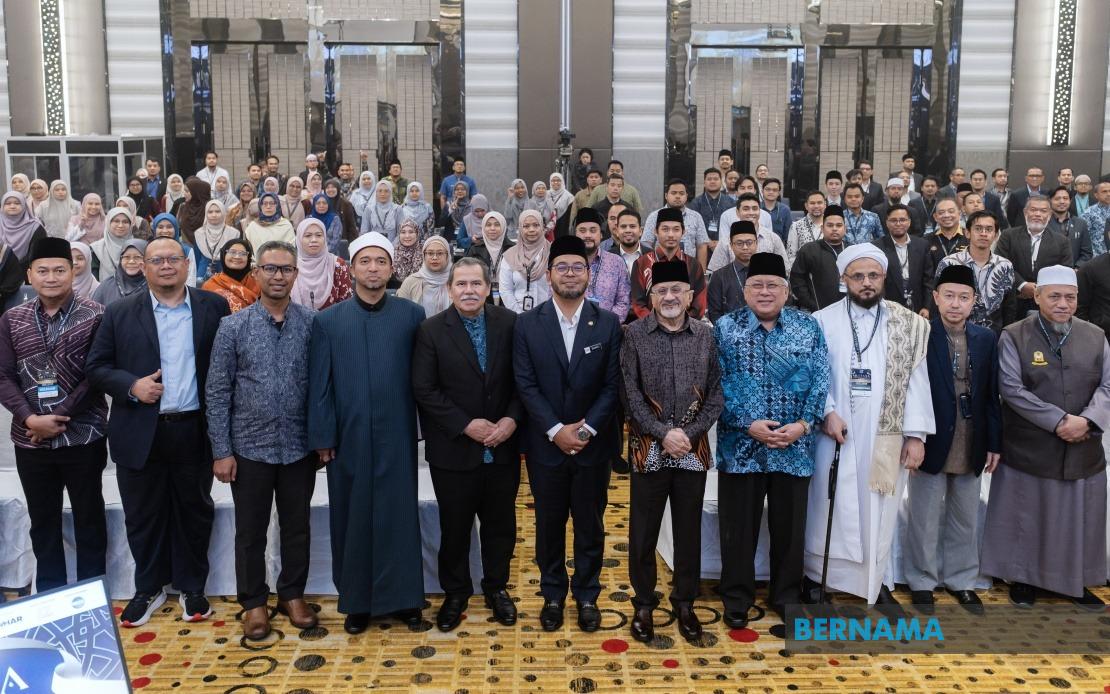
Malaysia's approach to poverty alleviation is set to undergo a significant shift with the formal positioning of Islamic social finance as a mainstream economic instrument rather than a peripheral charitable mechanism. At the MULTAQA SIDR Islamic Social Finance Conference in Kuala Lumpur, Minister in the Prime Minister's Department (Religious Affairs) Dr Zulkifli Hasan articulated a comprehensive vision for leveraging Islamic financial principles to drive sustainable development and reduce inequality across the nation.
The minister's comments arrive at a critical juncture when emerging economies in Southeast Asia are re-evaluating traditional approaches to social welfare. Rather than viewing Islamic social finance through a purely religious lens, Malaysia is now positioning it as a legitimate economic strategy comparable to conventional development financing. This reframing has profound implications for how the country allocates resources and measures poverty reduction outcomes, particularly in communities where trust in Islamic institutions remains high.
Zulkifli emphasised that strengthening this sector requires unprecedented collaboration between government bodies, academic institutions, and private enterprise. The Department of Waqf, Zakat and Haj (JAWHAR) has been designated as the lead agency responsible for enhancing governance standards and professionalising Islamic organisations, especially non-governmental groups operating in social welfare. This structural decision reflects recognition that institutional credibility directly influences whether Islamic social finance can achieve mainstream acceptance alongside conventional banking and finance segments.
Higher education institutions and universities are being positioned as critical partners in this transformation, tasked with improving the management and governance frameworks of Islamic NGOs. By infusing academic rigour and professional standards into these organisations, Malaysia hopes to demonstrate that Islamic social finance can operate with the same transparency and accountability expected of regulated financial institutions. This bridge between academia and practice represents an innovative approach to institutional capacity-building rarely seen in the region.
The launch of Malaysia's Islamic Social Finance Report 2026 provides the empirical foundation for this strategic pivot. The report documents current developments within the Islamic social finance ecosystem, identifies challenges impeding its growth, and outlines unrealised potential that could benefit both local communities and broader regional economies. By creating a comprehensive reference document accessible to institutions, industry stakeholders, and academic researchers across Southeast Asia, Malaysia is establishing itself as a thought leader in Islamic economic development.
Central to Zulkifli's message is the concept of Islamic social finance functioning as 'The Third Force'—a distinct economic model that transcends the binary of government provision and commercial markets. Rather than perpetuating dependency through consumptive assistance alone, this approach seeks to empower communities through productive investment and capability-building. The philosophical distinction is crucial: it repositions beneficiaries not as passive recipients but as economic actors capable of generating sustainable income.
Yet this ambition faces significant headwinds, particularly regarding institutional integrity. Zulkifli's pointed reference to recent parliamentary debate surrounding the Royal Commission of Inquiry report on Tabung Haji serves as a sobering reminder that governance failures within Islamic institutions damage public confidence across the entire sector. When corruption or mismanagement surfaces in high-profile cases, the reputational harm extends beyond individual organisations to Islam itself, creating a trust deficit that undermines the legitimacy of all Islamic finance initiatives.
The minister's caution about maintaining unimpeachable standards of governance and integrity reflects a deeper concern: if Malaysia is to successfully mainstream Islamic social finance, it cannot afford even isolated incidents of institutional weakness. The calculus is unforgiving. In societies where religious identity intersects with financial decision-making, perceived impropriety strikes at the moral authority necessary for these instruments to function effectively. This dynamic differs markedly from secular finance, where regulatory oversight and market discipline typically suffice.
When asked about proposals for a new Royal Commission of Inquiry to investigate investment losses at Tabung Haji, Zulkifli's measured non-response itself communicates sensitivity around governance questions. The reluctance to engage suggests the government recognises the precarious balance between allowing institutions sufficient autonomy and maintaining oversight standards that prevent recurrence of previous problems. Resolving this tension—between institutional independence and public accountability—will determine whether Islamic social finance can genuinely transition to mainstream status.
The timing of this strategic repositioning coincides with broader regional movements toward Islamic finance integration. Neighbouring Indonesia, Brunei, and Singapore are simultaneously exploring ways to expand Islamic financial markets and integrate them more deeply into national economies. Malaysia's explicit framing of Islamic social finance as an anti-poverty tool and development mechanism positions the country to lead regional standardisation efforts and potentially export governance models to other Muslim-majority economies facing similar challenges.
For Malaysian policymakers, the investment in collaborative frameworks involving INCEIF University, the Federal Territories Islamic Religious Council (MAIWP), and the Zakat Collection Centre (PPZ-MAIWP) signals confidence that institutional quality can be systematically improved. However, success ultimately hinges on demonstrating measurable poverty reduction outcomes and transparent resource allocation. Academic institutions bring analytical capacity, while government agencies provide legitimacy and regulatory oversight—a combination that could yield meaningful progress if aligned toward shared objectives.
The initiative also carries implications for Malaysia's broader development trajectory. By channelling Islamic social finance toward productive community empowerment rather than subsistence-level welfare, the country could unlock latent human capital in disadvantaged populations. Microfinance, cooperative formation, skills training financed through zakat and waqf mechanisms, and enterprise development initiatives grounded in Islamic principles could generate employment and income diversity in ways conventional poverty programmes have struggled to achieve.
Ultimately, Dr Zulkifli's vision represents an attempt to harness cultural and religious values as development catalysts rather than viewing them as separate from economic modernisation. If executed with genuine institutional discipline and measurable accountability, Islamic social finance could indeed become the third force he describes—neither government nor market, but a complementary economic sphere rooted in principles of community welfare and sustainable prosperity. The path forward demands unwavering commitment to governance excellence and demonstrated results.

