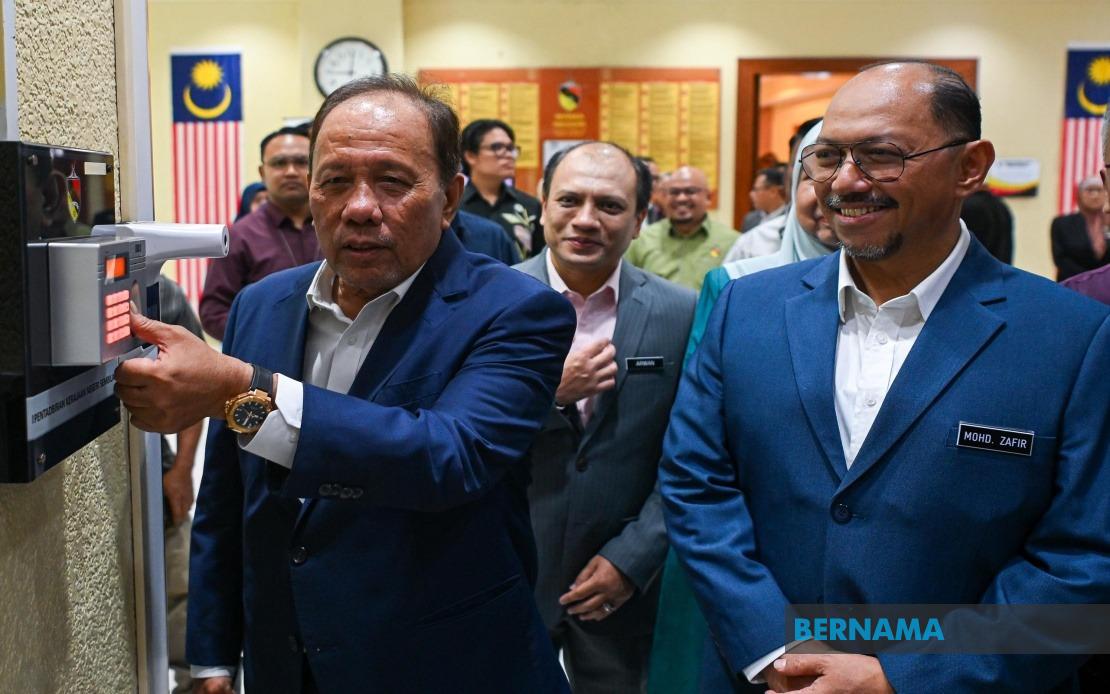
Datuk Ismail Lasim moved swiftly to defend his appointment as Negeri Sembilan Menteri Besar, declaring that his elevation to the state's top executive position adhered strictly to constitutional guidelines and established protocols. Speaking to journalists at the state government headquarters in Seremban on Monday, Ismail expressed confidence that the appointment mechanism had been executed with proper adherence to all regulatory frameworks governing such transitions of power in the state.
The new Menteri Besar's remarks came in direct response to scrutiny from Wawasan chairman Tan Sri Rais Yatim, who had publicly questioned whether the appointment procedure maintained the integrity expected under Negeri Sembilan's constitutional arrangements. Rais Yatim's concerns went beyond procedural technicalities, encompassing broader allegations that external actors had sought to influence decisions touching on state customs and constitutional prerogatives—matters traditionally treated with considerable sensitivity in Malaysia's federal system.
Ismail, who claimed the Juasseh state constituency in the recent Negeri Sembilan elections, was formally invested with the office of Menteri Besar during a ceremonial swearing-in at Istana Besar Seri Menanti the previous Sunday. The ceremony involved Yang Dipertuan Besar of Negeri Sembilan Tuanku Muhriz Tuanku Munawir, whose role in validating the appointment underscored the formal recognition accorded to his accession to the position. The timing of his official commencement of duties at Wisma Negeri represented the final stage of transitioning into executive leadership of Malaysia's smallest peninsular state.
The backdrop to these constitutional proceedings reflects Negeri Sembilan's political landscape following the recent state election. Barisan Nasional secured 18 of the 36 available state seats, while Perikatan Nasional won seven seats, together delivering both coalitions the legislative supermajority necessary to establish and sustain state government operations without reliance on independent representatives or smaller political groupings. This outcome provided the mathematical foundation for constructing a new administration, though it left questions about the mechanics through which the Menteri Besar position would be allocated between the two dominant blocs.
The appointment controversy highlights ongoing tensions within Malaysia's political establishment regarding the mechanics of power-sharing arrangements between major coalitions. When multiple parties or alliances command substantial parliamentary representation, the determination of who leads the executive branch can become a site of negotiation, with questions emerging about whether appointments genuinely reflect voter preferences or result from backroom arrangements. In Negeri Sembilan's case, the fact that both BN and PN possessed supermajority strength collectively meant that the choice of Menteri Besar involved inter-coalition dynamics rather than a straightforward majoritarian outcome.
Tan Sri Rais Yatim's intervention introduces the perspective of a figure historically associated with oversight of constitutional propriety and national interests. Wawasan, the organization he chairs, positions itself as a watchdog on governance standards and national orientation. His specific allegations regarding potential external interference carry particular weight in Malaysia's political discourse, where concerns about sovereignty and external influence periodically resurface, particularly regarding high-stakes appointments involving state institutions and customary arrangements. The invocation of concerns about state customs and constitutional provisions suggests Rais was questioning not merely procedural compliance but the deeper integrity of the appointment within Negeri Sembilan's unique constitutional framework.
For Malaysian readers, the significance of this dispute extends beyond Negeri Sembilan's borders. The mechanics of appointment processes for chief executives in states governed by supermajority coalitions could establish precedents affecting other jurisdictions. As coalitional politics becomes increasingly normal across Malaysia's states, questions about how appointment decisions are made—and whether they reflect genuine democratic choice or represent brokered compromises—take on heightened relevance. The controversy surrounding Ismail's appointment serves as a case study in how these modern political arrangements intersect with Malaysia's constitutionally prescribed governance structures.
The tension between defending procedural legitimacy and addressing substantive concerns about external interference also reflects broader anxieties within Malaysia's political establishment. Ismail's measured response—emphasizing that correct procedures were followed—addresses the technical dimension of the appointment but does not directly engage with allegations of external influence or questions about whether the process genuinely served Negeri Sembilan's constitutional traditions and interests. This gap between procedural defense and substantive rebuttal may leave questions lingering within certain political circles about whether the appointment truly reflected the state's constitutional autonomy or involved considerations transcending state-level decision-making.
As Negeri Sembilan transitions into its new political dispensation under Ismail's leadership, the credibility of his administration may partly depend on how effectively he navigates the underlying legitimacy questions raised by figures like Rais Yatim. While constitutional procedures may have been followed, the appointment's sustainability could be tested by broader perceptions among Negeri Sembilan constituents regarding whether the process genuinely reflected their political choices and the state's constitutional autonomy. The coming weeks and months will likely clarify whether these initial challenges dissipate or intensify.

