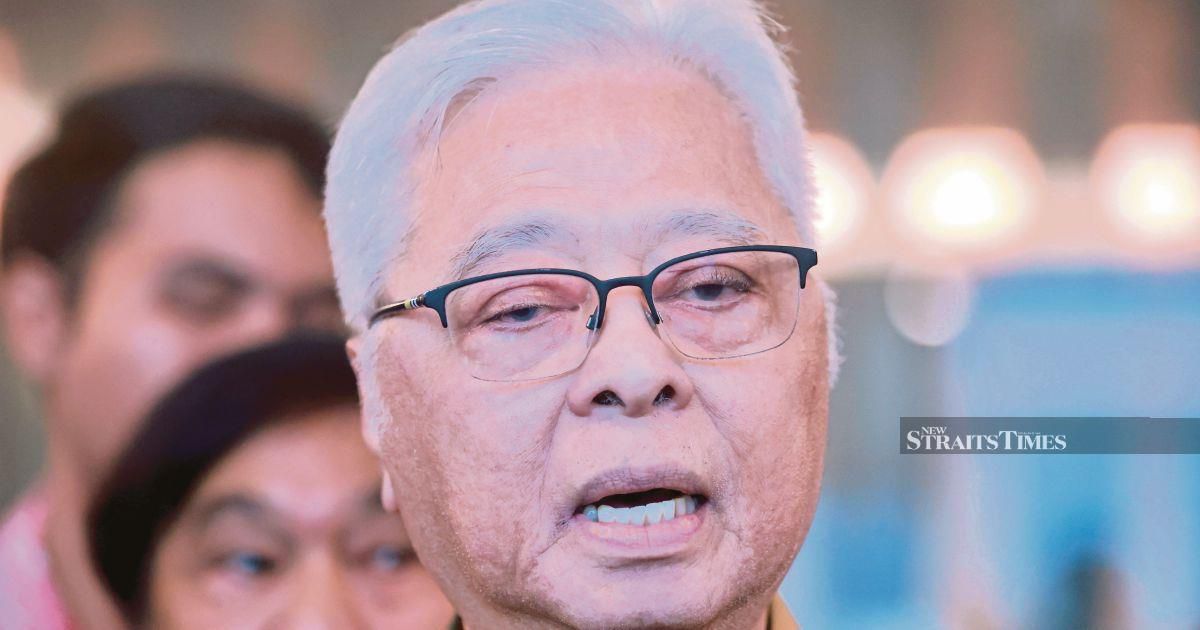
Datuk Seri Ismail Sabri Yaakob is poised to become the third former prime minister of Malaysia to face criminal charges, continuing a troubling pattern in Malaysian politics where recent leaders have encountered serious legal difficulties. The development marks another chapter in a succession of legal setbacks that have befallen the nation's top executives following their departure from office, with both Datuk Seri Najib Razak and Tan Sri Muhyiddin Yassin having preceded him through the criminal justice system.
The prospect of charges against Ismail Sabri underscores deepening questions about accountability and governance standards in Malaysia's highest offices. His potential prosecution would represent an unprecedented clustering of legal troubles among consecutive leaders, suggesting either systemic institutional failures or a significant shift in Malaysia's approach to investigating former officeholders. The frequency with which Malaysia's recent prime ministers have faced allegations raises concerns about the effectiveness of oversight mechanisms during their tenures and the robustness of institutional checks and balances.
Najib Razak, who served as prime minister from 2009 to 2018, became the first former leader to face criminal prosecution. His case centred on the sprawling 1Malaysia Development Berhad (1MDB) scandal, one of the world's largest financial frauds. Najib was convicted of multiple charges including abuse of power and money laundering, receiving a 12-year prison sentence. Though he has maintained his innocence and appealed his conviction, his case fundamentally altered public perception of Malaysian leadership accountability and demonstrated that even former prime ministers could be prosecuted.
Tan Sri Muhyiddin Yassin, who held office briefly in 2020 and 2021, followed as the second ex-PM to face legal proceedings. His charges related to alleged money laundering and abuse of power, stemming from activities tied to his political party. The charges against Muhyiddin signalled that Malaysia's prosecutorial authorities were willing to pursue cases against recent leaders regardless of their political affiliation or tenure length, expanding the scope of accountability beyond Najib's case and suggesting a broader enforcement effort.
The impending charges against Ismail Sabri, who served as prime minister from 2021 to 2022, would complete a trilogy of legal challenges that spans nearly the entire recent leadership of the nation. His brief tenure as the chief executive coincided with considerable political turmoil and the complex aftermath of the COVID-19 pandemic, during which questions about government procurement, emergency management, and administrative decisions emerged. The specific charges he may face have not yet been formally detailed, but the pattern suggests investigations into financial impropriety or abuse of authority.
This concentration of criminal cases among three consecutive prime ministers raises fundamental questions about institutional integrity and the adequacy of systems designed to prevent misconduct while leaders remain in office. It suggests that either multiple administrations engaged in serious wrongdoing, or that investigative and prosecutorial processes were ineffective until after incumbents had left power. Either scenario reflects poorly on Malaysia's governance framework and highlights the challenges of maintaining strong institutional oversight when those under scrutiny hold executive authority.
For Malaysian citizens and observers across Southeast Asia, these developments carry significant implications. The rule of law and equal application of justice form cornerstones of democratic legitimacy and economic confidence. When prime ministers face criminal charges after leaving office, it can undermine public faith in the entire political system and create uncertainty for both domestic and international stakeholders considering engagement with Malaysia. Investors and trading partners monitor such cases closely, viewing them as indicators of institutional health and predictability.
The succession of cases also raises questions about selective enforcement and political motivation. Critics have argued that Malaysia's approach to prosecuting former leaders appears inconsistent or influenced by shifting political coalitions. Whether justified or not, perceptions of politically-motivated prosecution erode confidence in judicial independence and the integrity of law enforcement institutions. These perceptions matter as much as the actual facts, particularly in regions where governance and accountability remain contested issues.
Looking forward, the expected charges against Ismail Sabri will likely dominate Malaysian political discourse and international attention on the country's governance trajectory. His case will test whether Malaysia's legal system can handle high-profile former leaders with consistency and fairness, or whether existing cases will be viewed as outliers in a broader pattern of impunity. The outcome could shape how future prime ministers and other senior officials approach their responsibilities and whether accountability mechanisms can function effectively before misconduct becomes entrenched in state institutions.

