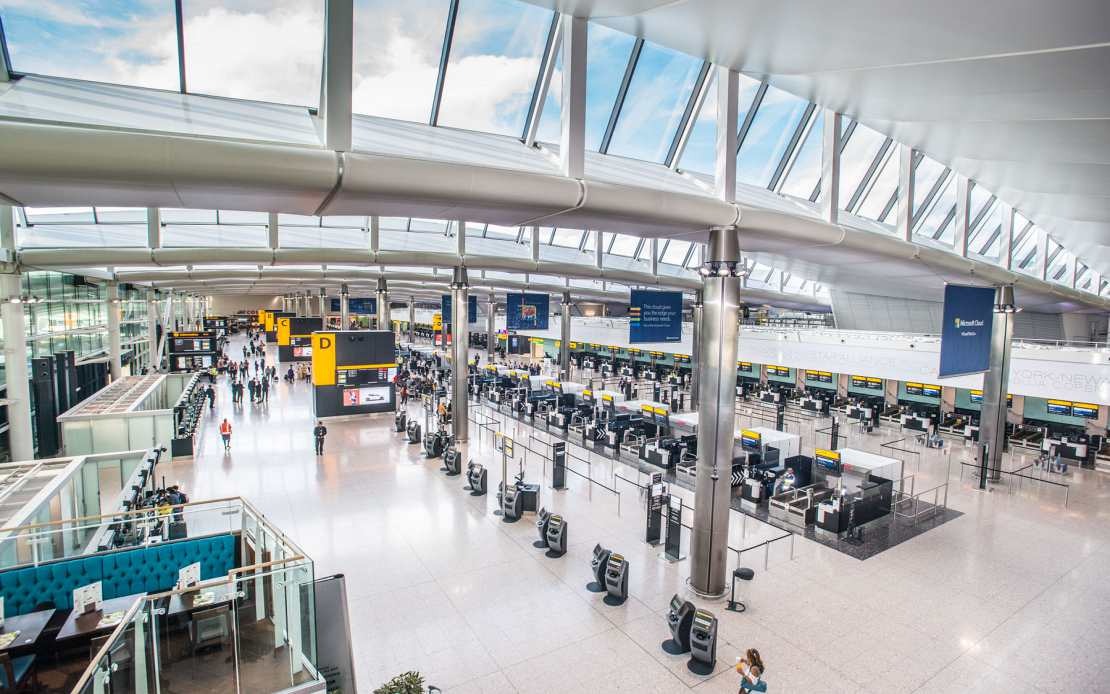
Istanbul Airport has displaced London's Heathrow from its long-standing position as Europe's busiest aviation hub, marking a significant reversal in the continent's airport hierarchy. The Turkish facility handled 8.15 million passengers in July, edging past Heathrow's 7.86 million travellers across the same month. For regional observers, particularly those tracking Southeast Asian connectivity to European markets, this shift signals broader changes in global aviation dynamics and raises questions about Britain's competitive standing as a gateway between continents.
Heathrow's loss of its European crown—a position it maintained continuously from 1996 through 2019—represents a dramatic decline in institutional prestige for one of the world's most recognised airports. The facility had previously lost its top ranking in 2020 when coronavirus lockdowns decimated international travel, but recovered the title in 2023 and held it until this latest monthly update. Istanbul's resurgence, by contrast, reflects the Turkish airport's strategic positioning and the region's growing prominence in connecting Asia, Europe, and the Middle East—a factor relevant to Malaysian travellers and businesses using these routes.
The underlying data reveals diverging trajectories for both airports. While Heathrow recorded a contraction of 1.5 per cent compared with July of the previous year, Istanbul achieved expansion of 2.3 per cent during the same comparative period. This performance gap underscores structural challenges affecting London's premier airport, particularly its vulnerability to geopolitical disruptions affecting passenger demand on certain routes.
Heathrow explicitly attributed recent passenger declines to the United States-Iran conflict, which has disrupted air traffic patterns across West Asia routes. During July, passenger numbers on these routes dropped by 20.2 per cent year-on-year, demonstrating how regional tensions directly impact major international aviation hubs. For Malaysian stakeholders considering routing options through European gateways, such volatility presents strategic challenges when planning Middle Eastern connections.
Despite these headwinds, Heathrow operates at the absolute limit of its infrastructure capacity, utilising both existing runways at near-maximum efficiency. This constraint has become the focal point of a protracted political battle over airport expansion. The airport's ownership has proposed a third runway that would theoretically accommodate 150 million passengers annually, effectively addressing the current ceiling and positioning the facility to compete more robustly against rivals like Istanbul.
The expansion proposal has attracted high-level government attention following Transport Secretary Heidi Alexander's June launch of a consultation process regarding the renamed Heathrow expansion national policy statement. This consultation phase represents an attempt to establish transparent criteria and conditions under which such a major infrastructure project might proceed. Former chancellor Rachel Reeves had previously indicated determination to see the project move to active construction during the current parliamentary session, with a target completion date of 2035.
However, expansion plans face political resistance rooted in regional inequality concerns. Prime Minister Andy Burnham, who dismissed Reeves from her previous role, has previously voiced opposition to Heathrow expansion, characterising the scheme as diverting crucial infrastructure investment away from northern England and concentrating resources in London. This tension between national ambitions for a world-class hub and regional demands for balanced development reflects fundamental debates about Britain's post-pandemic economic geography.
Heathrow's operational performance contains some encouraging elements despite the headline decline. The airport identified July 19 as its busiest day of the year, with 267,000 passengers processed as summer school holidays commenced. Additionally, several new carriers commenced operations during the month, including ITA Airways from Italy, Alaska Airlines from the United States, and Riyadh Air from Saudi Arabia. These developments suggest underlying demand for expanded connectivity that transcends short-term geopolitical disruptions.
Chief executive Thomas Woldbye characterised the summer season as commencing strongly while emphasising ambitions to expand further through route network development and enhanced passenger services. His framing of expansion as essential to maintaining Britain's status as home to Europe's leading hub connects infrastructure policy to broader economic objectives, including trade facilitation, investment attraction, and tourism growth. For Malaysian commercial interests reliant on London connections, the outcome of this expansion debate carries direct implications for future flight availability and pricing.
The strategic positioning of Istanbul airport merits consideration for Asian markets. Its ascent reflects not merely temporary fluctuations but a structural reorientation of European aviation around Middle Eastern hubs offering superior connectivity to Asian origin markets. This trend may compel other major European airports to pursue their own expansion strategies, creating a competitive cascade that could reshape continental aviation geography over the coming decade.
Heathrow's loss of market leadership, while significant symbolically, does not immediately threaten its operational viability or prestige among global carriers. However, sustained passenger growth at Istanbul combined with Heathrow's constrained runway capacity creates a compelling case for expansion advocates. The consultation process now underway will determine whether political consensus can materialise around approval, and whether construction timelines align with the 2035 aspirations previously articulated by government officials. For Malaysian stakeholders evaluating long-term European market access strategies, monitoring this expansion debate remains essential.

