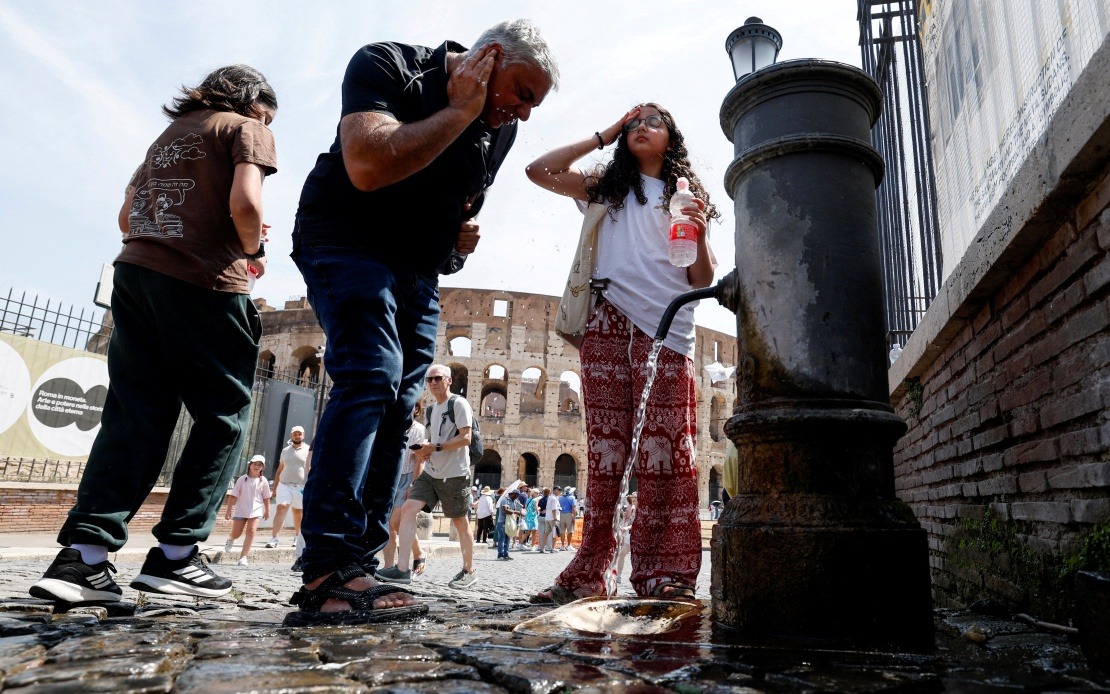
Italy's government has activated the highest tier of its heat warning system for every major metropolitan area under health department surveillance, as the country grapples with an intensifying heatwave that threatens public health across the entire nation. The decision came on Thursday as temperatures persistently climbed above 35 degrees Celsius throughout the country, with forecasts indicating even more dangerous peaks in some regions.
The red alert designation represents the gravest warning that Italian authorities can issue during extreme weather events. This alert level is triggered specifically when intense heat combines with elevated humidity levels, creating conditions that pose acute health risks extending beyond vulnerable populations. While elderly citizens and those with pre-existing medical conditions face heightened danger during such events, the red alert classification acknowledges that even healthy individuals and athletes engaged in physical activity encounter significant health hazards when both temperature and moisture reach critical thresholds.
The alert encompasses cities spanning the entire Italian peninsula, stretching from Bolzano in the northern region of South Tyrol to Palermo on the Mediterranean island of Sicily. This geographical expanse underscores the unprecedented nature of the current weather system, which has affected both Alpine regions in the north and Mediterranean coastal areas in the south. The simultaneous activation across such diverse climatic zones illustrates how the heatwave is not localised to any single region but represents a broad atmospheric phenomenon affecting the entire country.
Temperature forecasts for Thursday painted an increasingly alarming picture across major urban centres. While many cities were experiencing conditions exceeding 35 degrees, meteorologists predicted particularly extreme readings in certain tourist and cultural destinations. Florence, nestled in the Tuscany region, was forecast to reach temperatures surpassing 40 degrees, as was Rome, Italy's capital city. Such temperatures create conditions that can overwhelm public health infrastructure and pose severe risks to residents unfamiliar with extreme heat protocols.
Beyond the immediate threat to human health, the prolonged heatwave has created cascading environmental consequences throughout Italian water systems. The Po River, Italy's longest watercourse, has been displaying water levels significantly depleted compared to historical averages for this time of year. Measurements taken across multiple monitoring stations along the Po indicated consistently low flows, suggesting that the combination of heat and reduced rainfall has substantially stressed this vital water resource upon which agriculture, industry and hydroelectric power generation depend.
Northern Italy's lake systems are experiencing similarly concerning conditions. Lake Maggiore, the nation's second-largest freshwater body, is approaching water levels not seen in living memory according to media reports. These historic lows threaten water supply stability for surrounding communities and could impact the delicate ecosystems these lakes support. Meanwhile, Mediterranean waters surrounding the northern Adriatic coast have warmed to dangerous levels, with measurements exceeding 30 degrees Celsius—conditions that can trigger unusual marine ecosystem responses and create additional thermal stress on coastal regions.
Meteorological projections suggest the heatwave will maintain its grip on the country through at least mid-August, presenting a prolonged public health challenge for Italian authorities and citizens alike. However, forecasters indicated that conditions may begin moderating slightly in northern regions beginning Friday, potentially allowing at least partial relief from the most dangerous temperatures. This projected improvement in the north has direct implications for the red alert system.
The Italian Health Ministry's forecast models suggest that Bolzano will be removed from the red alert list as conditions improve in South Tyrol, reducing the number of cities under maximum alert status from 27 to 26. Nevertheless, most of the country is expected to remain under red alert conditions as the core of the heatwave persists across central and southern Italy. Additionally, South Tyrol faces the prospect of significant heat thunderstorms, which could bring heavy precipitation but also create dangerous lightning hazards in already stressed communities.
For Southeast Asian observers, Italy's heatwave offers cautionary lessons about climate vulnerability even in developed nations. Malaysia and its neighbours face chronic exposure to high temperatures and humidity, yet the scale of Italy's emergency highlights how even temperate regions are increasingly susceptible to dangerous heat events. The simultaneous failure of multiple water systems—rivers, lakes and agricultural availability—demonstrates how heat stress propagates through interconnected resource networks, creating compounding crises.
The Italian experience also underscores the importance of heat alert systems and public health preparedness. Malaysia's meteorological services and health authorities could examine how Italy's tiered alert system communicates risk to different population segments, particularly when traditional boundaries between vulnerable and healthy populations blur under extreme conditions. The red alert for all 27 cities represents a message of widespread severity that transcends demographic categories.
Furthermore, the environmental impacts visible in Italian waterways—depleted rivers and historic lake lows—resonate with Southeast Asian concerns about dry season intensification and monsoon pattern disruption. As global temperatures continue rising, the mechanisms that maintained Europe's temperate climate are demonstrating unexpected fragility. For a tropical region already experiencing heat and humidity challenges, understanding how these systems fail under stress becomes directly relevant to long-term planning and adaptation strategies across Malaysia and the wider region.

