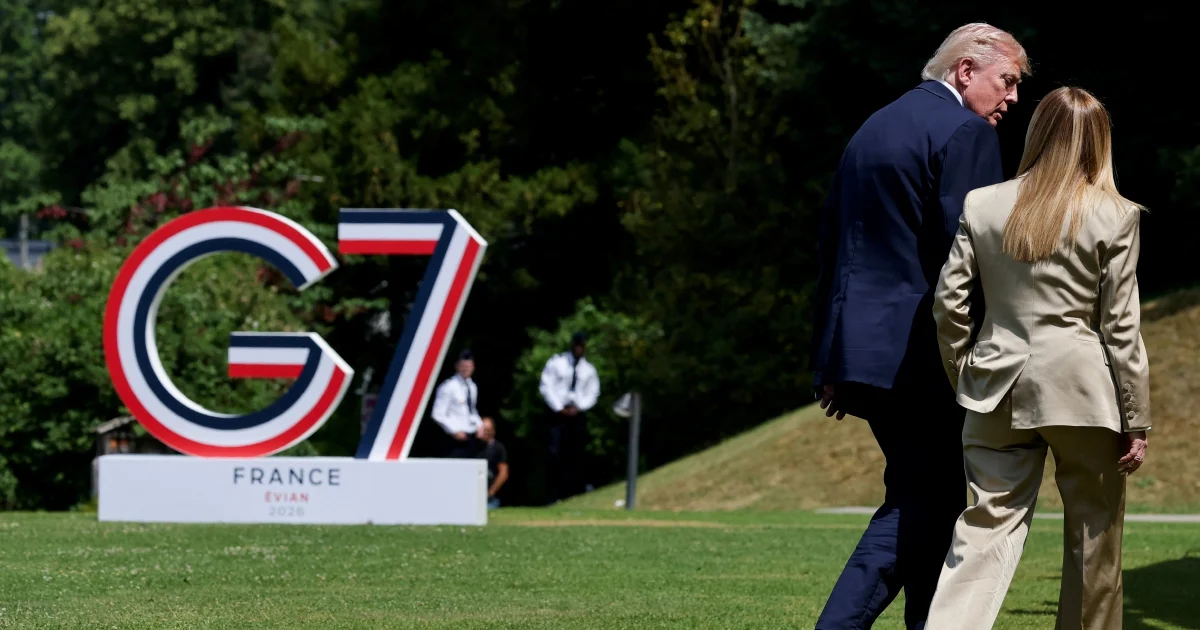
Rome reacted with visible displeasure on Friday following reported remarks by US President Donald Trump that appeared to deride Prime Minister Giorgia Meloni. The comments, which allegedly characterised the Italian leader as overly eager for a photograph with the American president, sparked a diplomatic controversy that prompted Italy's Foreign Minister to cancel a scheduled visit to the United States.
The incident highlighted the delicate nature of transatlantic relations in the current geopolitical climate. Italy, as a long-standing member of NATO and the European Union, maintains close ties with Washington on matters ranging from security cooperation to trade. However, the reported comments touched a nerve within Rome's government, suggesting a perceived lack of respect toward Italy's democratically elected leadership and raising questions about how the Trump administration views its traditional European allies.
The timing of the controversy is particularly significant given the broader political landscape in Europe. Italy, under Meloni's leadership since September 2022, has positioned itself as a bridging figure within the EU while maintaining a pragmatic approach to international diplomacy. The government has worked to strengthen Italy's standing on the global stage, particularly following years of political turbulence that preceded Meloni's rise to office. Any perception of disrespect from Washington undermines these efforts and complicates Italy's carefully calibrated diplomatic strategy.
The cancellation of the Foreign Minister's planned visit represents more than a symbolic gesture. It signals Rome's willingness to demonstrate its displeasure through concrete diplomatic action, even toward a major ally. Such moves are rarely undertaken lightly, as they carry reputational implications and can complicate future negotiations on matters of mutual interest. The Italian government's decision to take this step suggests that the comments were viewed as sufficiently offensive to warrant a response that transcends routine diplomatic protocol.
For Malaysian observers and readers across Southeast Asia, this incident offers instructive lessons about how smaller and mid-sized nations navigate relationships with superpowers. While Malaysia's own diplomatic engagements with major powers differ in context, the fundamental principle remains relevant: nations must balance maintaining important bilateral relationships against the need to preserve their dignity and sovereignty. The Italian response demonstrates that even countries with deep historical ties to powerful allies can and do push back when they perceive disrespect.
The controversy also underscores the unpredictable nature of international relations under the Trump administration. Meloni, as a right-leaning leader, might have expected stronger rapport with Trump's ideological camp. Instead, the reported mockery reveals that ideological alignment does not necessarily translate into diplomatic courtesy or genuine partnership. This pattern has important implications for how other leaders, regardless of their political orientation, should calibrate their approach to the current US administration.
Within the European context, the incident reinforces existing tensions about European autonomy and the extent to which the continent should remain dependent on American security guarantees and strategic alignment. Several EU member states have been discussing greater European strategic autonomy, and incidents such as this fuel those conversations. If the United States, through its leadership, does not extend appropriate diplomatic respect to partner nations, it weakens the fabric of the transatlantic alliance that has underpinned Western security architecture since the Cold War.
Meloni herself has cultivated a careful political image domestically and internationally. Her government has managed to maintain credibility across different political and ideological divides, a challenging feat in contemporary European politics. Any perception of external actors treating her or her government with contempt threatens this balance and potentially strengthens opposition voices at home who might argue that Italy's current leadership lacks sufficient international standing.
The situation also reflects broader questions about how modern leaders interact in the age of instantaneous global communication. Comments that might once have remained within closed diplomatic circles now circulate rapidly, potentially reaching media outlets, opposition parties, and the general public within hours. This transformation of the information environment means that leaders must exercise greater discipline in their private remarks, as anything deemed newsworthy quickly becomes part of the public record.
Looking ahead, the question remains whether this diplomatic friction can be smoothed through quiet channels or whether it will develop into a more serious rift. Italy's cancellation of the visit establishes a cost for the reported behaviour while leaving room for potential reconciliation. Both Rome and Washington have incentives to restore normal relations, particularly given shared interests in NATO, Mediterranean security, and countering Russian influence in Europe. However, the speed and tone with which the Trump administration responds to Italy's protest will determine whether this becomes a momentary diplomatic incident or a more enduring source of tension.
For Italy's strategic position and its role within Europe and the broader Western alliance, navigating this moment carefully will be essential. The country must demonstrate that it will not tolerate disrespect while simultaneously remaining a reliable and pragmatic partner. This balancing act represents the perennial challenge facing mid-sized powers in a world shaped by the interests and actions of superpowers.

%22%2F%3E%3C%2Fpattern%3E%3C%2Fdefs%3E%3Crect%20width%3D%22100%25%22%20height%3D%22100%25%22%20fill%3D%22url(%23ph5k6avg)%22%2F%3E%3Crect%20width%3D%22100%25%22%20height%3D%22100%25%22%20fill%3D%22url(%23ph5k6avp)%22%2F%3E%3Ctext%20x%3D%2250%25%22%20y%3D%2250%25%22%20text-anchor%3D%22middle%22%20dominant-baseline%3D%22central%22%20fill%3D%22rgba(255%2C255%2C255%2C0.95)%22%20font-family%3D%22Georgia%2C%20'Times%20New%20Roman'%2C%20serif%22%20font-weight%3D%22700%22%20font-size%3D%22272%22%20letter-spacing%3D%22-0.02em%22%3EAnwar%3C%2Ftext%3E%3C%2Fsvg%3E)