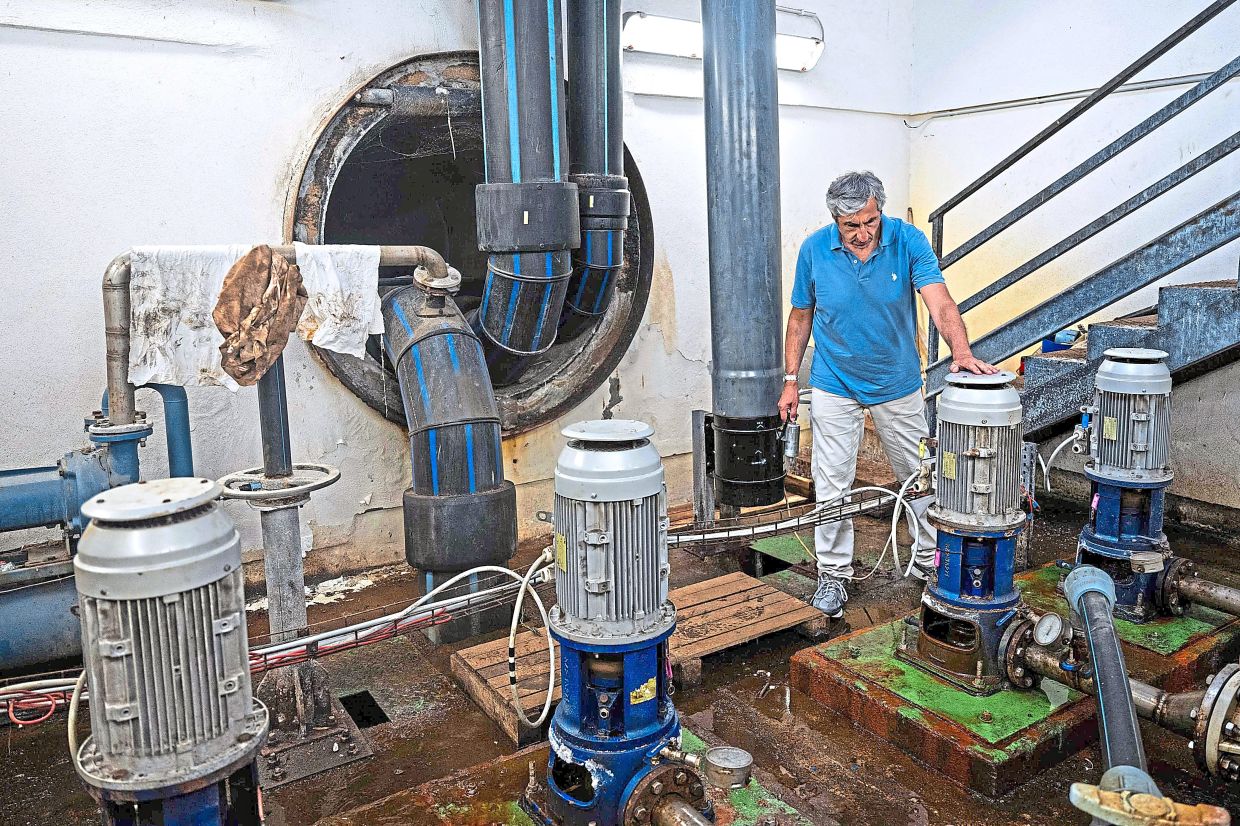
The Italian archipelago of the Aeolian Islands, situated off Sicily's northern coast, confronts an acute resource management crisis that mirrors broader Mediterranean challenges: how to sustain freshwater supplies for permanent communities while accommodating seasonal tourism surges. The islands, home to approximately 15,000 year-round residents, received 146,000 tourist arrivals in 2024, placing immense strain on water infrastructure designed for a far smaller population. This imbalance has sparked heated debate between those advocating technological solutions through expanded desalination and others calling for measured, environmentally conscious approaches to water management.
The archipelago's eight islands present a patchwork of water security scenarios that illustrate both the promise and complications of desalination technology. Vulcano has achieved substantial autonomy through an existing desalination facility, characterised by distinctive white silos that now supply the island's drinking water needs reliably. Conversely, Stromboli remains vulnerable, dependent on periodic water shipments delivered by vessel. This dependence creates genuine hardship; when weather conditions prevent docking, the island faces acute shortages. Angelo Mirabito, a 66-year-old restaurant proprietor, articulated this precarity directly: during rough seas, "We're left without water." Such scenarios underscore why many residents view desalination expansion as essential infrastructure rather than optional development.
The economics of water supply on these islands reveal starkly divergent cost structures that favour technological solutions. Desalination plants operating on the Aeolian Islands produce drinking water at approximately €2 per cubic metre—a figure that reflects operational efficiency and economies of scale. By contrast, water transported by military-organised shipping routes costs approximately €14 per cubic metre, representing a sevenfold price differential. The defence ministry's subsidy of maritime water transport masks the true budgetary burden on the Italian state, making the case for infrastructure investment increasingly compelling from a fiscal perspective.
Italy's broader position within European desalination capacity demonstrates both established expertise and continued expansion potential. As the European Union's second-largest producer after Spain, Italy operates 341 desalination plants generating slightly more than 657,000 cubic metres daily—accounting for approximately 7.6% of aggregate EU desalination output according to The European House – Ambrosetti think tank. This substantial existing infrastructure, combined with Mediterranean climatic pressures, positions Italy as a natural leader in advancing desalination technology across the region. The Aeolian Islands represent a manageable test case for optimising such systems on smaller, isolated populations.
Proposed expansion plans, however, have ignited environmental objections that cannot be dismissed as merely obstructionist. The municipality has advanced a proposal for four new desalination plants serving Alicudi, Filicudi, Panarea and Stromboli, a scheme that environmental associations and concerned residents view with considerable scepticism. Critics contend that insufficient research has been conducted into potential ecological impacts within ecosystems already classified as fragile. The islands' unique biodiversity and marine environments face mounting anthropogenic pressure; hastily implemented infrastructure could inflict irreversible damage to habitats and species dependent on precise environmental conditions.
Environmental advocates acknowledge desalination's legitimate role within climate adaptation strategies. Giuseppe Amato, a water-focused campaigner at Legambiente, an Italian environmental NGO, characterised desalination as "an appropriate response, particularly taking into account the various hydrological crises brought about by the global climate crisis." His position reflects growing scientific consensus that some Mediterranean regions must embrace technological solutions as traditional water sources prove increasingly unreliable. Yet Amato insisted that implementation requires rigorous planning and prudent operational parameters—not merely installing capacity and hoping demand justifies the investment.
A fundamental tension underlies the desalination expansion debate: whether new plants should be sized for permanent resident populations or for peak seasonal tourist numbers. Amato pointedly questioned whether Filicudi's proposed facility should be engineered for the island's approximately 250 permanent inhabitants or instead for the maximum tourist capacity during summer months. This distinction carries profound implications for environmental footprint, operational costs, and whether desalination genuinely addresses community needs or merely facilitates unlimited tourism growth. Different answers reflect different philosophical positions regarding island development and environmental stewardship.
The environmental foundation Marevivo has formally requested suspension of the desalination authorisation procedure, arguing that comprehensive alternatives merit serious consideration before proceeding. Their position emphasises wastewater recycling, rainwater harvesting, and demand management strategies as complementary approaches that could reduce reliance on new desalination capacity. Such solutions require cultural shifts and behavioural changes—tourists and residents alike learning to use water more prudently, understanding its scarcity value. Marevivo's approach suggests that infrastructure investment alone cannot resolve challenges rooted partly in consumption patterns and expectations.
Local perspectives on tourism and resource management reveal psychological dimensions often overlooked in technical debates. Eugenio Vodini, who operates boat excursions for holidaymakers, observed that permanent residents possess inherent advantages in managing limited water resources—they have adapted behaviours and expectations calibrated to scarcity. Tourists, by contrast, arrive with consumption patterns shaped by mainland abundance, creating friction between supply realities and demand assumptions. Vodini himself characterised water as "almost like gold, because what can you do without water?"—a poignant reminder that for island residents, water transcends economic categorisation as mere commodity.
The Aeolian Islands dispute resonates across Mediterranean and Southeast Asian contexts grappling with similar pressures. Rising temperatures, erratic precipitation patterns, and tourism-driven population fluctuations challenge traditional water infrastructure throughout the region. Malaysia, despite generally abundant freshwater resources, confronts comparable management questions in island and resort communities facing seasonal visitor surges. The Italian experience—particularly tensions between technological expansion and environmental caution—offers instructive lessons about balancing development imperatives against ecological vulnerability.
Resolving the Aeolian Islands water question requires moving beyond binary choices between shipment and desalination, embracing instead integrated strategies incorporating multiple supply sources, aggressive conservation, and carefully calibrated tourism development. This approach demands stakeholder consensus that presently remains elusive. Environmental concerns deserve serious engagement rather than dismissal as obstacles to progress; simultaneously, residents' legitimate needs for reliable water access cannot be indefinitely postponed for perfect planning. The islands' experience suggests that sustainable island development requires uncomfortable compromises—accepting neither unlimited technological expansion nor indefinite reliance on expensive, unreliable maritime supply.

